
18 Cutting Shapes Worksheets (Free Printables)
Handing a preschooler scissors and a plain sheet of shapes is one of the easiest ways to build real scissor skills without turning it into a formal lesson. These 18 free cutting shapes worksheets give kids a full progression, from simple shapes like the circle and square up through trickier ones like the star, hexagon, and spiral, so scissor control builds gradually instead of all at once.
Below you’ll find instructions for using the worksheets, age guidance, descriptions of each of the 18 shapes included, and a few tips for getting the most out of them.
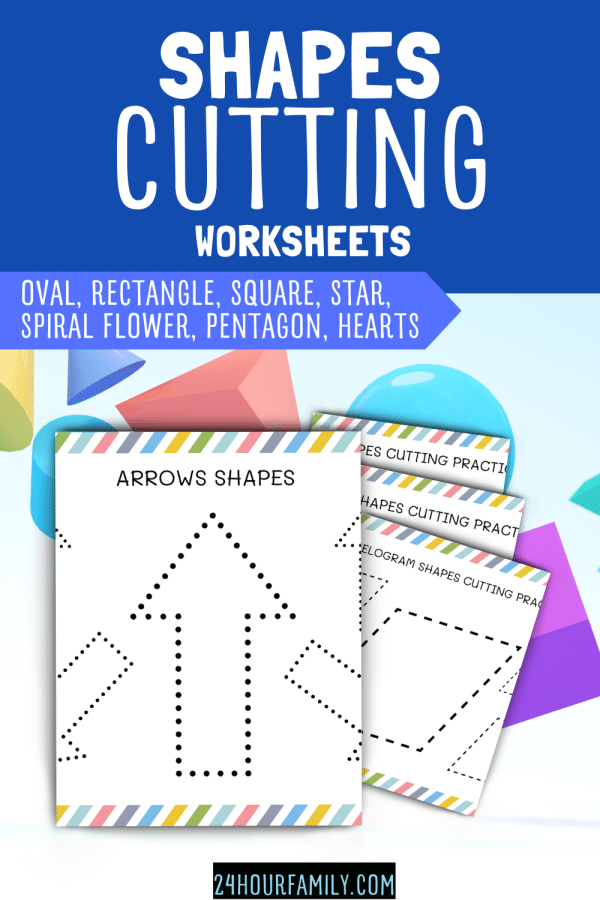
How to Use the Cutting Shapes Worksheets
Print the worksheets onto regular paper for a light first pass, or onto construction paper or cardstock once your child is ready for a slightly sturdier cut. Hand over a pair of kid-safe scissors and show them how to hold the paper steady with one hand while cutting with the other.
Start with straight-edged shapes like the square and rectangle before moving to curved shapes like the circle and oval, and save the pointed shapes, like the star, for when your child has a few worksheets of practice behind them.
Let your child name each shape aloud as they cut it, since saying “this is a triangle” while cutting reinforces shape recognition alongside the scissor practice.
This post may contain affiliate links. As an Amazon Associate and a participant in other affiliate programs, I earn a commission on qualifying purchases. Read our disclosure policy here.
Age Guidance
These worksheets work well for children ages 3 to 7. Preschoolers around age 3 to 4 typically need help holding the paper steady and may only manage a few straight cuts before needing a break, which is completely normal at that stage.
Kindergartners ages 5 to 6 can usually work through an entire simple shape on their own, and by age 6 to 7 most kids are ready to tackle the more detailed shapes like the spiral and the star.
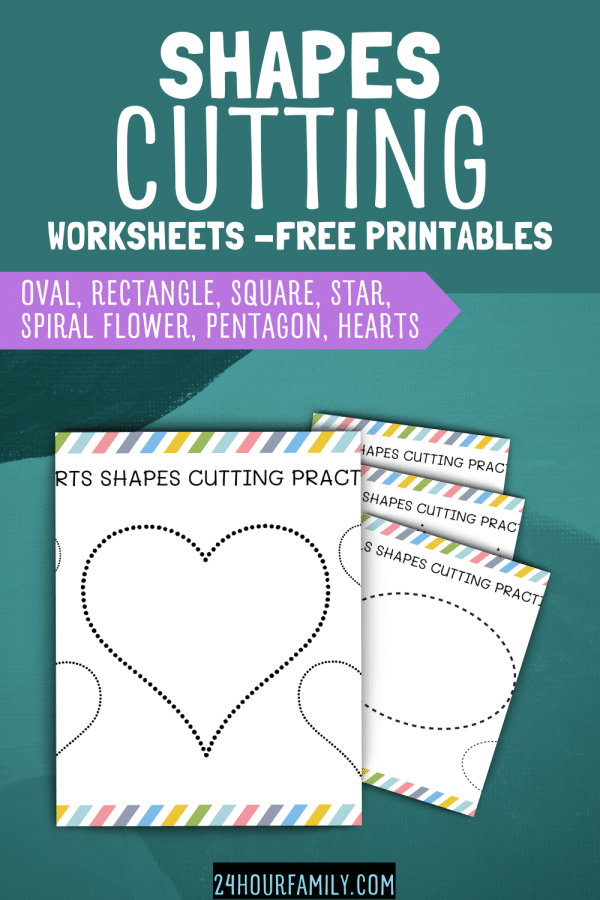
What Kids Practice With These Worksheets
Cutting along a printed line takes a combination of skills working together at once.
Kids practice fine motor control in their cutting hand, bilateral coordination as they use one hand to steady the paper while the other cuts, and hand-eye coordination as they track the line and adjust their angle.
The repetition of naming each shape as it is cut also reinforces early shape recognition and vocabulary.
The 18 Shapes Included
Circle
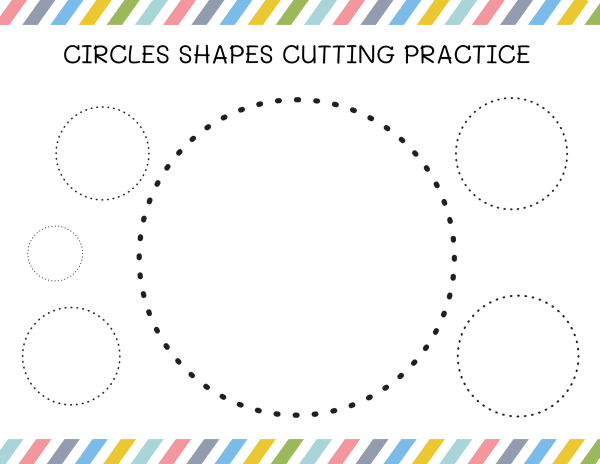
The circle is a good early shape since it only requires a single continuous curved cut with no corners to navigate or straight lines to keep steady.
Triangles
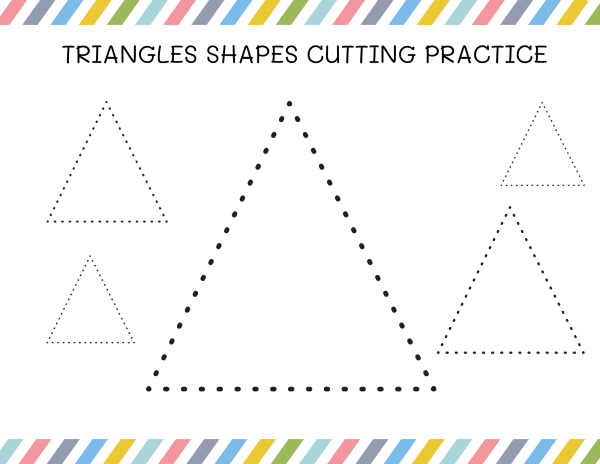
With three sides and three sharper corners than a square, the triangle takes a bit more precision and is a good next step once straight cuts feel comfortable.
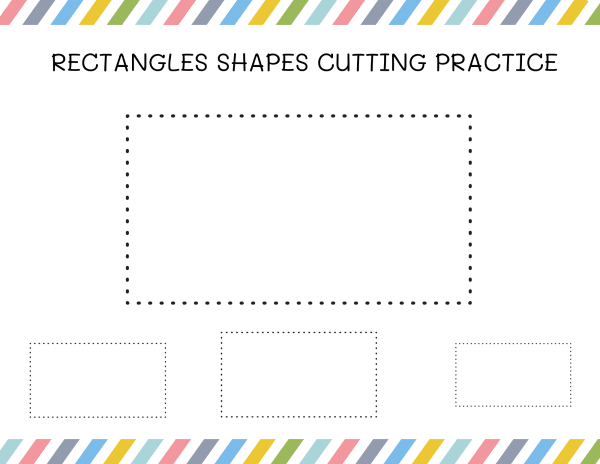
Rectangle
The rectangle builds on the square with two pairs of unequal sides, which is good practice for noticing that not every four-sided shape is cut the same way.


Square
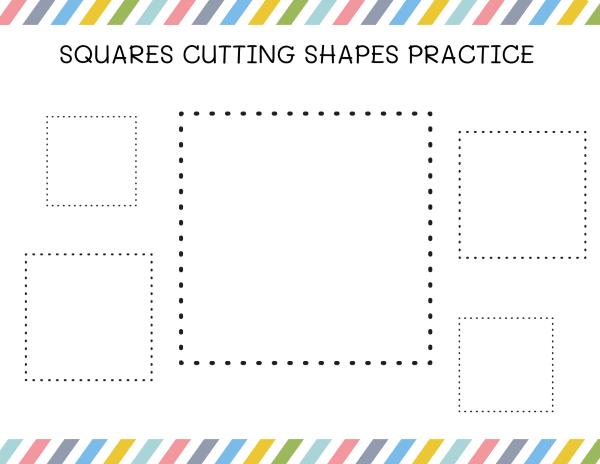
The square has four straight sides and four corners, giving kids practice in stopping, slightly adjusting their grip, and turning the paper at each corner.
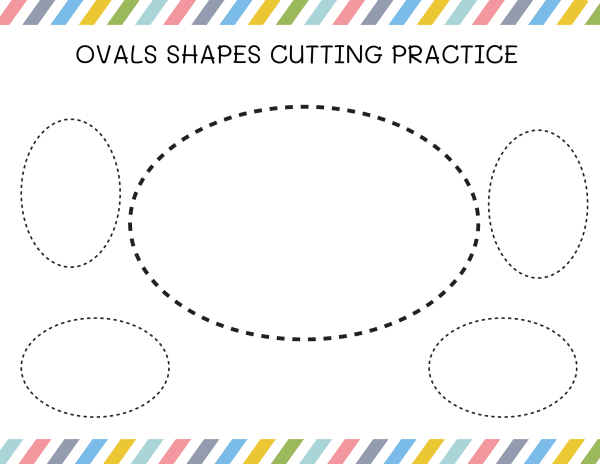
Ovals
The oval takes the circle’s curved cut and stretches it into a longer shape, requiring a steadier, more sustained curve than the circle does.
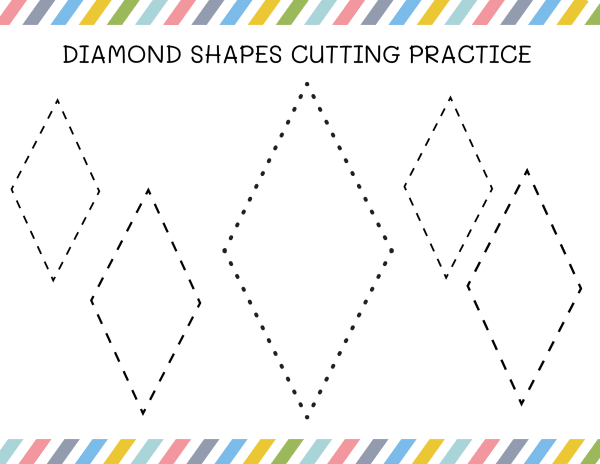
Diamond
The diamond has four sides like a square, but its longer and shorter pairs of sides sit at different angles, which helps kids see that the same number of sides can look and cut very differently.
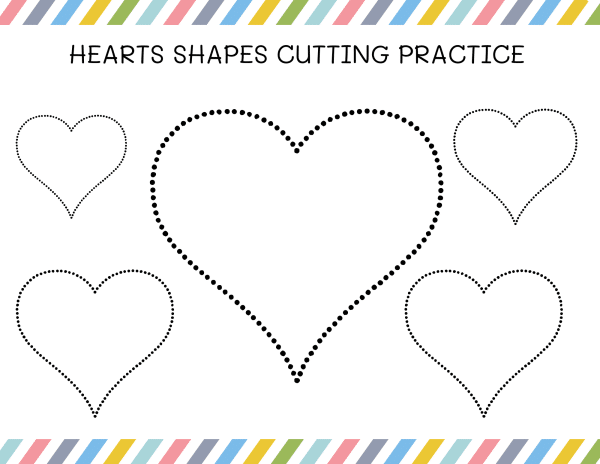
Heart
The heart adds an inward dip at the top, which is one of the more precise cuts on this list and a good one to introduce once basic curves and corners are comfortable.
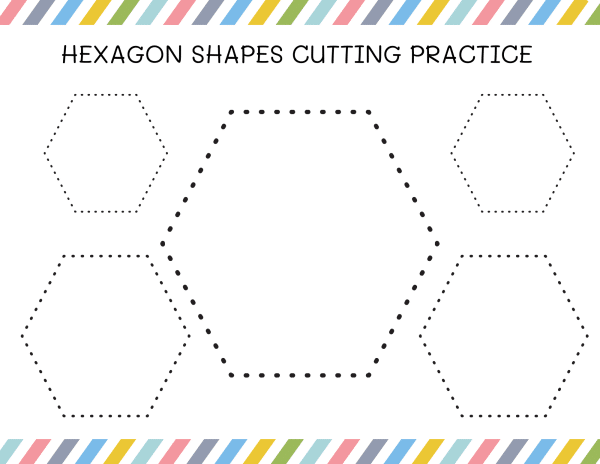
Hexagon
The hexagon’s six sides make it a step up from the pentagon, and it’s a good shape for comparing side counts against the shapes that came before it.
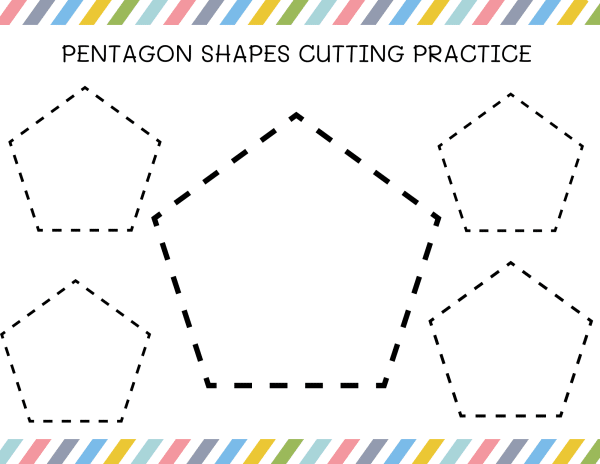
Pentagon
The five-sided pentagon is a good bridge between simple shapes and more complex ones, since it’s a natural point to start counting sides out loud while cutting.
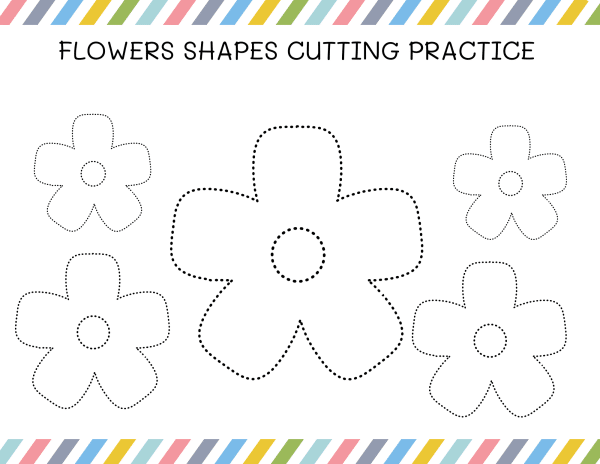
Flower
The flower shape combines several rounded petal edges in a single cut, which is good practice for continuous curved cutting without any straight lines to break up the motion.
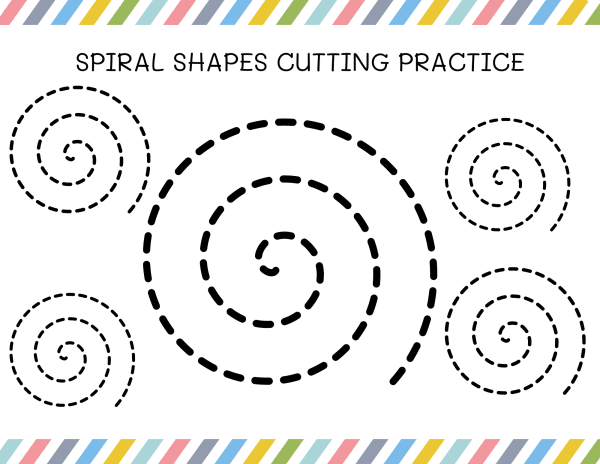
Spiral
The spiral is one of the most advanced shapes included, as it asks kids to follow a curved line that continuously changes direction as they cut toward the center.
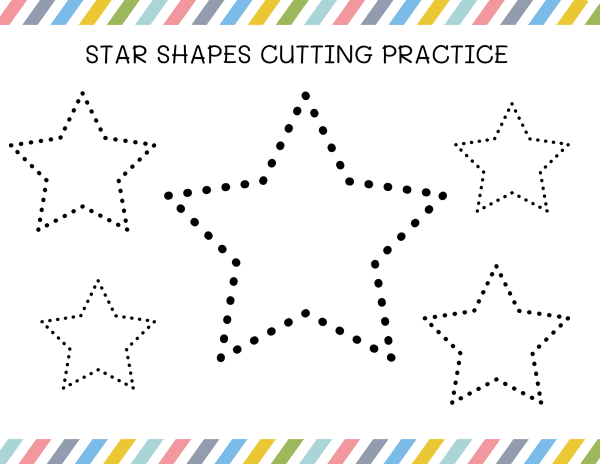
Star
The star’s multiple points require the most precise, controlled cuts on this list, since each point needs a small, deliberate turn rather than a smooth curve or a single corner.
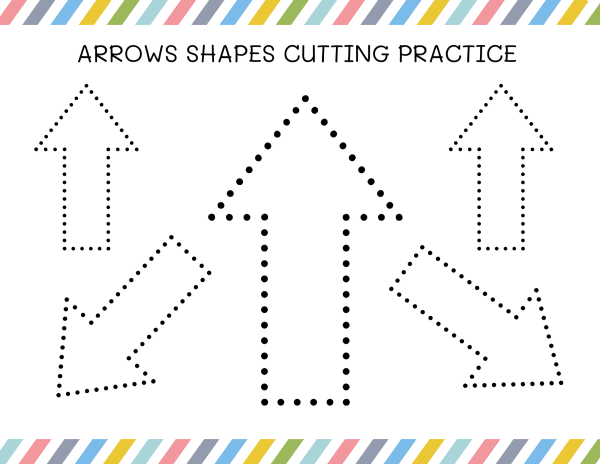
Arrow
The arrow combines straight edges with an angled point, a useful shape for practicing sharp directional changes mid-cut.
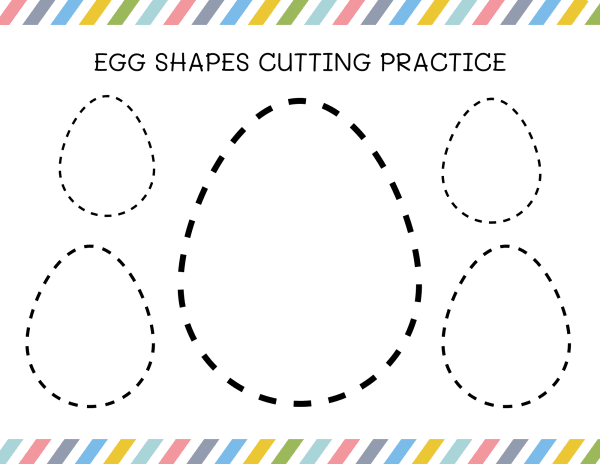
Egg
The egg shape is similar to an oval but slightly asymmetrical, narrower at one end, which takes a bit more attention to the changing curve than a symmetrical oval does.
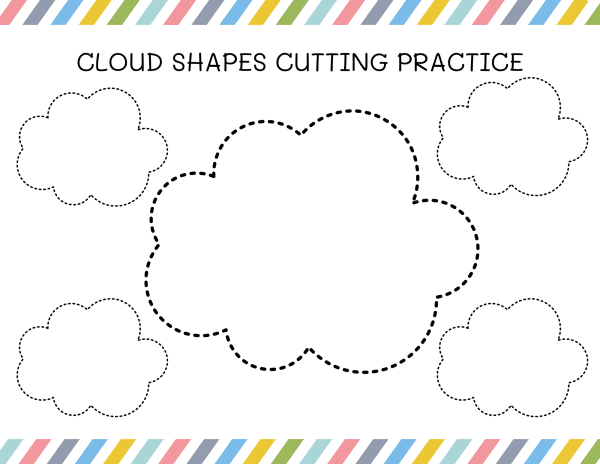
Cloud
The cloud-shaped string connects several small, rounded bumps in a row, giving kids repeated practice with small curved cuts rather than a single long curve.
Zartores Montessori Toys for 1 2 3 Year Old Boys Girls Gifts, Wooden Shape Sorter Toys for Ages 2-4, Toddler Learning Toy Puzzles Birthday Gift Ages 1-3LiKee Open Ended Wooden Shape Puzzles (36 Blocks&60 Cards) for Toddlers 3+ Years Old, Montessori Development Toys Preschool Education Activity Travel Toy Board Games for Kids 4-8 YrsShape Puzzles Wooden Puzzles for Toddlers, Peg Puzzle Educational Shape Sorter Toys Wooden Shape Board Puzzles, Preschool Learning Educational Toy for Baby Girls BoysMelissa & Doug Shape Sorting Cube – Classic Wooden Toy With 12 ShapesGushu 1500Pcs Foam Stickers Foam Shapes Stickers for Kids,10 Colors Self Adhesive Craft Supplies Geometric Stickers with Googly Eyes for Preschool Craft DIY Program (Circle, Square, Triangle, Star)Odoorgames 60 Pieces 3D Shapes for Teaching – Geometric Solids for Kids,Light Table Manipulatives,Translucent Toy for Light Table


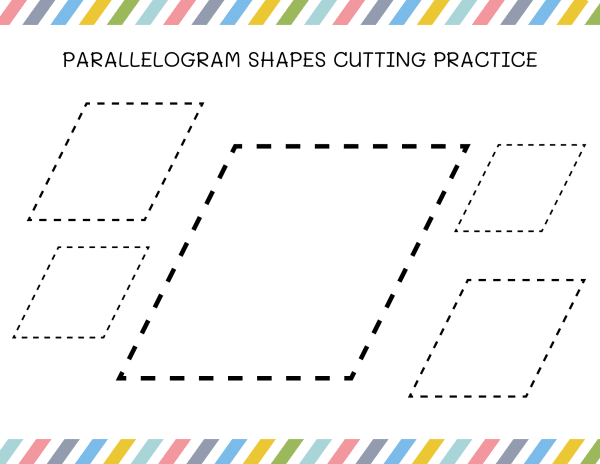
Parallelogram
The parallelogram’s slanted sides make it one of the trickier shapes on this list, since kids have to angle their cuts consistently rather than cutting straight up and down or side to side.
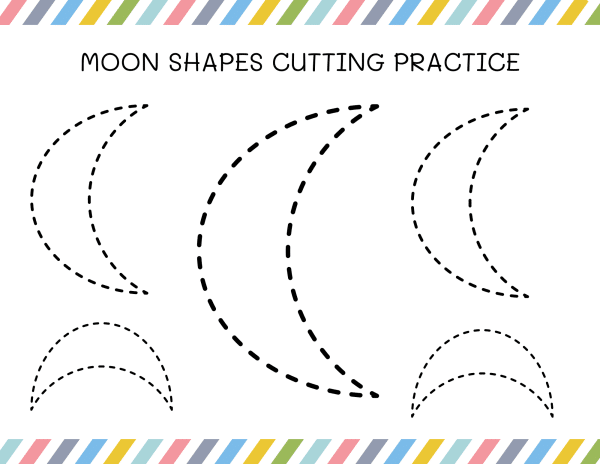
Moon
The crescent moon shape has two curved edges that meet at two thin points, requiring more precision at the tips than a full circle or oval.
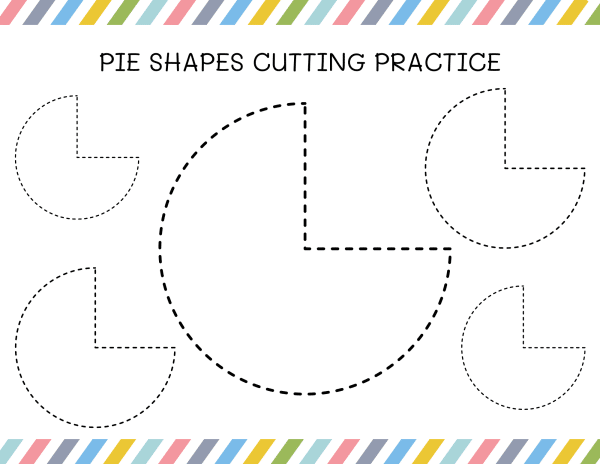
Pie
The pie shape (a circle with a wedge cut out) combines a curved outer edge with two straight sides that meet at a point, blending the skills of the circle and the triangle into one cut.
Tips to Maximize Learning
Always supervise cutting practice, especially the first few times a child uses scissors, and stop for a break if their grip starts to tire.
Work through the shapes roughly in order of difficulty, starting with straight-edged shapes and saving the star, spiral, and parallelogram for once basic cuts feel confident.
Let kids glue their finished cut-out shapes onto a blank sheet of paper afterward to build a simple collage, which reinforces the idea that a whole picture can be made from smaller pieces.
Mix in shape tracing or playdough shape mats alongside the cutting worksheets for variety, so scissor practice isn’t the only shape activity in the rotation.
These cutting-shapes worksheets give kids a full, gradual path to stronger scissor skills, moving from simple straight and curved cuts to more advanced shapes as their control improves. Print the full set once, and you’ll have scissor practice ready to pull out anytime.

Thank you for sharing