
Build a Plant Cell Cut and Paste Worksheets
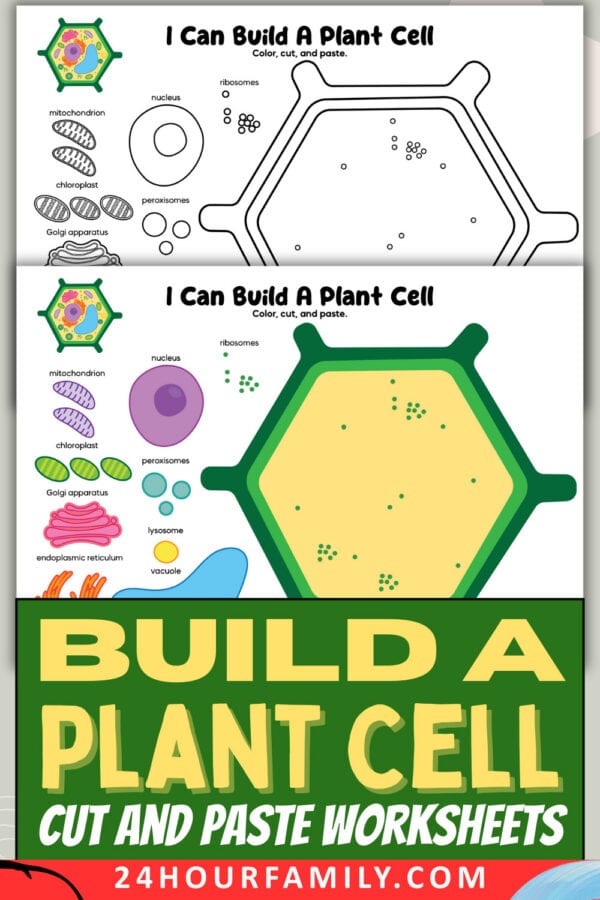
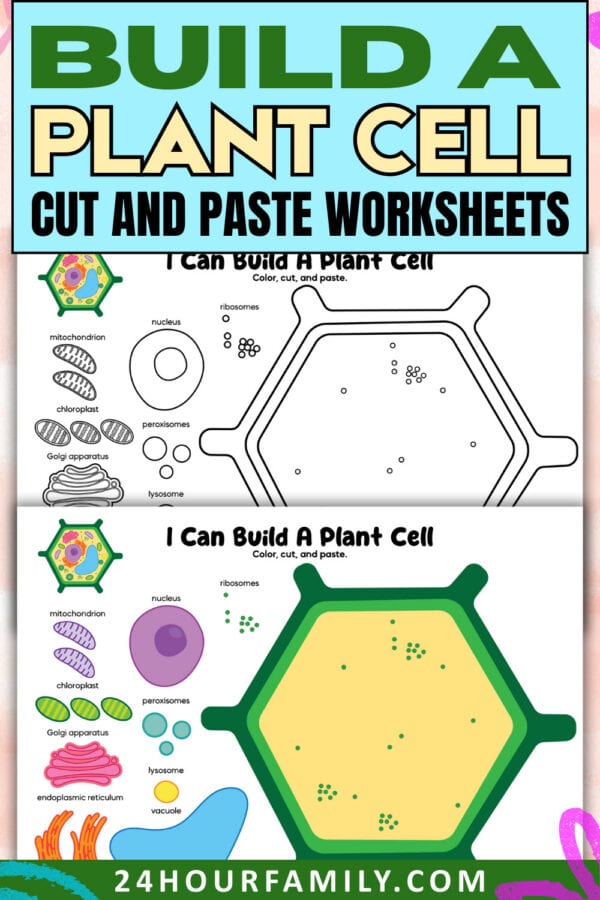
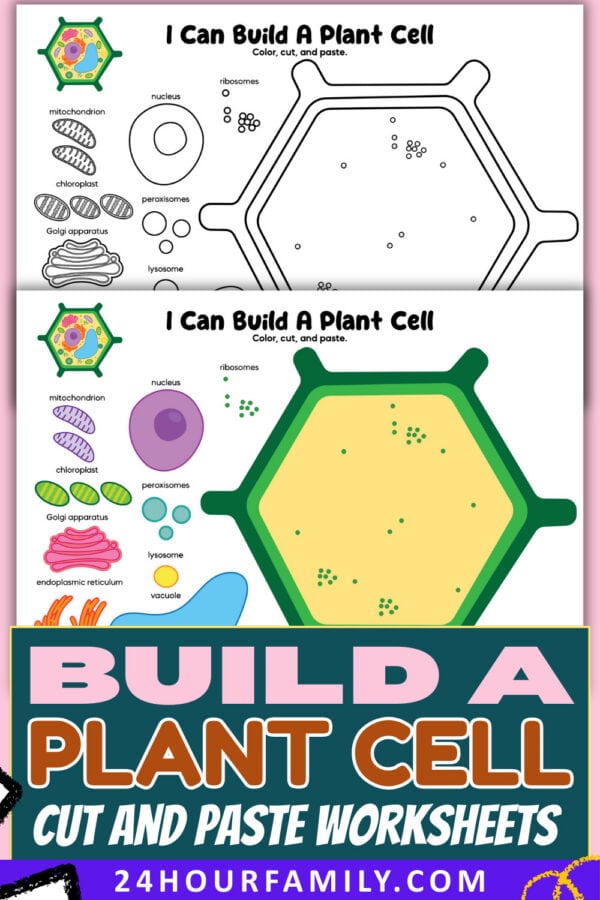
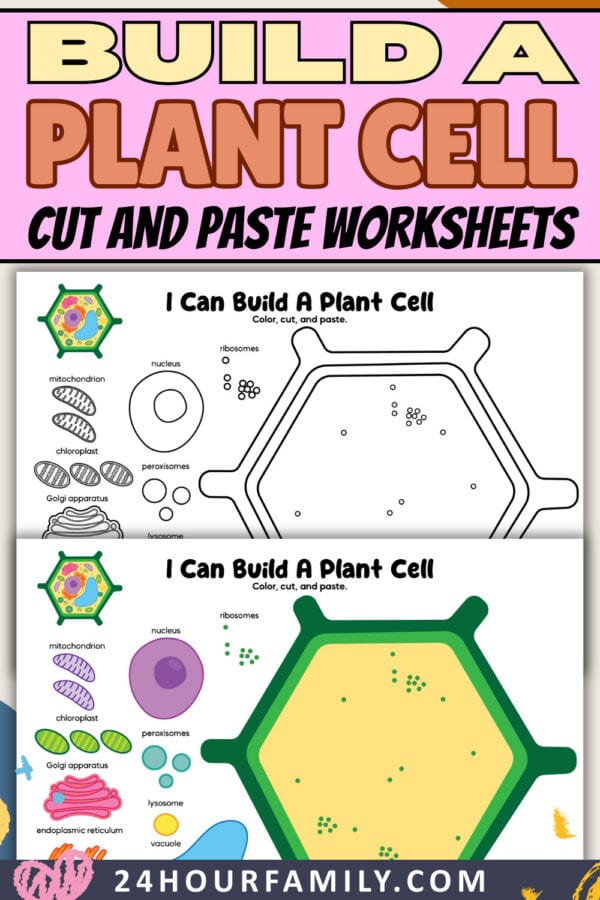
These build-a-plant-cell cut-and-paste worksheets turn a complex biology lesson into a clear, hands-on activity students can see and understand. Instead of only reading about plant cell organelles, students color, cut, assemble, and label each part of the cell to create their own visual model.
This printable plant cell activity helps reinforce the functions and locations of the cell wall, cell membrane, nucleus, chloroplasts, vacuole, cytoplasm, and other important organelles. The combination of coloring, cutting, gluing, and labeling supports visual learning, fine motor practice, and retention of science vocabulary.
Use these plant cell worksheets for a homeschool biology lesson, a classroom science center, a review activity, an interactive notebook, or middle school.
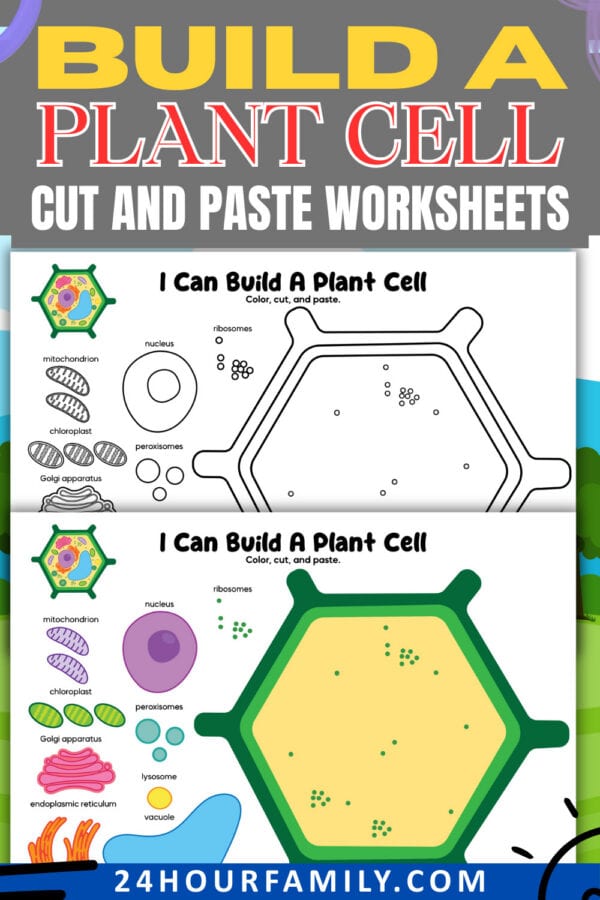
Build a Plant Cell: Cut and Paste Worksheets
A plant cell worksheet that includes cut-and-paste elements gives students a step-by-step way to understand the structure and function of plant cells. Rather than staring at a complicated cell diagram, they break it down piece by piece.
Each organelle gets its own moment of attention. Each part has a purpose. Each label means something.
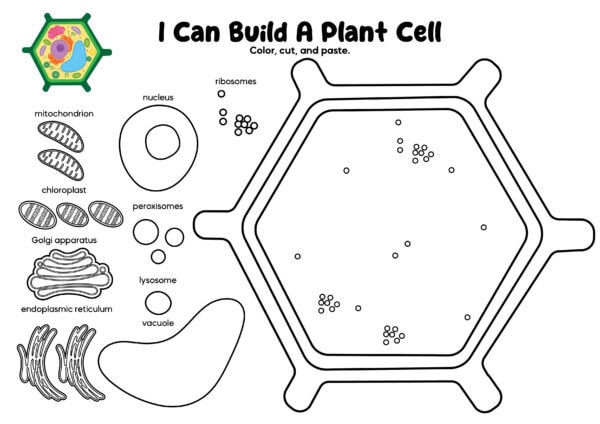
When students build a plant cell this way, they slow down enough to really notice the details. They see the thick cell wall on the outside.
They place the cell membrane just inside it. They add the nucleus, vacuole, chloroplast, and mitochondrion one at a time. Suddenly, the diagram isn’t overwhelming anymore.
This post may contain affiliate links. As an Amazon Associate and a participant in other affiliate programs, I earn a commission on qualifying purchases. Read our disclosure policy here.
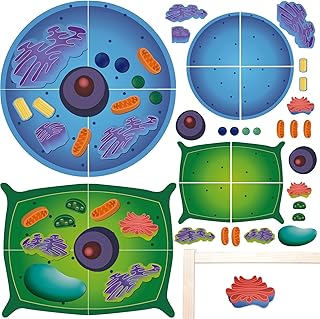
Learning Resources Cross-Section Plant Cell Model, Plant Anatomy, Science Classroom Accessories, 2 Foam Pieces Animal and Plant Cell Anatomy Model, Soft Felt Toy, Early Cell Biology and Life Science STEM Toys, Classroom Teaching Aid, Educational Learning Activities STEM Birthday Toys for Kids 6+3D Printed Plant and Animal Cell Models, Educational STEM Learning Kit2 Set Magnetic Animal and Plant Cell Anatomy Model Clearly Labeled Animal Cell Model Educational Science Kits for Biology Anatomy and Science Projects Classroom Learning Teaching AidMIXC 10 Packs Seed Starter Tray Seed Starter Kit with Humidity Dome (120 Cells Total Tray) Seed Starting Trays Plant Starter Kit and Base Mini Greenhouse Germination Kit for Seeds Growing StartingPlant Cell Anatomy Coloring Book: Plant Cell Anatomy Coloring Workbook for Kids Boys Girls. New Surprising Magnificent Learning Structure For Anatomy … & Teachers. Plant Cell Coloring Workbook.




Breaking Down the Parts of a Plant Cell
One of the biggest challenges in teaching plant cell structure is vocabulary. Words like cytoplasm, Golgi apparatus, and rough endoplasmic reticulum can feel intimidating. A hands-on worksheet helps make those terms simpler.
Here are some of the key cell parts students identify as they complete the project:
- Cell wall – The sturdy outer layer that gives a plant cell its shape and support.
- Cell membrane – The thin layer just inside the cell wall that regulates what moves in and out of the cell.
- Nucleus – The part of the cell that directs and manages its activities.
- Vacuole – The large storage sac in the center of the cell, commonly referred to as the central vacuole.
- Chloroplast – The organelle inside a plant cell where photosynthesis happens, helping the plant produce its own food from sunlight.
- Mitochondrion – The organelle responsible for generating energy that powers the cell’s activities.
- Golgi apparatus – The cell’s sorting and delivery center, where materials are processed and sent to their next destination.
- Rough endoplasmic reticulum – A network within the cell that produces and transports proteins to where they’re needed.
- Cytoplasm – The jelly-like material inside the cell that surrounds and supports all the organelles.
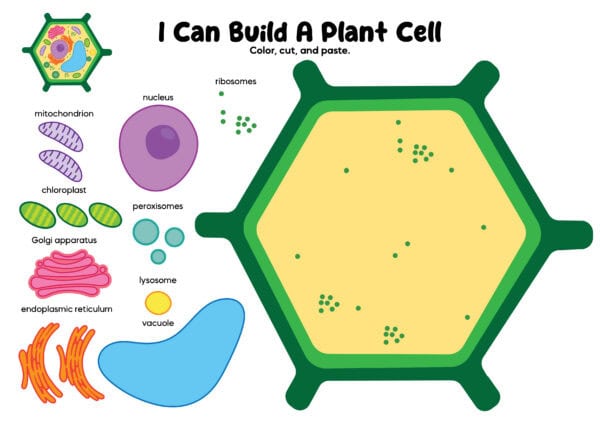
When students cut and paste each organelle into the correct place, they begin to visualize how the structure fits together. That visual connection is key in life science.
Check Out: 100+ Fun and Educational Kids Printables (Free Learning Activities)
How to Use This: Build a Plant Cell, Cut and Paste Worksheets
This resource is flexible enough to fit into almost any classroom setting. Here are a few ways teachers use it:
As an Introduction Lesson
Start your biology lesson by having students explore the cell diagram. Go over each organelle and explain what it does.
After that, have students cut out the pieces and glue them in place. It instantly turns the lesson into something hands-on and much more engaging.
As a Review Activity
After you’ve covered plant cell content, use the worksheet as a review. Ask students to label each part from memory before checking their work. This is a great way to prepare for a quiz or assessment.
As a Notebook Craft
Many teachers use this as a science notebook insert. Students assemble the model on a page and add vocabulary definitions around it. It becomes a built-in study guide they can refer back to all year.
As a Small Group Resource
If some students need extra support, this hands-on approach makes a big difference. Instead of memorizing a list, they identify each organelle through matching and placement. That extra repetition strengthens understanding.
Supporting Different Grade Levels
One of the best things about this build-a-plant-cell cut-and-paste worksheet is its adaptability across grade levels.
In a lower grade, you might focus on identifying the major parts like the nucleus, cell wall, and chloroplast. In a higher grade, you can go deeper into structure and function.
You can even challenge learners to write the definition of each organelle in their own words. That pushes them beyond simple matching and into real comprehension.
For middle school grade biology, this can be part of a larger organizer in which students compare plant and animal cell diagrams. For upper elementary grade classrooms, it can serve as a foundational introduction to life science vocabulary.
Cut and Paste Science Worksheets
There’s a reason cut-and-paste activities have been used in classrooms for years. When students physically build something, they’re more likely to remember it.
This isn’t just a craft, it’s an interactive learning experience.
Science can sometimes feel abstract, especially when discussing microscopic structures. A clear diagram paired with coloring, cutting, and gluing helps learners visualize what they can’t see.
They aren’t just hearing about the membrane or the Golgi apparatus — they’re placing it themselves.
And for many students, that hands-on element is the key to understanding.
As a teacher, you’re always looking for resources that are easy to use and actually effective. This build-a-plant-cell cut-and-paste worksheet is designed to be straightforward. You download the pdf file, print the page, and you’re ready to go.
There’s no complicated prep. No special materials. Just paper, scissors, glue, and maybe some crayons if you want to add color.
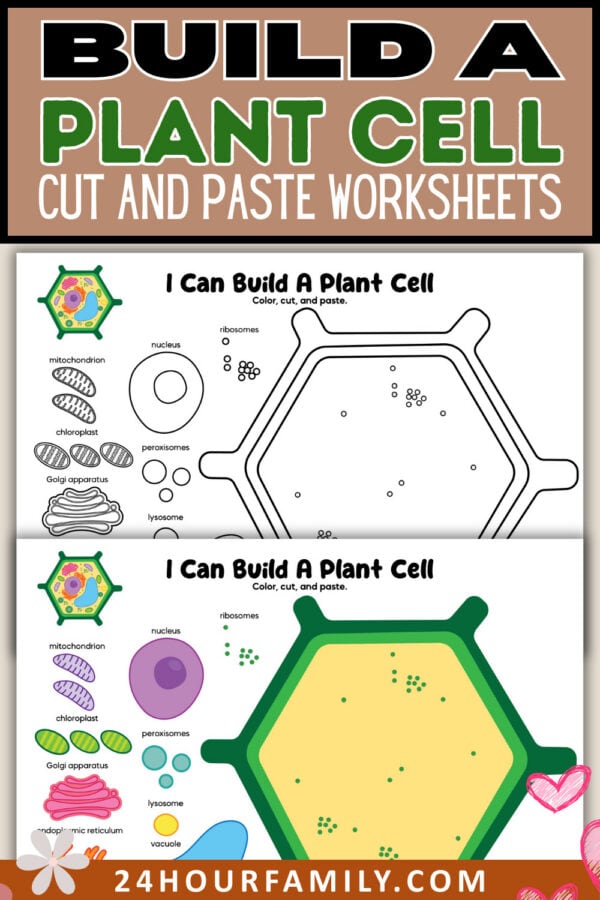
Because it’s a printable resource, you can use it year after year. It works for whole-group instruction, small group work, or even independent study.
Helping Students Build Confidence in Biology
For some students, biology feels overwhelming at first. Long vocabulary lists and detailed diagrams can make them anxious. A structured worksheet breaks that challenge into manageable steps.
First, identify the part.
Then cut it out.
Then paste it in the correct spot.
Then label it.
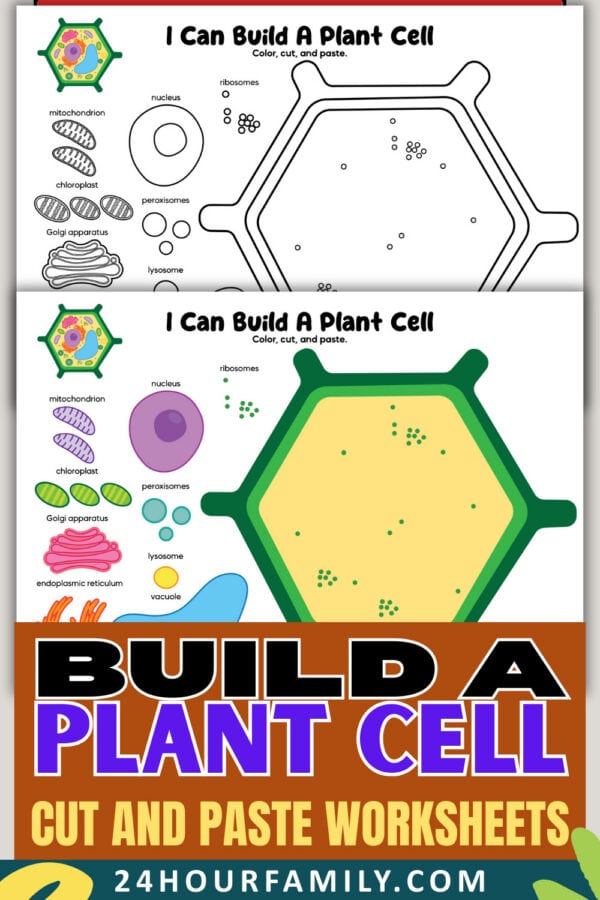
That simple sequence builds confidence. Each small success adds up. By the time they finish, students have a complete plant cell model that they created themselves.
And that sense of ownership matters.
Trees, Leaves, Flowers and Seeds: A Visual Encyclopedia of the Plant Kingdom (DK Our World in Pictures)Seed to Plant (National Geographic Kids Readers, Level 1)STEM Starters for Kids Botany Activity Book: Packed with Activities and Botany Facts!


Free Science Worksheets
Once students complete the worksheet, you can extend the lesson in a few easy ways:
- Have them explain the function of one organelle in their own words.
- Have them look at the plant cell and animal cell side by side and point out how they are similar and different.
- Turn the finished diagram into a quick oral presentation.
- Use it as a study guide before a test.
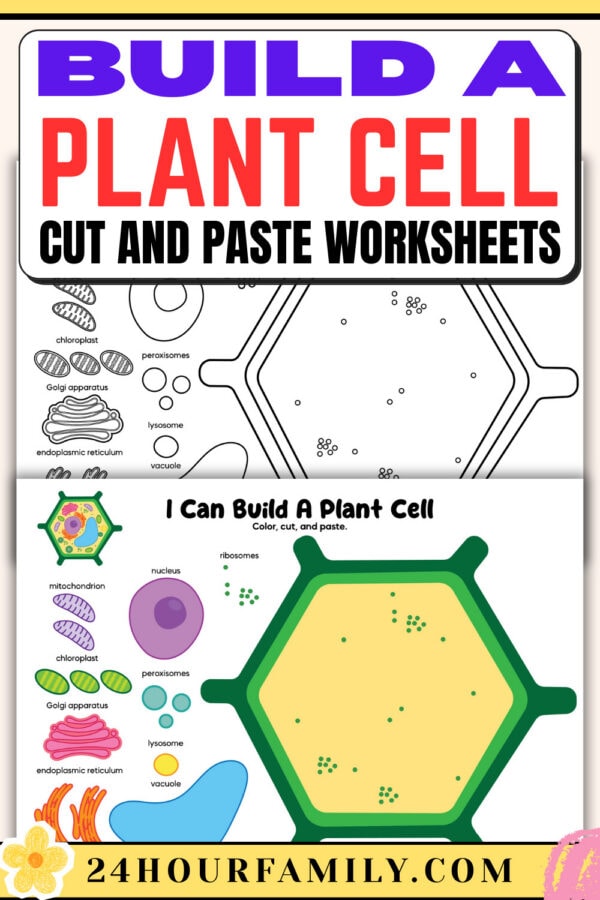
You could even turn it into a quick matching game in which students pair vocabulary words with their definitions.
More Learning Worksheets for Kids
If you enjoyed working on these Build a Plant Cell Cut-and-Paste Worksheets, these engaging worksheet sets offer more hands-on ways for kids to practice important early learning skills.
- Color Sorting Worksheets – A bright and interactive set that helps kids recognize and sort different colors.
- Five Senses Sorting Worksheets – A fun activity that introduces kids to the five senses through simple sorting tasks.
- Zoo Animals Sorting Worksheets – A playful worksheet set where kids sort and learn about different zoo animals.
- Alphabet Trace and Color Worksheets – A helpful set designed to build early writing skills while adding creative coloring.
- Animal Cell Cut and Paste Worksheets
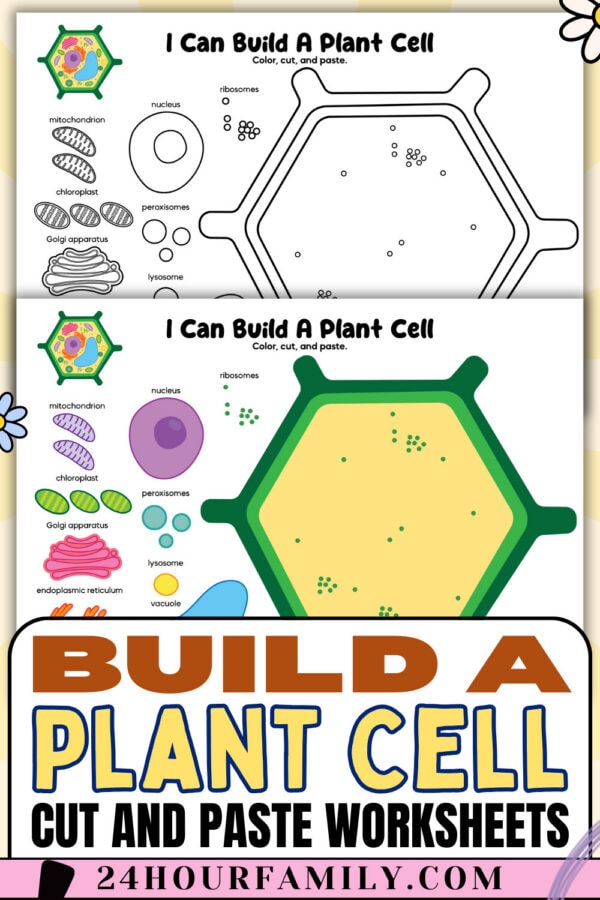
At the end of the day, teaching plant cell structure doesn’t have to feel intimidating. With the right worksheet, students can explore biology in a way that feels approachable and even fun.
This build-a-plant-cell cut-and-paste worksheet gives them a clear visual guide. It guides them in recognizing and naming each organelle.
It supports vocabulary development. It helps students see the differences and similarities more clearly. And it turns a complicated diagram into something they can build step by step.
