
Build an Animal Cell Cut and Paste Worksheets
These build-an-animal-cell cut-and-paste worksheets help students understand cell structure through a hands-on activity. Students color, cut, assemble, and label the organelles, creating a visual model they can use as they learn how each part of an animal cell works.
The activity is especially helpful for visual and tactile learners who may struggle to understand a cell from a textbook diagram alone. It can be used during a classroom or homeschool science lesson, as an interactive notebook activity, or as a review before comparing animal and plant cells.

Placing each piece in the correct position helps visual and tactile learners form stronger connections than they might from studying a textbook diagram alone.
Use these animal cell worksheets for a homeschool science lesson, a classroom biology unit, a review assignment, or a middle school life science activity.
The completed cell model also provides students with a helpful visual reference for reviewing organelles and comparing animal cells with plant cells.
Build an Animal Cell: Cut and Paste Worksheets
An animal cell can feel overwhelming at first. There are so many parts to remember—each organelle with its own job, name, and structure and function.
But when you break it down into a cut-and-paste model, everything becomes clearer.

Students color, cut, and glue each organelle into a large cell diagram. As they place the nucleus, mitochondrion, ribosome, and other parts, they begin to see how all the cell structures fit together.
The worksheet becomes more than paper—it becomes a model with organelles that students physically assemble.
This post may contain affiliate links. As an Amazon Associate and a participant in other affiliate programs, I earn a commission on qualifying purchases. Read our disclosure policy here.
Learning Resources Cross-Section Animal Cell Model – STEM Biology Gifts, Molecular Science Activities , Microbiology ,Classroom and Teacher Must Haves, Homeschool Materials, Model Kit Tools GIANT MICROBES Animal Cell Plush, Animal Cell Model, Biology Model, Biology Gifts, Science Classroom Decor, Science Teacher Gifts, Cell Biology, Biology Stuffed AnimalsAnimal and Plant Cell Anatomy Model, Soft Felt Toy, Early Cell Biology and Life Science STEM Toys, Classroom Teaching Aid, Educational Learning Activities STEM Birthday Toys for Kids 6+Animal Cells (Genetics)Simple Animal Cell 3-D Paper Model Making Kit – Individual Student Edition (17-7729)


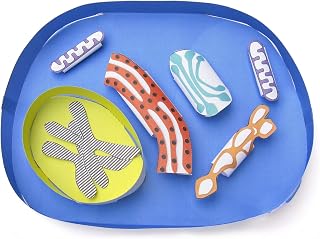
Inside the Build an Animal Cell Cut and Paste Worksheets
A typical printable set includes:
- A large animal cell base with a visible membrane and cytoplasm
- Individual organelle pieces to cut and glue
- Labels for each part
- A colored and black-and-white worksheet.

This flexibility makes the student worksheet adaptable to your grade level.
Exploring the Organelles
One of the best parts of this organelle activity is how it highlights each organelle individually. Students don’t just memorize terms; they interact with each one.
Common parts included:
- Nucleus – The control center of the animal cell, protected by the nuclear membrane. Inside, students can also identify and label the nucleolus.
- Mitochondrion – The structure responsible for generating energy within the cell.
- Ribosome – A small cellular structure responsible for producing proteins.
- Endoplasmic Reticulum – Often divided into rough endoplasmic reticulum (RER) and smooth endoplasmic reticulum (SER), so students can clearly distinguish their functions.
- Golgi apparatus – Processes, organizes, and prepares proteins for transport throughout the cell.
- Vacuole – Stores materials.
- Lysosome – Breaks down waste.
- Centrioles – Help with cell division.
- Cytoskeleton – Provides support inside the cytoplasm.

As students color and place each organelle, they begin matching functions to structures. These matching functions exercises reinforce key concepts in a memorable way.
Comparing Plant and Animal Cells
Once students complete the animal cell worksheet, it’s a natural transition into plant vs discussions. You can introduce a plant cell diagram and have students compare plant and animal features side by side.
This is where they differentiate important differences:
- The cell wall (present in plant cells, absent in animal cells)
- The chloroplast, which supports photosynthesis in a plant cell
- A larger vacuole in plant and animal comparisons
When comparing plant structures visually, students clearly see how the membrane differs from the cell wall and how chloroplasts change the plant cell’s function.
This comparison of plant topics strengthens understanding of both cell types.
Perfect for Interactive Science Notebooks
If you use interactive science notebooks, this worksheet fits perfectly. You can use it for an interactive notebook – have your students glue the finished model inside and write reflections next to it.
It works beautifully in interactive science notebooks as:
- Morning work
- Bell ringers
- A science station
- A quick assessment tool
- An exit ticket
- A homework assignment

You can also use this activity as part of a larger lesson on learning about cells, helping reinforce key concepts in a visual format.
Check Out: 100+ Fun and Educational Kids Printables (Free Learning Activities)
Free Science Worksheets
Depending on your grade, you can adjust how detailed the worksheet becomes.
For younger students:
- Focus on major cellular organelles such as the nucleus, the membrane, the mitochondrion, and the cytoplasm.
- Keep explanations simple.
- Use a word bank based on the level of readiness.

For upper elementary and middle school students:
- Add a more detailed explanation of the rough and smooth endoplasmic reticula.
- Include the cytoskeleton and centrioles.
- Require written explanations of structure and function.
You can even extend the discussion to cell structures not visible in simple diagrams and challenge students to add more detail.
This isn’t just a worksheet; it feels like a science craft. Students color, assemble, and build a model of a real animal cell using organelles.
For students who don’t write long notes comfortably, this visual approach helps tremendously. It allows them to process vocabulary without overwhelming written output.

Because students color each organelle, the learning feels engaging rather than repetitive. That activity is awesome to include when attention starts fading, but you still need meaningful work.
Ways to Extend the Activity
There are so many creative ways to use this worksheet:
- Turn it into file folder activities, thank you for centers.
- Use it as a review activity.
- Transform it into a graphic organizer.
- Create a reference sheet perfect for students to keep in their binder.
- Use it as a supplement to a lesson plan.

You can also use it to introduce an interactive lesson before diving deeper into cell cutout labeling or diagram analysis.
Reinforcing Structure and Function
This animal cell cut and paste worksheet helps reinforce:
- How the membrane protects the cell
- The role of the cytoplasm as the internal environment
- The connection between the ribosome and the rough e.r
- How the Golgi apparatus packages proteins
- Why the lysosome is important for cleanup
- How the nucleus directs activities

Students also learn about the nuclear membrane and how it protects genetic material. When they physically place these parts inside the diagram, it solidifies their understanding.
Because the worksheet is flexible, you can modify it based on your grade level and understanding. Some classes may need simpler matching activities. Others may be ready to explain structure and function in depth.

You can even challenge advanced students to explain how the cell membrane differs from the cell wall or how the chloroplast supports photosynthesis in a plant cell.
The versatility makes it ideal for a wide range of learners.
More Learning Worksheets for Kids
If you enjoyed working on these Build an Animal Cell Cut-and-Paste Worksheets, you’ll find more engaging worksheet sets that offer hands-on ways for kids to practice important early learning skills.
- Space Worksheets for Preschool – A fun collection that introduces young learners to planets, rockets, and space themes.
- Shapes Line Tracing Worksheets – A helpful set that strengthens fine motor skills while kids trace different shapes.
- Alphabet Line Tracing Worksheets – A simple and engaging way for kids to practice letter formation and early writing.
- Weather Line Tracing Worksheets – A themed tracing activity that combines fine motor practice with weather learning.
- Build a Volcano Science Worksheet
- Build a Plant Cell Cut and Paste Worksheet

Build an Animal Cell: Cut-and-Paste Worksheets bring clarity to a topic that often feels complicated. By assembling each organelle, students move beyond memorization and into real comprehension.
Whether you use it as part of interactive science notebooks, as a science station, for formative assessment, or simply as an engaging way to review cell organelles, it helps students truly understand how an animal cell works.
