
20 Free Forgiveness Coloring Pages for Kids
Help children discover what the Bible says about grace, kindness, confession, and forgiving others with these 20 free forgiveness coloring pages.
The collection includes Scripture designs, crosses, peaceful scenes, pictures of people forgiving one another, and faith-based messages about forgiveness. Children can decorate the illustrations during Sunday school, homeschool Bible study, family devotion time, Christian counseling activities, or quiet reflection.
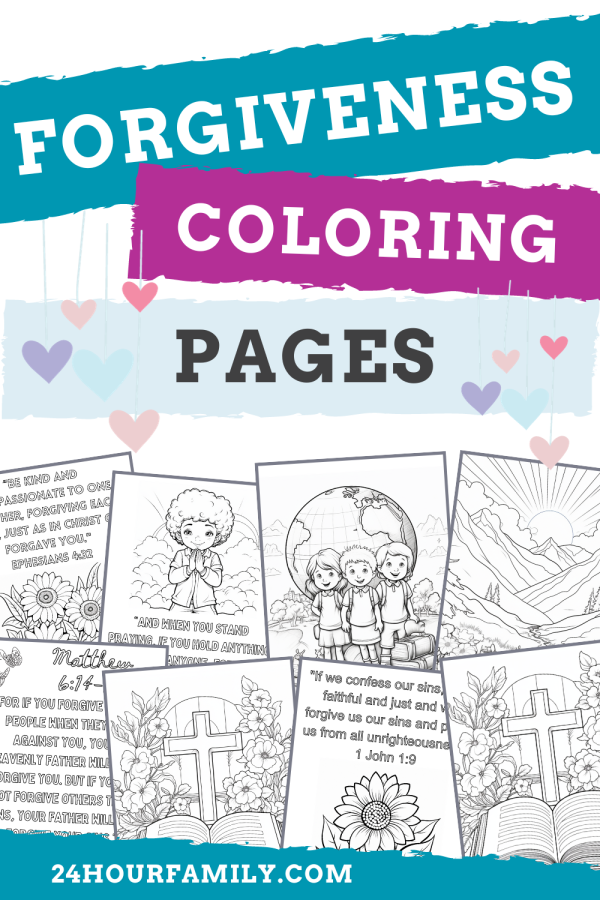
20 Free Forgiveness Coloring Pages for Kids
Several designs feature important passages on forgiveness, including Ephesians 4:32, Matthew 6:14–15, and 1 John 1:9. Other illustrations help children reflect on kindness, mercy, love, and what it means to ask for or extend forgiveness.
The printable PDF is available through the download form at the bottom of this post.
What Is Included in the Forgiveness Coloring Book?
This collection includes 20 black-and-white designs about biblical forgiveness.
The set includes:
- Bible verses about forgiveness
- Ephesians 4:32 designs
- Matthew 6:14–15 designs
- A 1 John 1:9 coloring sheet
- “Forgive, and You Will Be Forgiven” illustrations
- “Love One Another” designs
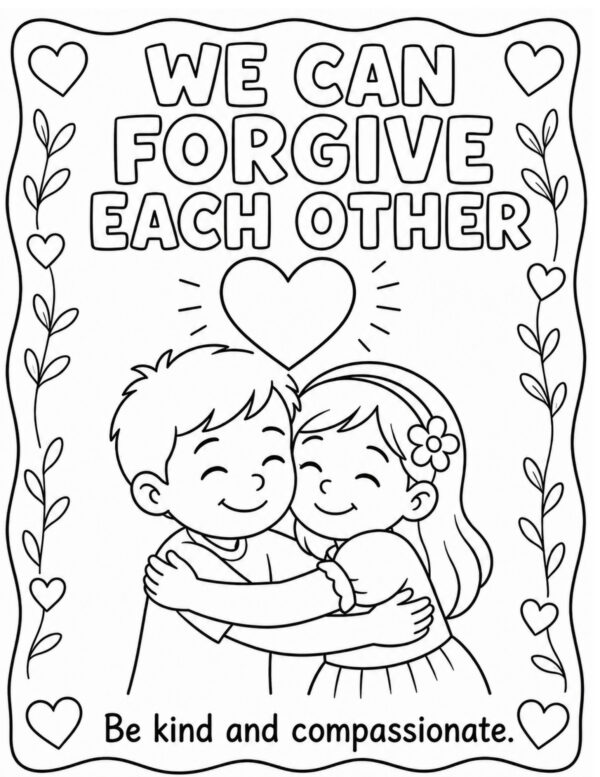
- Pictures of people forgiving each other
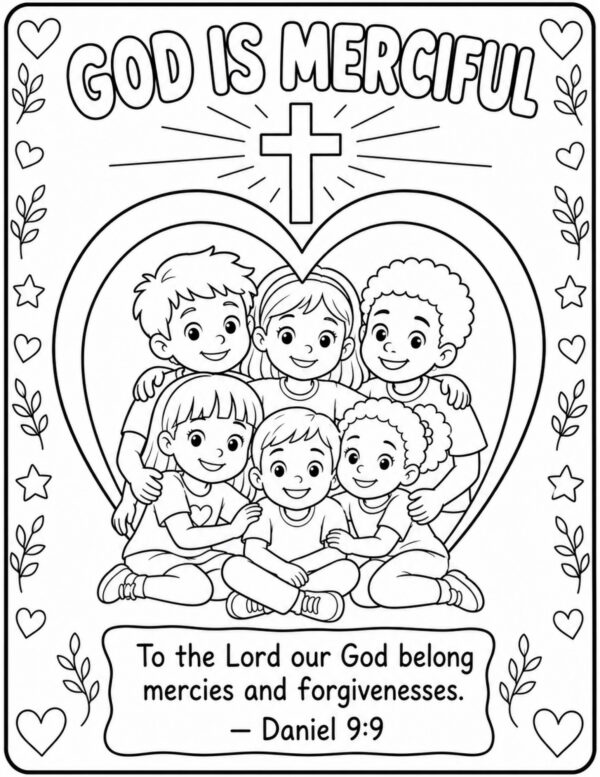
- Christian teachings about grace and mercy
- Forgiveness quote and reflection designs
Some illustrations contain larger, simpler spaces that are easier for young children to decorate. Others have additional detail and are best for older children, teenagers, or adults.
Understanding Forgiveness
Forgiveness means choosing to let go of revenge and refusing to continue holding someone’s offense against them.
Choosing mercy does not require overlooking the pain, excusing wrongdoing, removing appropriate consequences, or restoring trust right away.
Followers of Christ are called to let go of resentment and extend understanding to others, reflecting the grace they have been shown.
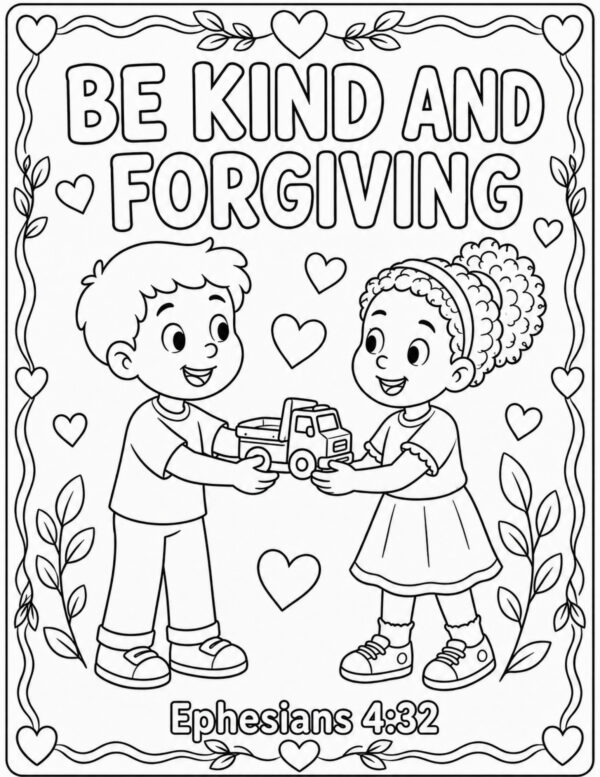
Ephesians 4:32 reminds believers to respond to one another with a gracious and forgiving heart:
“Be kind and compassionate to one another, forgiving each other, just as in Christ God forgave you.”
When discussing this idea with children, explain that forgiving someone does not require them to deny their feelings. They can tell a trusted adult that they are hurt, angry, afraid, or confused as they begin to understand forgiveness.
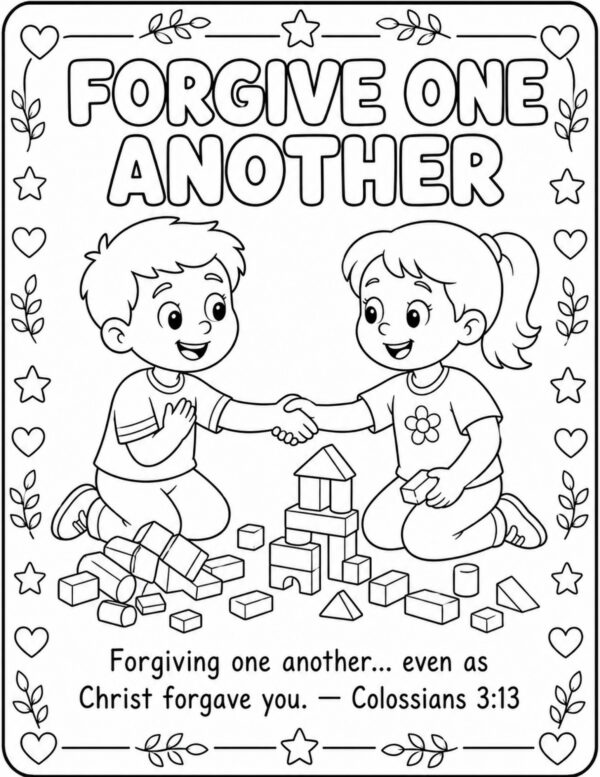
Ephesians 4:32
Encourages young learners to respond to others with compassion and a forgiving heart.
The verse connects three important actions:
- Being kind
- Showing compassion
- Forgiving others
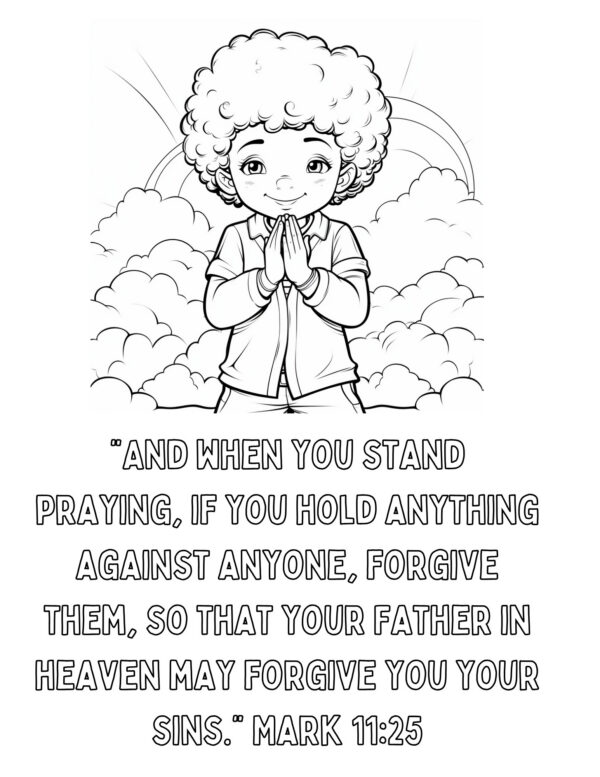
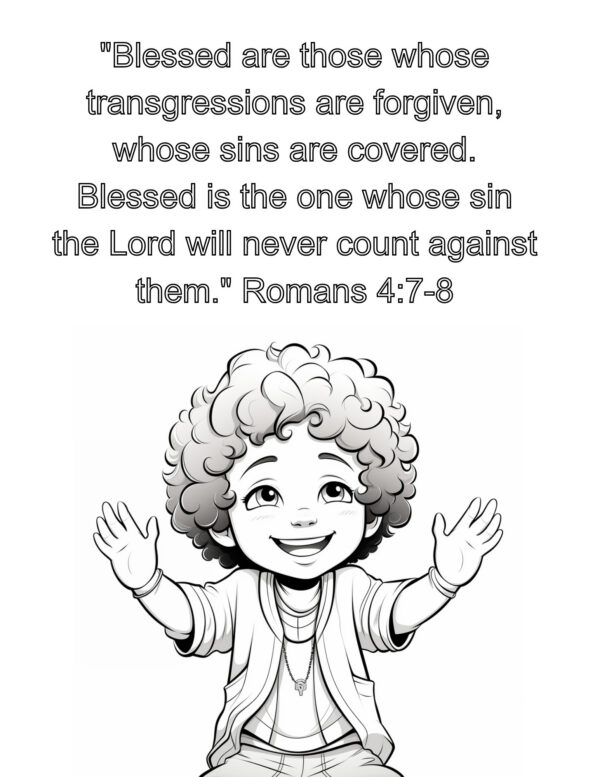
Try the Ephesians 4:32 forgiveness coloring page as a memory-verse activity. Read the verse aloud several times and ask children to circle or point to the words kind, compassionate, and forgiving.
Discuss what each word might look like in everyday situations.
A child might show kindness by including someone in a game. Compassion could mean checking on a friend who is sad. Forgiveness might mean choosing not to seek revenge after someone apologizes for an unkind action.
1 John 1:9 Activity Sheet
First John 1:9 explains how to confess our sins and trust God to forgive and cleanse us.
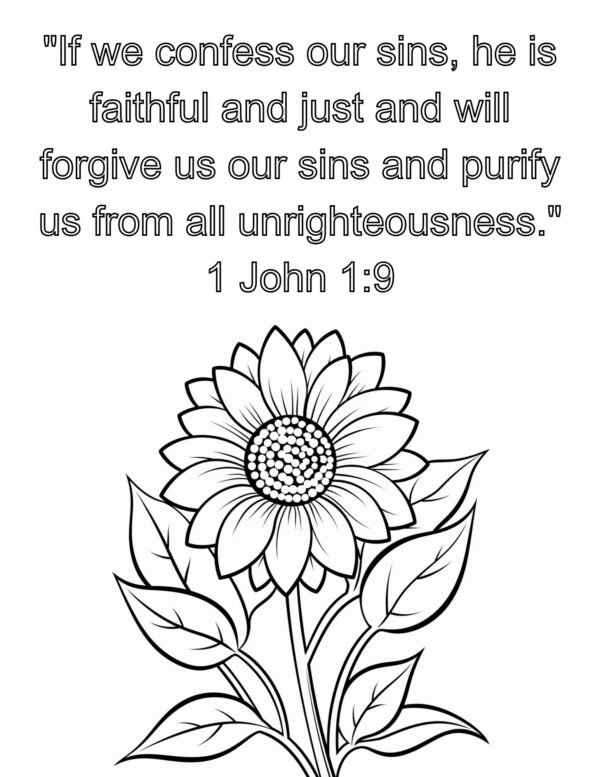
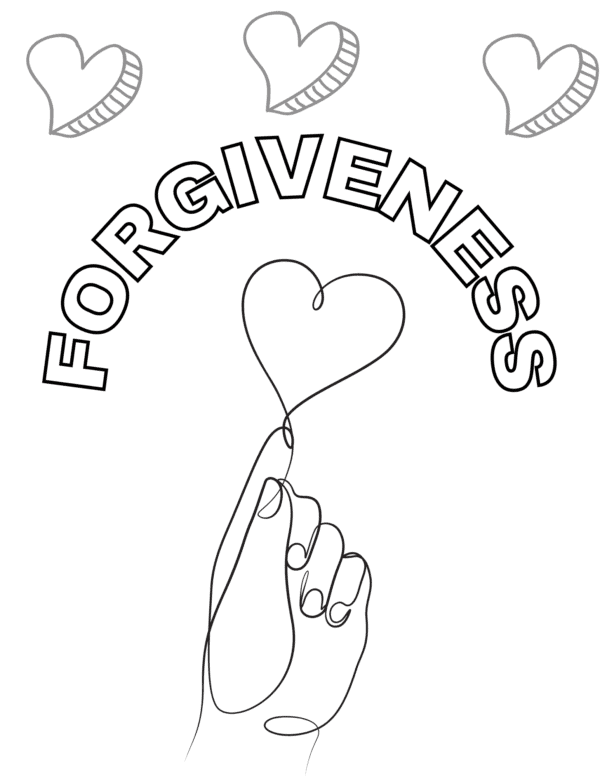
This verse can introduce the difference between confession and merely feeling sorry after being caught. Confession means honestly agreeing that a choice was wrong.
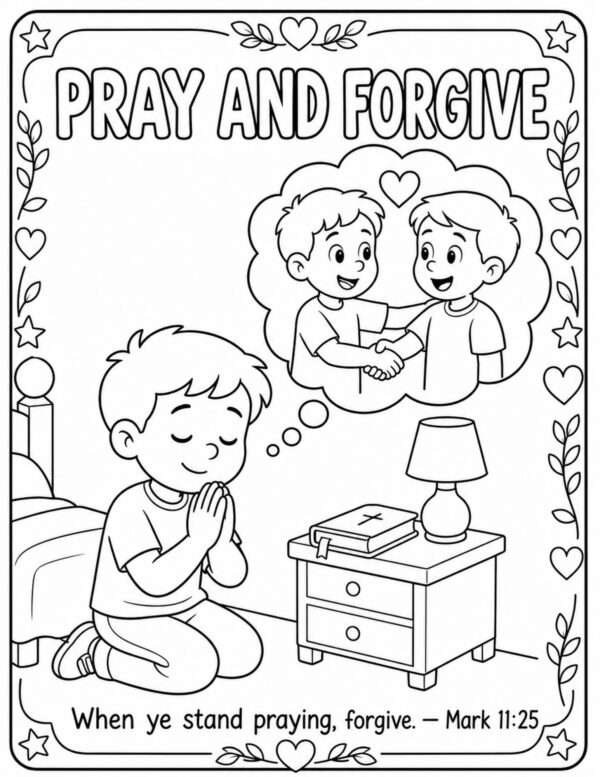
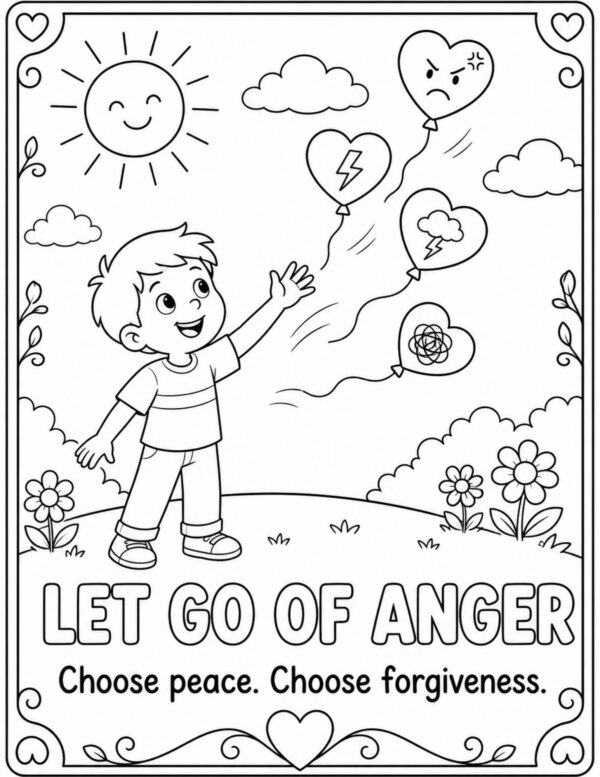
A simple explanation for children is:
When we confess our sins, we tell God the truth about what we have done. He faithfully and fairly offers forgiveness.
Include the activity during a time of prayer. Children do not need to announce private confessions to the class. Instead, give them quiet time to pray or write a private reflection.
Matthew 6:14–15 Scripture Activity
In Matthew 6, Jesus emphasizes the importance of forgiving other people. This teaching follows the Lord’s Prayer, which asks for forgiveness as we forgive our debtors.
Young children may interpret these verses to mean that they must earn forgiveness by behaving perfectly. Explain the passage within the broader message of grace.
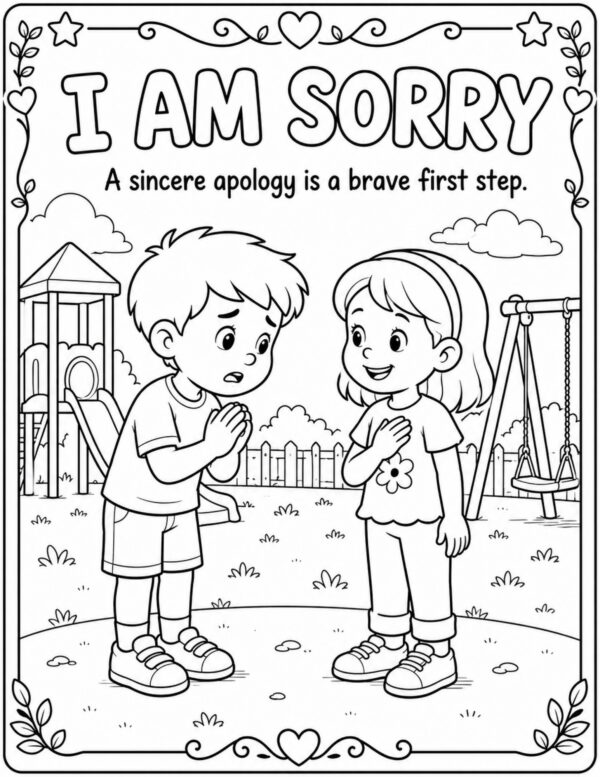
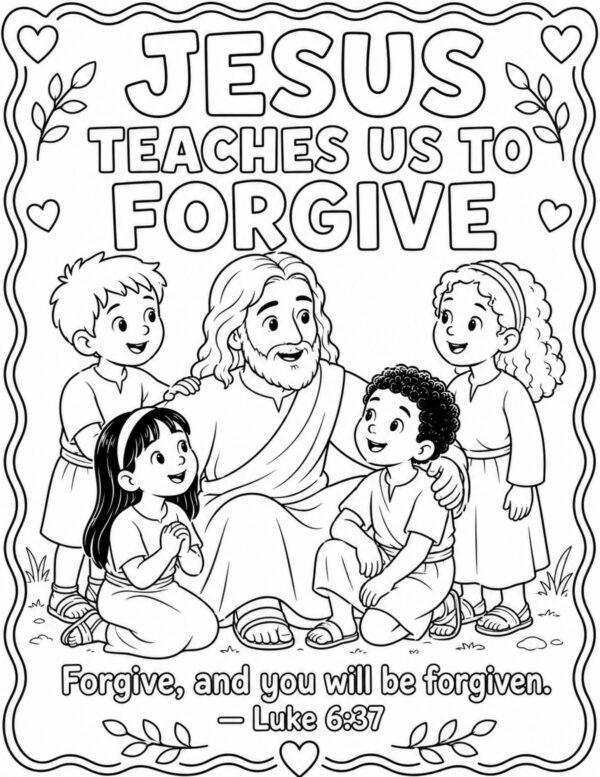
Christians forgive because they have received mercy, not because forgiveness is a way to purchase salvation.
Questions for discussion include:
- Who can help us pray and make a wise decision?
- Why can forgiving someone feel difficult?
- How does remembering mercy help us forgive?
- What can we do when we want to forgive but still feel hurt?
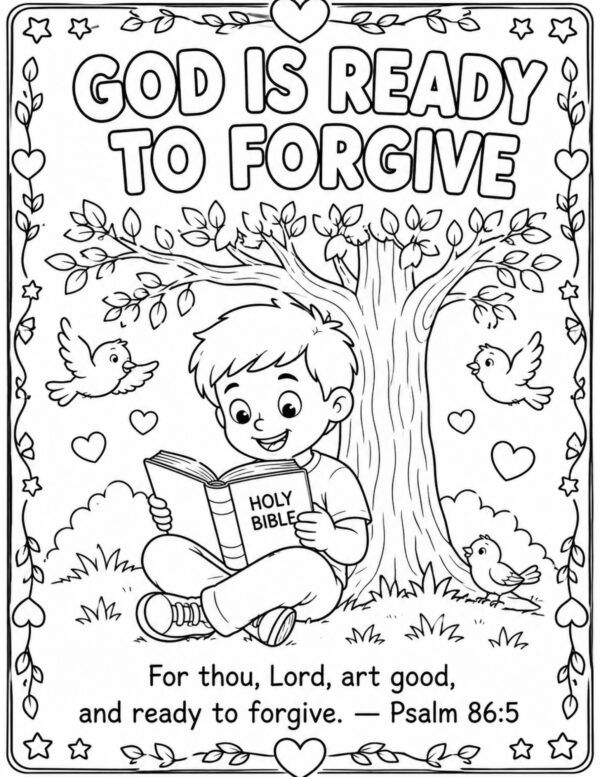
God Forgives Coloring Pages
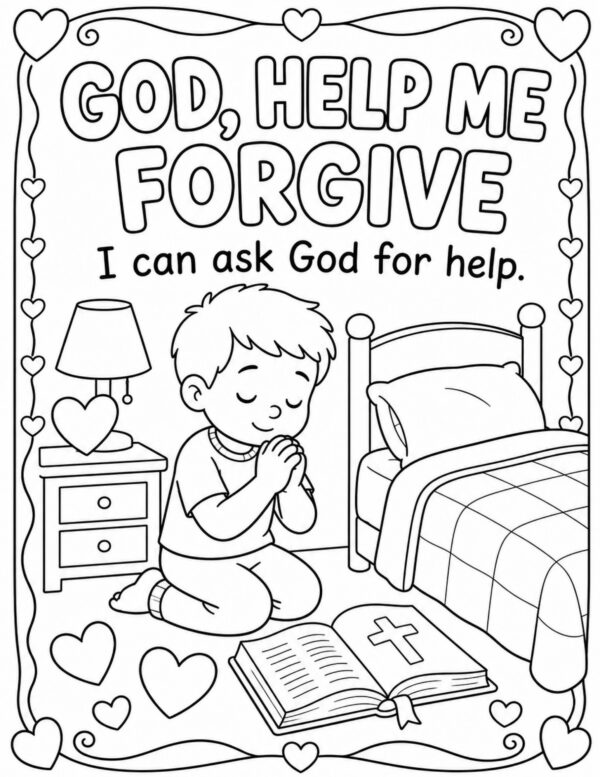
Several illustrations focus on the hope found in forgiveness.
These designs can support discussions about:
- Grace
- Confession
- Repentance
- The cross
- Christ’s sacrifice
- Mercy
- Starting again after making a wrong choice
When speaking with children, avoid presenting forgiveness as permission to keep making the same harmful choice. Grace is not a reason to treat sin casually. Repentance includes turning away from wrongdoing and seeking to live differently.
At the same time, children should understand that forgiveness is not reserved for people who never make mistakes. The gospel offers hope precisely because everyone needs grace.
Jesus Forgives Coloring Pages
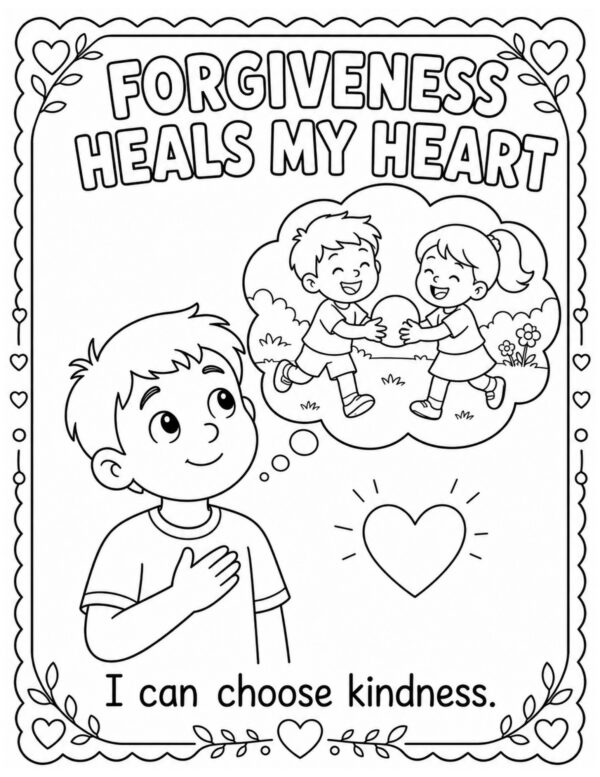
The cross is central to the Christian understanding of forgiveness. Christ’s death and resurrection demonstrate both the seriousness of sin and the depth of divine love.
Cross and faith-based illustrations can be paired with stories such as:
- The paralyzed man being forgiven and healed
- The woman who anointed Christ’s feet
- Zacchaeus responding to Christ
- The thief on the cross
- Peter being restored after his denial
- The Lord’s Prayer
- The parable of the unforgiving servant
- The parable of the prodigal son
Select one story and read it before decorating. Ask children what the story reveals about forgiveness, repentance, or mercy.
Forgiving Others Coloring Pages
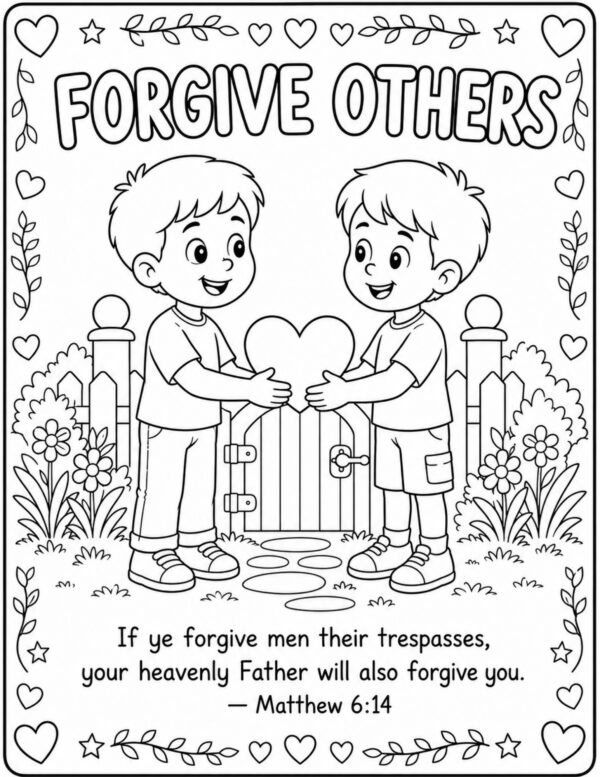
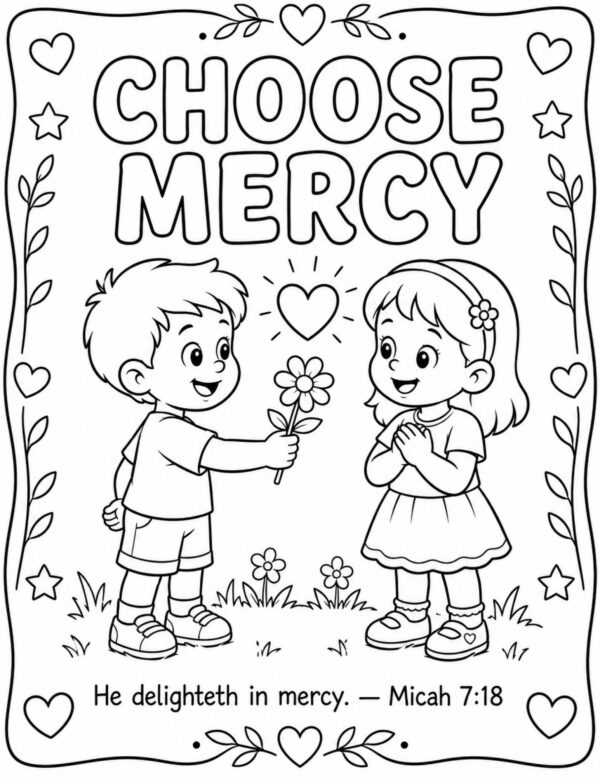
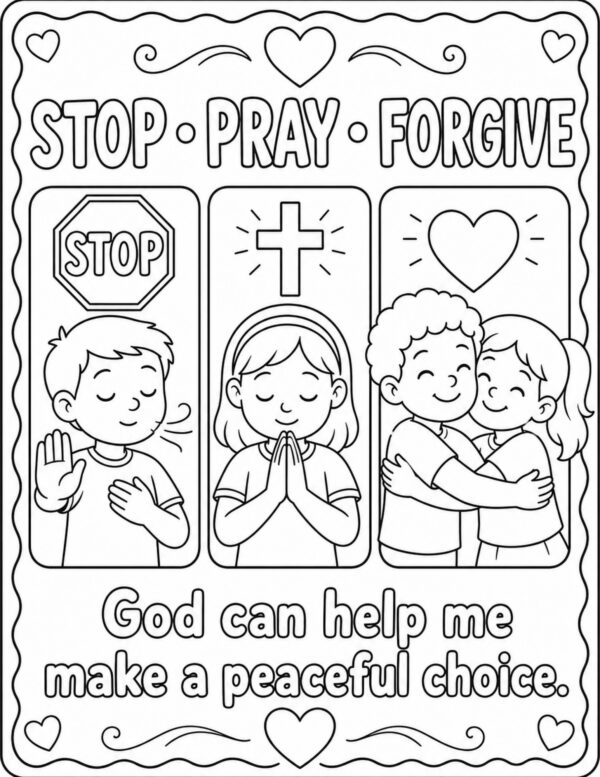
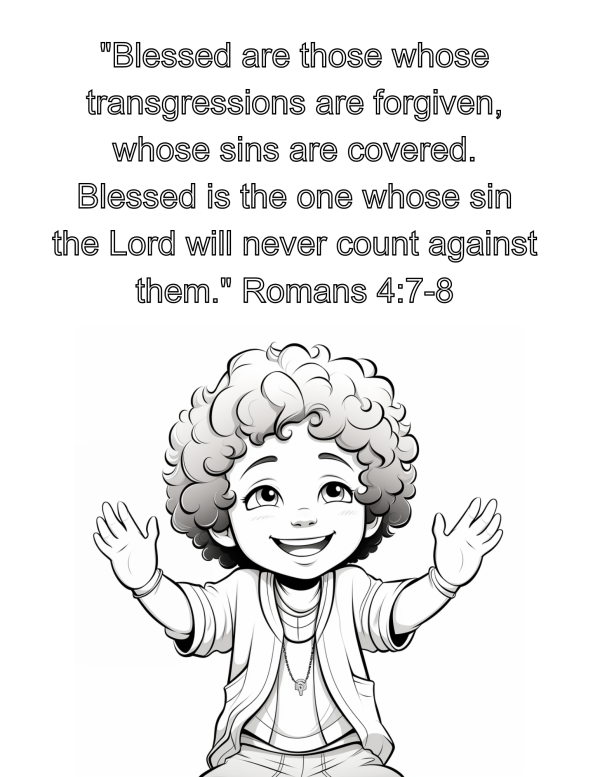
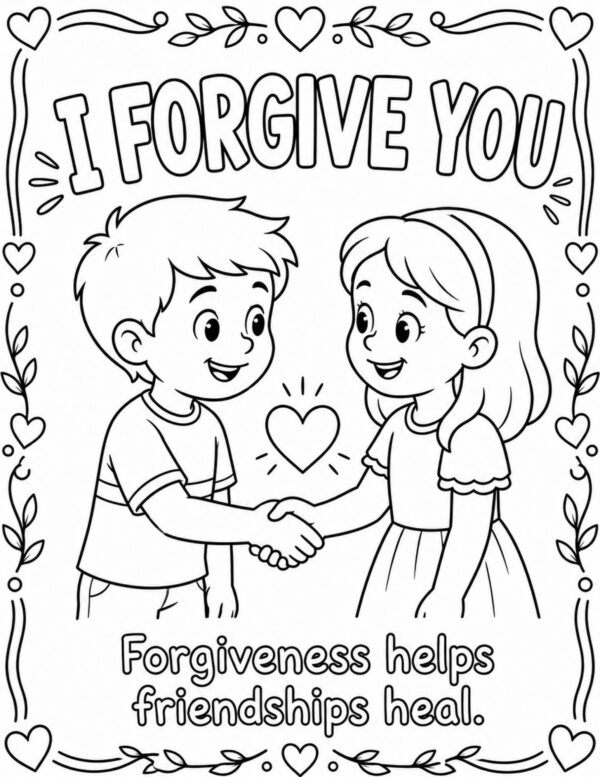
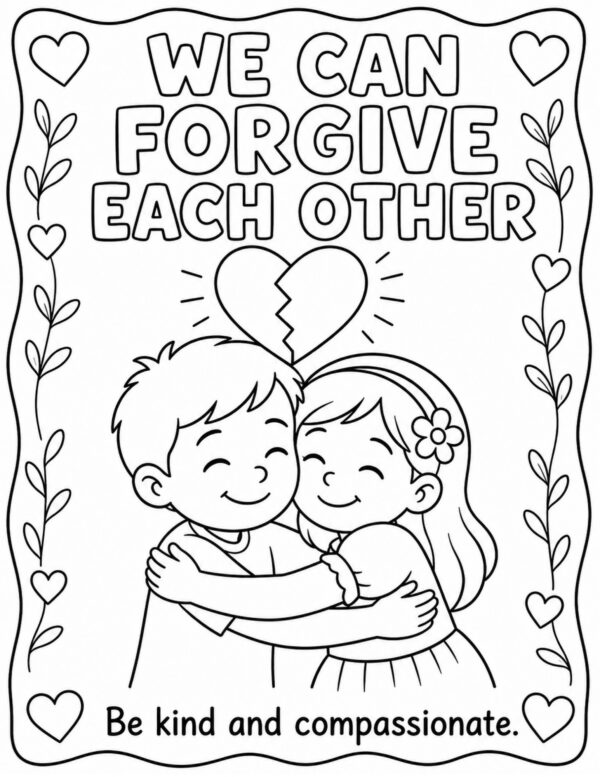
Some sheets show people offering or receiving forgiveness. These pictures help children connect an abstract biblical principle with everyday relationships.
Follow the illustrations to talk through a simple process:
- Tell the truth about what happened.
- Take responsibility for your own actions.
- Offer a genuine apology.
- Make amends when possible.
- Choose not to seek revenge.
- Rebuild trust gradually when it is safe and appropriate.
A sincere apology might sound like:
“I was wrong when I broke your project. I understand that what I did affected you. I want to make things right and fix what I can.”
Avoid teaching children to say, “I’m sorry if you were hurt.” That phrasing shifts responsibility away from the person who caused the harm.
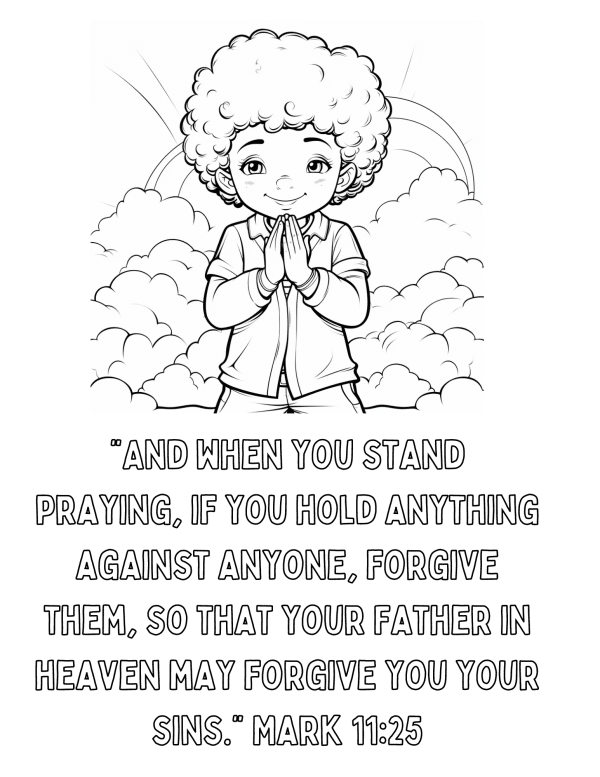
Forgiveness Is Not the Same as Reconciliation
This distinction is particularly important when teaching children.
Forgiveness involves choosing how to respond after being hurt, while reconciliation focuses on repairing and restoring the relationship. Reconciliation normally requires honesty, repentance, safety, and a willingness from both people to rebuild trust.
Forgiving does not always mean:
- Trusting the person immediately
- Pretending nothing happened
- Removing reasonable consequences
- Remaining close to someone who continues causing harm
- Keeping dangerous behavior secret
- Meeting privately with an unsafe person
- Allowing the same behavior to continue
Children should be encouraged to tell a safe adult about bullying, abuse, threats, inappropriate touching, dangerous secrets, or repeated mistreatment. A forgiveness coloring sheet should never be used to pressure a child into remaining silent or returning to an unsafe situation.
Forgiveness and Repentance
Forgiveness and repentance are related, but they are not identical.
Forgiveness addresses how someone responds after being wronged.
Repentance involves recognizing sin, turning away from it, and choosing a different direction.
When children hurt someone, guide them beyond simply saying “sorry.” Ask the children:
- What happened because of your actions?
- What could you have done differently?
- Who else was affected by what happened?
- What could you do to help fix the situation?
- How might you handle a similar situation differently in the future?
The goal is not to shame children. It is to promote truthfulness, accountability, empathy, and better choices.
How to Use These Printables in Sunday School
Before the lesson
Choose the page that most closely matches your Bible passage. Print one copy for each child and gather crayons, colored pencils, or washable markers.
Introduce forgiveness
Ask children what they think forgiveness means. Write their responses where everyone can see them.
Explain that forgiveness can be difficult, especially when someone has caused real hurt. Christians can pray for help when forgiving does not feel easy.
Read a Bible passage
Good options include:
- Ephesians 4:31–32
- Matthew 6:9–15
- Matthew 18:21–35
- Luke 15:11–32
- Luke 23:32–43
- 1 John 1:9
- Colossians 3:12–13
Decorate and discuss
Let children work while you review the topic. Coloring can provide a quiet, low-pressure activity during a sensitive conversation.
Apply the lesson
Choose an age-appropriate scenario:
Two friends are building a tower. One child becomes angry and knocks it down. What would be a good response afterward?
Discuss responsibility, apology, forgiveness, reasonable consequences, and rebuilding trust.
Close in prayer
Ask for help so children can tell the truth, seek forgiveness when they do wrong, and show mercy when others hurt them.
Forgiveness Lesson Plan for Kids
Objective
Children will explain forgiveness in simple terms and identify one Scripture verse that teaches about forgiving others.
Suggested age
Kindergarten through upper elementary, with adaptations based on reading ability and emotional maturity.
Supplies
- Forgiveness coloring activity
- Bible
- Crayons or colored pencils
- Pencils
- Paper, optional
Lesson outline
- Ask children what forgiveness means.
- Go over Ephesians 4:31–32 together.
- Explore how these qualities can shape the way we treat others.
- Talk through a simple relationship situation.
- Finish the activity.
- Invite children to name one way they can respond after hurting someone.
- End with prayer.
Main idea
Because we receive mercy, we can ask for the strength and spirit to extend forgiveness to others.
Questions to Ask While Children Work
- What does forgiveness mean?
- Why is it sometimes difficult to forgive?
- How is letting go of resentment different from acting as though nothing happened?
- Why should we apologize when we hurt someone?
- What makes an apology sincere?
- Can forgiveness and consequences happen together?
- Does forgiveness always restore trust immediately?
- Who can help you when someone has hurt or frightened you?
- What can we learn from Ephesians 4:32?
- How have we been shown mercy?
Avoid asking children to share private experiences publicly. A child may be thinking about a painful or unsafe situation that is inappropriate for group discussion.
Using the Pages at Home
Parents can try the sheets during family devotion time, after sibling conflict, or as part of a broader discussion about Christian character.
Try this simple family activity:
- Read Ephesians 4:32.
- Complete one sheet together.
- Ask each person to give an example of kindness.
- Discuss how to apologize sincerely.
- Pray for help showing compassion and forgiveness.
- Display the finished art as a reminder.
Do not introduce the activity in the middle of an emotionally intense conflict as a punishment. Wait until everyone is calm enough to talk and listen.
Using the Pages in Christian Counseling
Coloring can give children something quiet to do while discussing difficult feelings. The illustrations may also help a child begin expressing thoughts that are hard to put into words.
However, an activity sheet is not a substitute for safety planning, trauma-informed care, pastoral guidance, or professional mental-health treatment when those supports are needed.
Never assume that unwillingness to forgive immediately indicates disobedience. Children may need time, safety, support, and help understanding what happened.
Forgiveness Activities to Pair With the Printables
Crumpled-heart demonstration
Cut out a paper heart. Give examples of hurtful words while gently crumpling it. Smooth the heart afterward and explain that an apology and forgiveness matter, but hurtful actions can still have effects.
Be careful not to imply that a harmed person remains permanently “damaged.”
Apology practice
Give children fictional situations and help them practice apologies that name the wrong action without excuses.
Forgiveness prayer
Invite children to write or doodle something they would like help with. Allow the response to remain private.
Bible-verse cards
Write a short forgiveness quote or verse on cards and let children decorate them with a flower, cross, or simple doodle.
Kindness challenge
Ask children to complete one intentional act of kindness during the week and share what they learned at the next gathering.
Story sequencing
After reading the Prodigal Son or Unforgiving Servant, let children draw the beginning, middle, and end of the story. This creative idea can inspire them to think about the power of mercy and how relationships can flourish through kindness.
What Ages Can Use These Printables?
Preschoolers
Select designs with large shapes and minimal text. Concentrate on simple ideas such as kindness, saying sorry, telling the truth, and asking an adult for help.
Kindergarten through second grade
Choose short memory verses and concrete friendship examples. Read all instructions and Scripture aloud.
Older elementary students
Discuss apology, repentance, consequences, trust, and reconciliation in more depth.
Teenagers and adults
The more detailed designs can support journaling, Bible study, prayer, or reflection.
Review each picture before assigning it. Not every design will have the same level of detail or reading difficulty.
Coloring Supplies
These designs can be completed with:
- Crayons
- Colored pencils
- Washable markers
- Fine-tip markers
- Gel pens
- Watercolor pencils
- Highlighters
Print on ordinary copy paper for crayons and pencils. Choose slightly heavier paper if working with markers, and place another sheet underneath to prevent bleed-through.
More Christian Coloring Pages
Continue your faith-based lesson with:
These 20 designs can help families and ministry leaders begin thoughtful conversations about grace, confession, repentance, kindness, mercy, and forgiving others.
Choose a design that complements your lesson, provide plenty of supplies, and allow children to work while you discuss Scripture together.
Are these printables free?
Yes. The collection includes 20 free designs about forgiveness. Add your exact classroom and individual usage terms near the form.
Where can I download the printables?
Find the clearly labeled email or download form at the bottom of the post. If you publish the collection on another website, make sure visitors can easily locate the complete PDF.
Is there an Ephesians 4:32 coloring page?
Yes. The collection includes an Ephesians 4:32 design about kindness, compassion, and forgiving one another.
Is there a coloring page for 1 John 1:9?
Yes. The collection includes a 1 John 1:9 design about confession and the promise of forgiveness.
Are the coloring pages Christian?
Yes. The collection approaches forgiveness from a Christian perspective and includes Scripture, crosses, and faith-based messages about grace and mercy.
Can I use the pages in Sunday school?
Add your exact license here. If you permit it, specify that teachers may make copies for one Sunday school class but may not resell, redistribute, or upload the PDF.
What is the color of forgiveness?
Forgiveness does not have one official shade. White is often associated with cleansing, blue with peace, green with renewal, and purple with repentance or spiritual reflection. Children can choose any hues they find meaningful.
Are forgiveness and reconciliation the same?
No. Forgiveness and reconciliation are related but different. Reconciliation involves restoring a relationship and rebuilding trust; it may not be safe or possible in every situation.
