
DIY Gardening Kit for Kids Using Lemon Peels
Make a DIY gardening kit with lemon peels, an empty egg carton, potting mix, and a few seeds. Each lemon half becomes a tiny starter pot, while the carton holds the cups upright as children fill, label, water, and observe their seedlings.
This inexpensive project introduces kids to germination without requiring a store-bought kit. It works well for a spring activity, summer garden project, homeschool science lesson, or classroom growing unit. Most preparation takes about 30 minutes, but the real learning continues as children care for their seedlings each day.
DIY Gardening Kit for Kids with Lemon Seed Starters
Because the lemon cups are small and can deteriorate, they are temporary starters rather than permanent pots. Plan to transplant successful seedlings into larger containers or the garden once they develop true leaves and need more room.
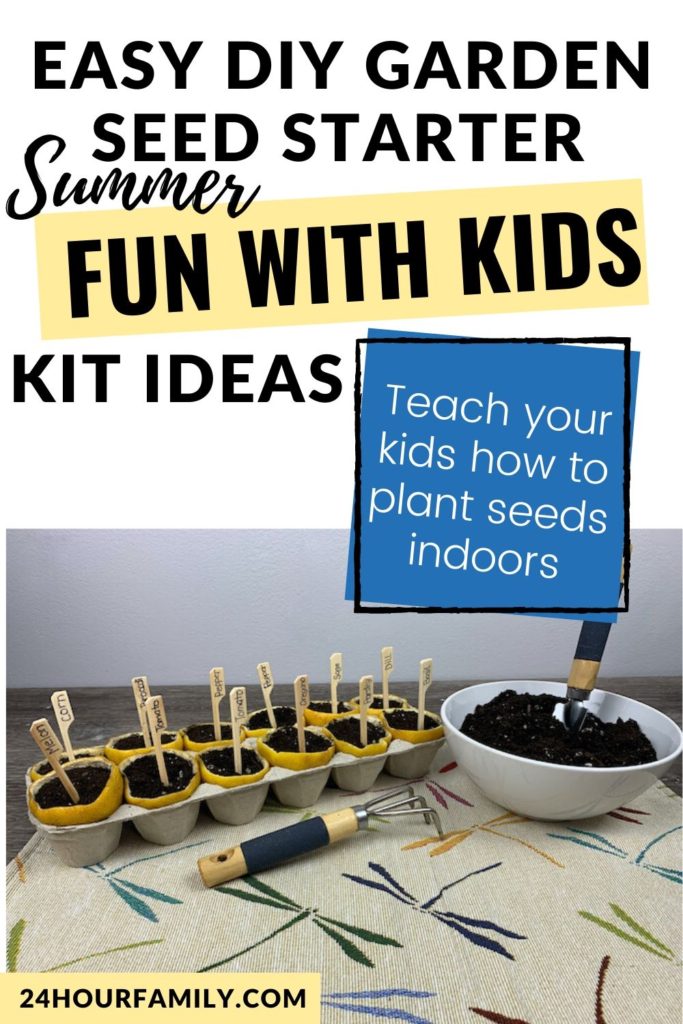
Why Use Lemon Peels as Seed Starters?
Lemon halves make colorful, biodegradable cups for a short growing experiment. Reusing the rinds also gives kids an easy example of turning kitchen scraps into something useful while exploring nature.
The egg carton acts as a support tray, keeping the rounded peels from tipping over. However, neither the peel nor a cardboard carton is waterproof. Place the entire project on a washable tray or shallow pan to protect the windowsill.
Lemon peels may soften or develop mold before slower-growing seedlings are ready to move. Check the cups daily and transplant the seedlings early if the rinds begin breaking down. This is one reason quick-germinating varieties work best for this project.
For another hands-on way to explore the outdoors, try this frozen nature sensory activity.
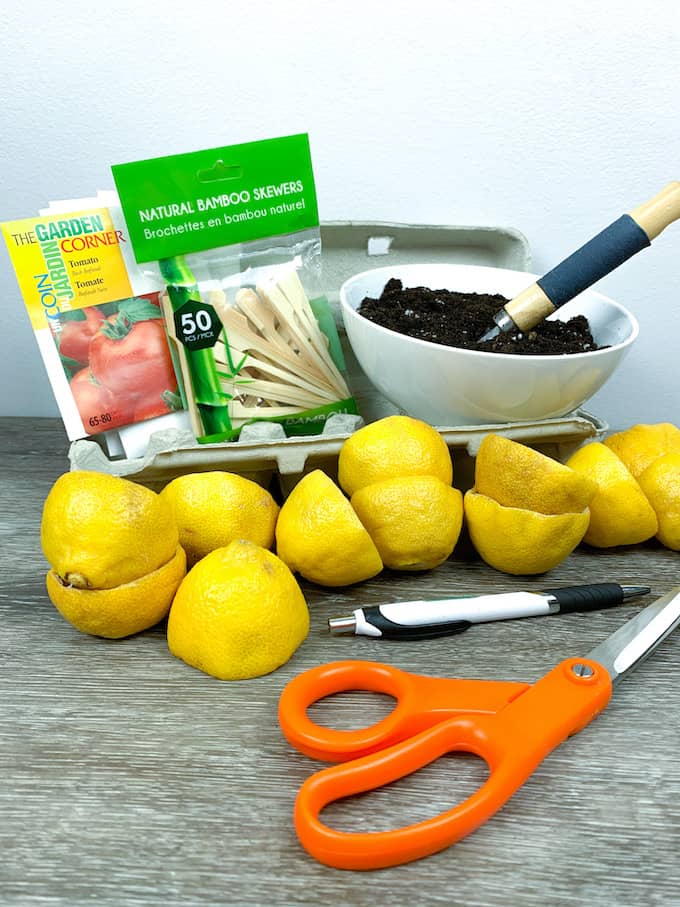
Supplies for a DIY Garden Starter Kit
- Egg carton
- Lemon halves/peels
- Seed-starting mix and seeds
- Mini bamboo sticks, wooden craft sticks, or labels
- Permanent marker
- Spoon or small garden scoop
- Scissors
- Wooden skewer or another pointed tool for drainage holes
- Spray bottle or small watering can
- Washable tray or shallow pan
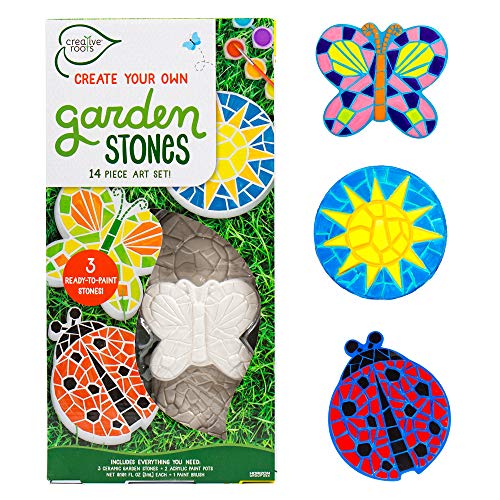
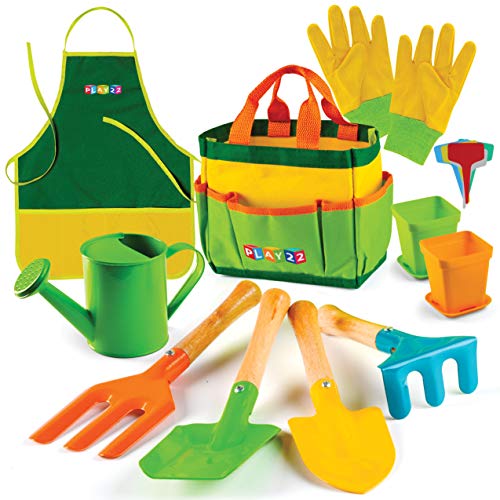
An adult or parent should cut the carton and make the drainage holes. Kids can scoop the potting mix, count seeds, make labels, and help moisten the finished cups. You don’t need special garden tools, a rake, or other expensive supplies.
This post may contain affiliate links. As an Amazon Associate and a participant in other affiliate programs, I earn a commission on qualifying purchases. Read our disclosure policy here.


The Best Seeds for This Kids Gardening Kit
Choose varieties that germinate quickly and fit your home’s growing conditions. Basil, lettuce, marigolds, zinnias, sunflower seeds, and dwarf tomato varieties can work well. Beans and peas germinate quickly but will soon outgrow the small lemon cups, so be prepared to transplant them promptly.
Use fresh seeds and follow the planting depth on each packet. A very small variety may need only a light covering of mix, while a larger one is generally planted deeper.
How to Make a DIY Gardening Kit
1. Prepare the lemon cups
After juicing the lemons, remove the pulp and seeds without cutting through the rind. Rinse the lemon halves and let them drain thoroughly.
Use the rinds promptly rather than storing them submerged in liquid. If you need to save them briefly, refrigerate the cleaned, drained halves in a covered container and check for spoilage before using them.
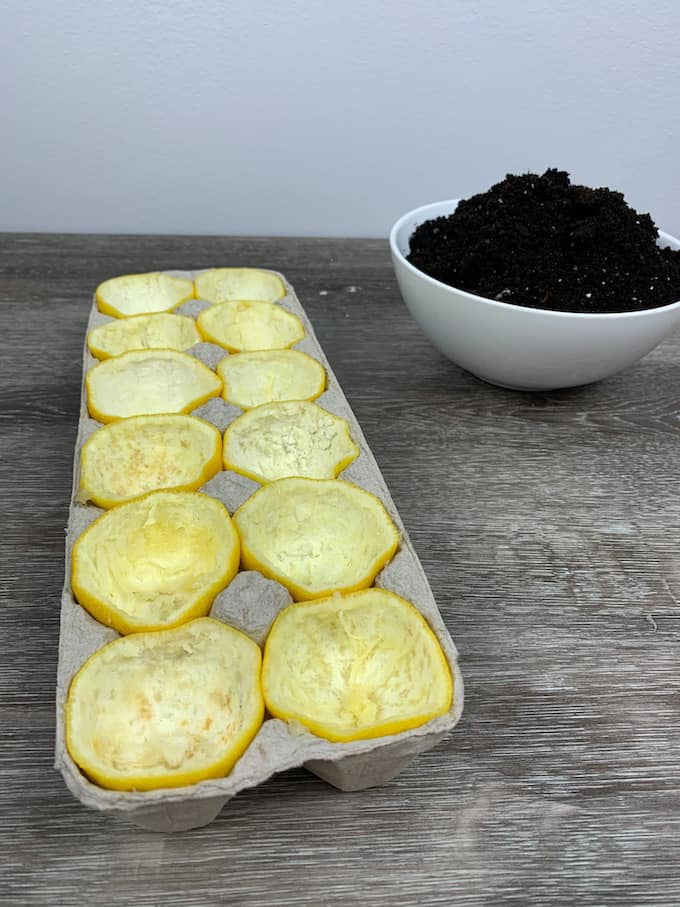
2. Prepare the egg carton
Cut the lid and front flap from the egg carton, leaving the section with the individual egg wells. Set the carton on a waterproof tray because moisture can pass through the cardboard.
If you prefer, leave the lid attached and place it under the base for extra support.
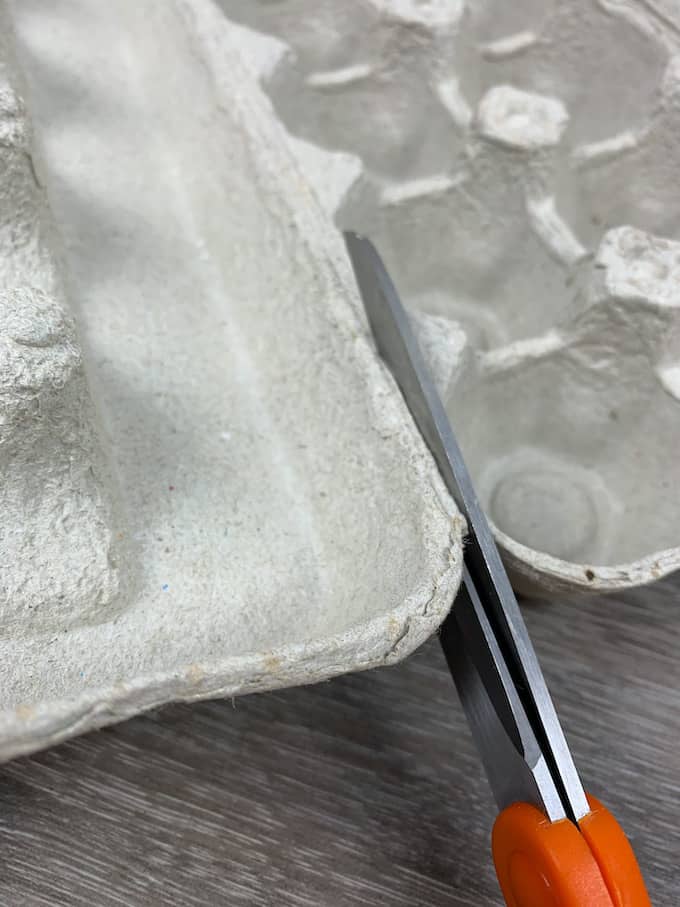
3. Add drainage holes
An adult should carefully make one or two small holes in the bottom of each lemon half with a wooden skewer. Drainage is important because young roots can rot when too much moisture collects around them.
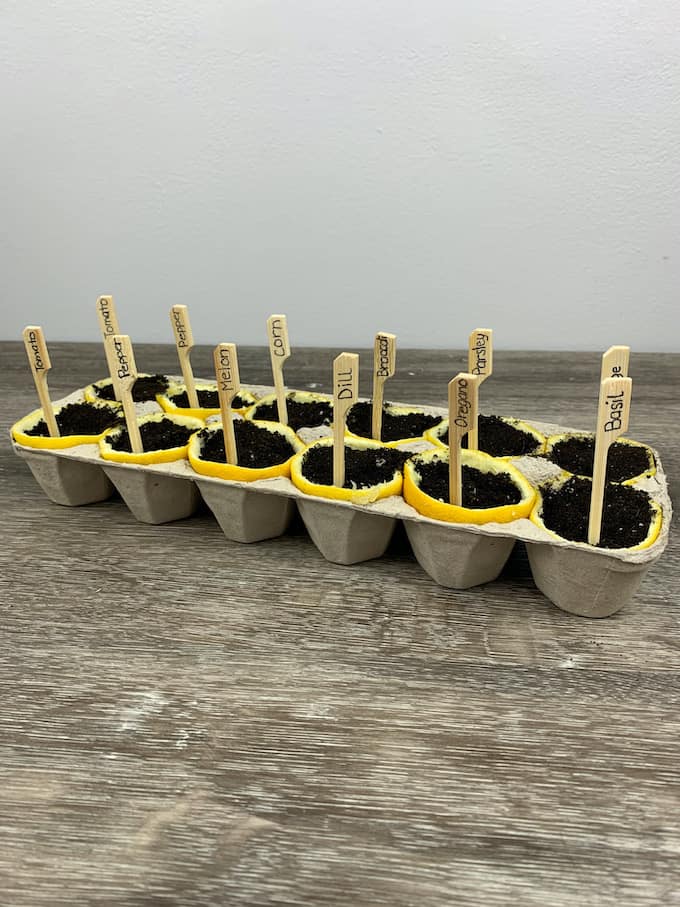
Arrange the lemon cups in the individual egg-carton sections, making sure each one is supported without squeezing the rind.
4. Fill the cups with potting mix
Use a spoon or small scoop to fill each lemon half with damp seed-starting mix. Leave a little room at the top so the mix does not wash out during watering.
Seed-starting mix is preferable to heavy outdoor garden soil because it drains better and is less likely to compact in the small cups.
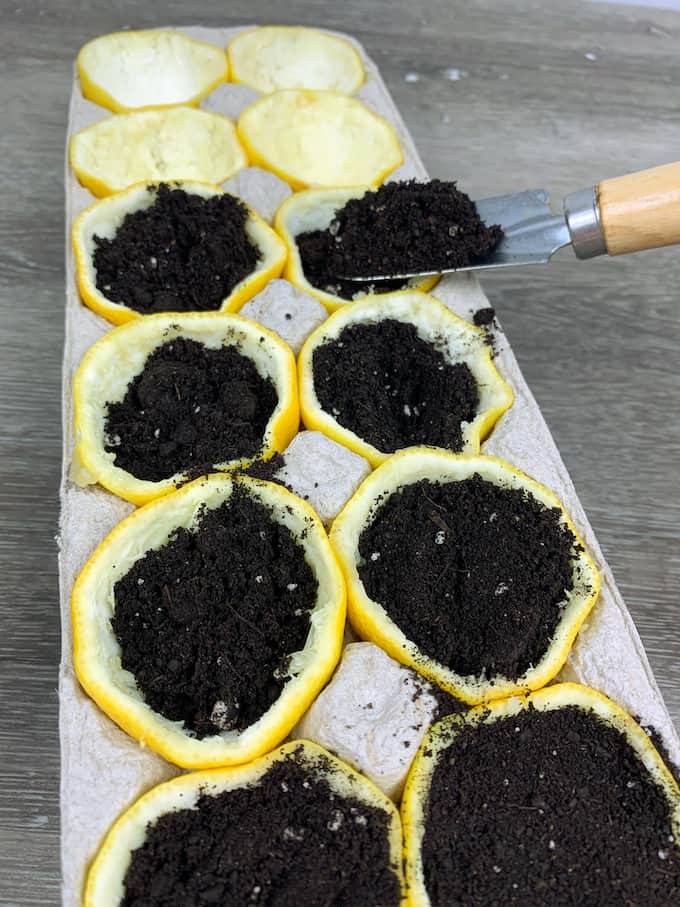
5. Make the markers
Write the name of each variety on a bamboo stick or label. Older kids can also add the planting date. If several children are participating, add each young gardener’s name to the labels.
Labeling before sowing helps prevent mix-ups, especially when different seedlings look similar.
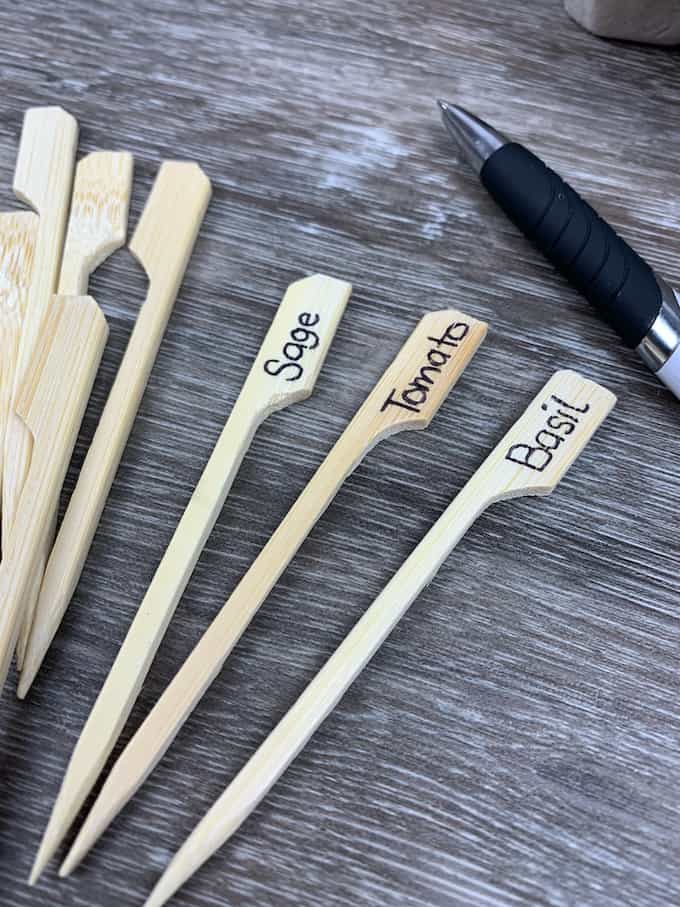
6. Sow the seeds
Read the packet for the correct depth and spacing. Place the recommended number in each cup, cover them gently with potting mix, and insert the matching label.
Using several in a cup may improve germination chances, but crowded seedlings will need to be thinned or separated later. Follow the packet directions whenever they differ from general advice.
7. Moisten gently
Mist the surface or add a small amount of water until the mix is evenly moist but not soggy. Empty any excess moisture that collects in the tray.
Check the cups every day. Add moisture when the surface begins to feel dry, using only enough to re-moisten the mix. A spray bottle gives young kids better control and helps prevent the contents from washing out.
8. Provide light and warmth
Place the kit in a warm location with the light type recommended on the packet. Once seedlings emerge, they generally need strong light to keep them from becoming tall and weak. Rotate the tray regularly if the sprouts lean toward a window.
Caring for the Seedlings
The project becomes more meaningful when kids take responsibility for daily observations. Ask them to check the moisture, look for the first green shoot, and notice how the stem and leaves change.
Children can keep a simple garden journal recording:
- What was placed in each cup
- The planting date
- The first day each seed sprouted
- The number of seedlings that grew
- Drawings or measurements of their growth
- Changes in the lemon peels
Pair the activity with our parts of a plant worksheet once the first roots, stems, and leaves are visible.
How to Transplant the Seedlings
Transfer the seedling once true leaves develop, the roots become crowded, or the lemon rind softens or shows mold. The earliest leaves are called seed leaves. The next set is the true leaves, which begin to resemble the foliage of the mature variety.
Gently remove the root ball from the lemon rind instead of placing the intact cup in the soil. If roots have grown through a drainage hole, carefully cut or tear the peel away.
Transfer the seedling to a larger pot filled with fresh potting mix, or move it outside when the weather and packet directions are appropriate.
Seedlings started indoors should be gradually introduced to outdoor sun, wind, and temperature changes before they remain outside permanently. This adjustment is called hardening off.
Add the empty lemon rind to a compost pile or cut it into small pieces before composting. Removing it at transplanting prevents the firm peel from restricting the roots while it decomposes.
What Kids Learn from This Activity
This growing activity for kids turns an ordinary gardening task into a fun science investigation.
Children practice fine-motor control as they scoop and sow, responsibility as they provide daily care, and early scientific thinking as they predict and observe changes.
The activity also encourages creativity and gives them another way to explore how living things grow.
Use the project to discuss what seeds need to germinate, why roots grow downward, how stems reach toward light, and why not every one sprouts. Avoid promising that every cup will grow.
Germination depends on the variety, age, temperature, moisture, planting depth, and light conditions.
You can also add an easy spring activity with these free spring coloring pages or find more summer craft ideas.
More Ways to Use This Kids Gardening Activity
Unlike larger grow kits sold in stores, this simple set uses materials many families already have at home. It can make a creative birthday or Easter gift for kids who enjoy gardening, science, and spending time in the yard.
For the right age group, it is also a practical present that lets kids grow something themselves instead of simply opening another toy.
More Ideas for Learning and Exploring
Keep the hands-on learning going with these creative activities and printables for kids:
- Frozen Nature Sensory Activity – Explore frozen leaves, flowers, and other natural materials with a simple sensory activity.
- Parts of a Plant Worksheet – Help kids identify and learn about the basic parts of a plant.
- Free Spring Coloring Pages – Add a relaxing seasonal activity with cheerful pictures to color.
- Summer Craft Ideas – Find more creative projects to keep kids busy and learning during the warmer months.
This lemon-peel starter makes gardening approachable for young kids while giving them something real to nurture. Once the first shoots emerge, the small daily job of checking their progress can become the most exciting part of the project.
Do lemon-peel starters need drainage holes?
They do. Make one or two small holes in the bottom of each rind so excess moisture can escape. An adult should handle the pointed tool. Keep the carton on a waterproof tray to catch moisture.
Can you put the lemon peel directly in the garden?
It is better to remove or tear away the peel before transplanting. A thick citrus rind may remain firm long enough to restrict the seedling’s roots. Compost the used rind separately.
Why is mold growing on the lemon cups?
The moist organic rind naturally begins to decompose. Overwatering, poor air circulation, and keeping the cups too wet can speed up mold growth. Remove a badly molded cup and transfer a healthy seedling into a clean pot.
How long can seedlings remain in lemon peels?
The cups are intended only for the earliest stage of growth. Transplant based on the seedling and condition of the rind rather than following a fixed number of days. Quick-growing varieties may outgrow the small cups shortly after developing their first true leaves.
Is this the same as commercial gardening kits for kids?
Not quite. This is a homemade seed-starting activity made from household and gardening supplies. Commercial gardening kits may include different containers, soil pods, varieties, and care instructions.
DIY Gardening Kit for Kids
Turn clean lemon halves and an egg carton into a garden starter kit for kids. Plant herbs, flowers, or vegetables and observe the seedlings as they grow.
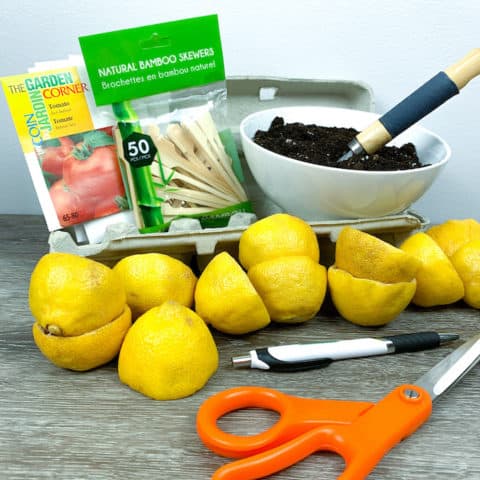
Materials
- 1 large cardboard egg carton
- Up to 12 clean, drained lemon halves
- Seed-starting mix or lightweight potting mix
- Seeds
- Mini bamboo sticks, craft sticks, or plant labels
- Permanent marker
Tools
- Spoon or small garden scoop
- Scissors
- Wooden skewer for drainage holes
- Spray bottle or small watering can
- Washable tray or shallow pan
Instructions
- Remove the pulp and seeds from the lemon halves. Rinse and drain them thoroughly.
- Cut the lid and closing flap from the egg carton. Place the carton on a waterproof tray.
- Have an adult make one or two drainage holes in the bottom of each lemon half.
- Set one lemon cup in each egg-carton well.
- Fill the cups with damp seed-starting mix, leaving a little space at the top.
- Label bamboo sticks with the plant names and planting date.
- Plant the seeds at the depth listed on each packet and insert the matching labels.
- Mist the mix until evenly moist. Empty standing water from the tray.
- Place the kit in a warm, well-lit location appropriate for the selected seeds.
- Check daily and water lightly when the surface begins to dry.
- Remove the lemon peel and transplant each healthy seedling when it develops true leaves, needs more room, or the rind begins deteriorating.
Notes
- Adult help is required for cutting and making drainage holes.
- Do not use lemon halves that smell spoiled or show mold before planting.
- Choose quick-germinating seeds and follow their packet directions.
- The lemon cups are temporary and may soften or mold.
- Do not promise children that every seed will sprout; compare the results instead.
