
“Learn The Colors” Flashcards for Preschoolers (Free Printables)
Learning colors is one of the first aspects of understanding for preschoolers, setting the foundation for cognitive skills and sensory development. These Free Learn Your Colors Flashcards are the perfect resource for parents, educators, and homeschoolers seeking educational materials that blend fun with learning.
These Printable Education flashcards cover a broad spectrum of colors and are crafted to encourage engagement, retention, and learning joy.

This post may contain affiliate links. As an Amazon Associate and a participant in other affiliate programs, I earn a commission on qualifying purchases. Read our disclosure policy here.


Why Are the Benefits of Learning Colors?
- Colors Stimulate Learning: They help children make sense of their environment, leading to better memory and attention to detail.
- Promotes Communication Skills: Discussing different colors helps enhance language development, enabling children to express themselves clearly.
- Fosters Creativity: Colors are the perfect way to spark imagination, encouraging little ones to create and experiment freely.
How to Use Our “Learn The Colors” Flashcards
Our “Learn the Colors” flashcards can reinforce learning in numerous interactive and engaging ways. Here are a few ideas:

- Color Sorting: Ask children to sort objects from around the room or from a provided set into piles that match the colors on the flashcards.
- Color Hunt: Turn learning into an adventure by encouraging kids to find objects that match the colors on the flashcards throughout the house or classroom.
- Matching Game: Print two sets of flashcards and use them for a memory-matching game, turning learning into a fun challenge.

Using flashcards to teach colors to preschoolers is a highly effective and interactive learning method. Here are some of the key benefits:
Visual Learning: Flashcards engage children visually, making it easier for them to associate words with objects or colors. This visual connection is crucial for young children who are primarily visual learners.
Memory Enhancement: The repetitive use of flashcards helps enhance memory retention. By repeatedly seeing the same color with its name, preschoolers can more easily associate the color with its corresponding word.
Concentration Skills: Working with flashcards can improve children’s concentration and focus. The quick display of cards holds their attention and encourages them to concentrate on each new card as it’s shown.
Interactive Learning: Flashcards encourage interaction, whether it’s between a child and a teacher or with peers. This interaction makes the learning process more engaging and less monotonous, keeping children interested and active in their learning.
Cognitive Development: Sorting and organizing flashcards can also contribute to cognitive development. Preschoolers learn to categorize and recognize patterns, which are critical thinking skills that will benefit them in other areas of learning.
Language Skills: While learning colors, children also improve their language skills by practicing the names of the colors and forming simple sentences or questions about the flashcards they see.
Flexibility and Portability: Flashcards are extremely portable and can be used in various settings, including at home, in the classroom, or even on the go. This flexibility enables learning opportunities beyond the traditional learning environment.
Confidence Building: As children become more familiar with the colors and start to answer correctly, their confidence grows. This increase in self-esteem can encourage them to engage more in the learning process and with other educational activities.
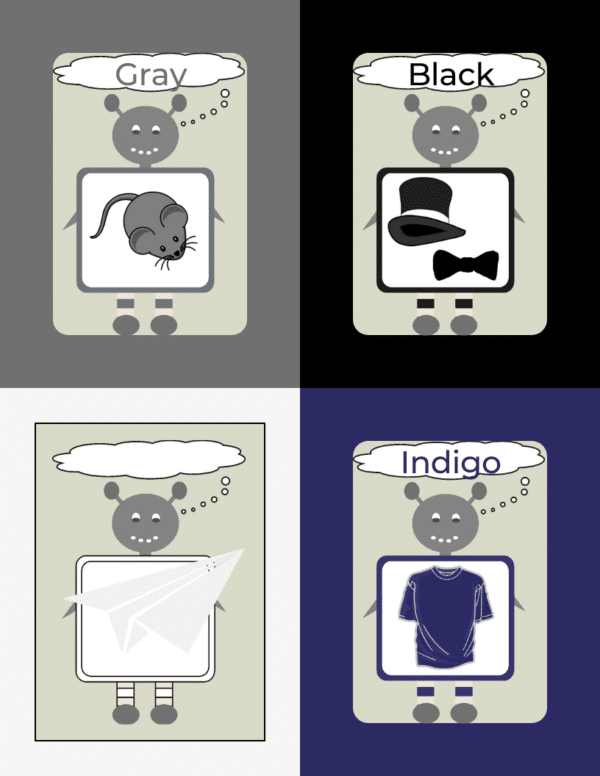
Customizable: Flashcards can be easily customized to match the learning pace and interests of each child. Additional elements, like different shades of colors or related objects, can be introduced to expand learning.
Fun and Engaging: Finally, using flashcards can be made into a fun game, such as guessing the color or finding objects of the same color. Turning learning into a game can increase enjoyment and make learning less intimidating for young children.

Understanding and identifying colors are crucial steps in a child’s cognitive development, laying the groundwork for categorizing and differentiating objects, emotions, and, eventually, concepts.
It enhances their descriptive language skills, allowing them to convey their thoughts and feelings more precisely.
