
Free Color and Cut Puzzle Worksheets for Preschool (15 Colors)
These free color-and-cut puzzle worksheets are one of those printables that do three things at once, and kids don’t even realize they’re learning while they do them.
Each worksheet in this pack asks a child to do something simple: read the color word at the top, color the picture in the correct color, cut the page into puzzle pieces along the dotted lines, then reassemble the puzzle. Four steps. Three skills. One sheet of paper and a pair of scissors.
The pack covers 15 colors across 15 worksheets — everything from the basic colors preschoolers learn first to the more advanced shades that challenge pre-k and kindergarten students. Every worksheet is free to download and print as many times as you need.
What’s included:
- 15 color and cut puzzle worksheets
- One worksheet per color
- Colors covered: red, green, brown, orange, yellow, blue, pink, purple, black, gray, teal, magenta, peach, navy, and white
- Dotted cutting lines on every page
- Simple, clear images kids can color independently
- Suitable for preschool, pre-k, and kindergarten

What Skills Do These Color and Cut Puzzle Worksheets Build?
These worksheets are genuinely multi-skill — here’s what’s actually happening when a child sits down with one:
Color recognition and color word reading. Each worksheet displays the color name as a word at the top of the page. Before a child can color the picture, they have to read (or have read to them) what color to use. Over time, they begin to associate the written word with the color — a foundational literacy skill that goes beyond just knowing what red looks like.
This post may contain affiliate links. As an Amazon Associate and a participant in other affiliate programs, I earn a commission on qualifying purchases. Read our disclosure policy here.


Fine motor skills — two ways. Coloring a picture develops grip strength and pencil control. Cutting along dotted lines develops scissor skills and hand-eye coordination. These are two of the most important fine motor skills for kindergarten readiness, and this worksheet builds both in a single activity.
Puzzle-solving and spatial reasoning. Once the page is cut into pieces, the child has to reassemble it. This requires them to look at shapes, orient pieces correctly, and figure out what goes where — all of which develop spatial reasoning and early problem-solving skills.
Sequencing and following multi-step directions. Color, cut, reassemble. Three steps in order. For preschoolers, following multi-step instructions is a genuine cognitive challenge and an important skill for school readiness.
Confidence and independence. There’s a moment when the puzzle snaps back together, and the picture is whole again — and kids light up. That sense of completion is what makes them want to do another one. Build in enough of those moments, and you build a child who believes they can figure things out.
What Colors Are Covered in This Worksheet Pack?
This pack goes well beyond the basic eight crayon colors. Here’s every color included and what kids will color on each worksheet:
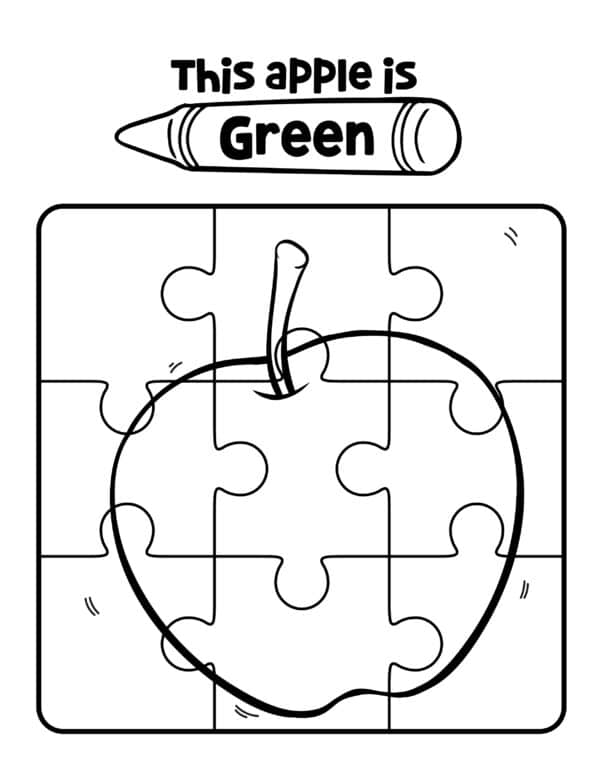
Red — An apple. A classic color-object association that preschoolers immediately recognize.
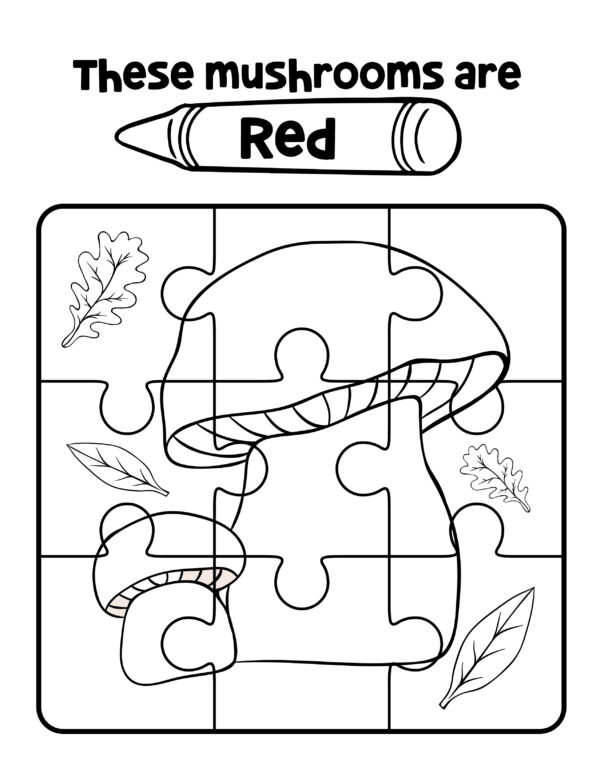
Green — An apple (green this time!). A great comparison piece with the red apple worksheet — same shape, different color.
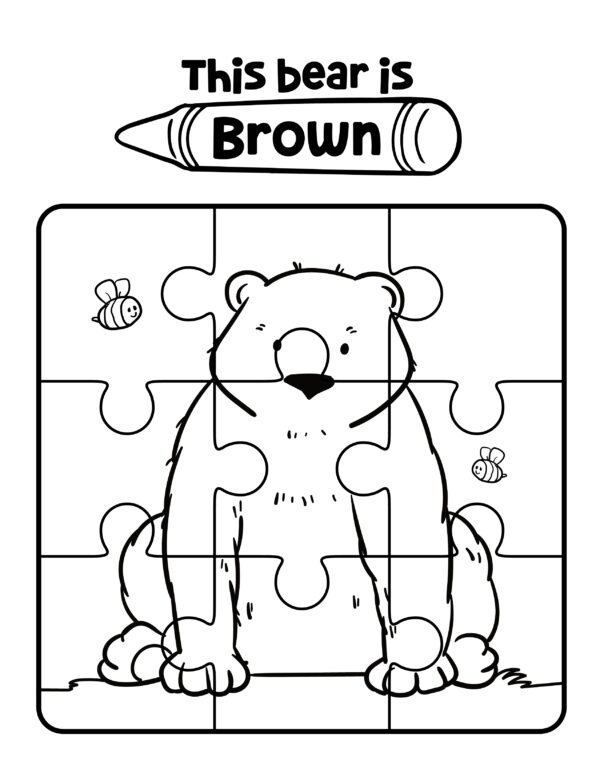
Brown — A bear. Pairs naturally with discussions about animals and their colors.
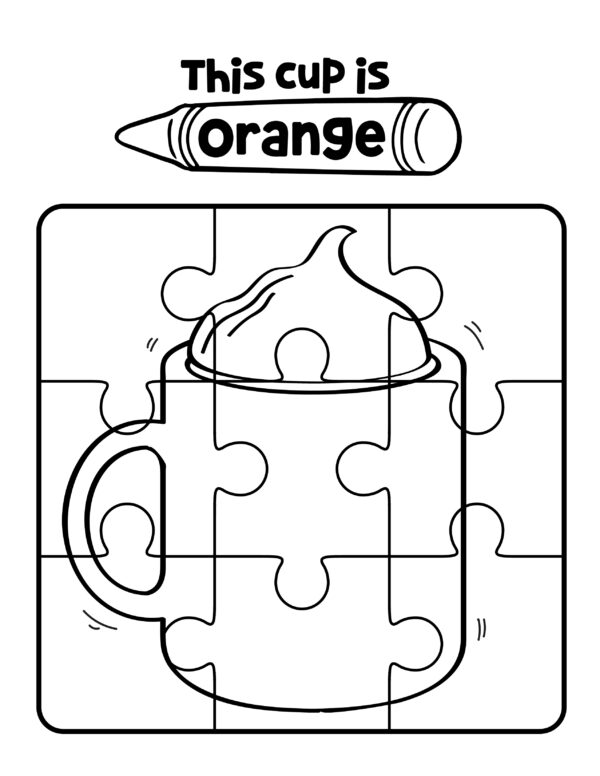
Orange — A cup. Simple shape, easy to color in a single solid color — great for young beginners.
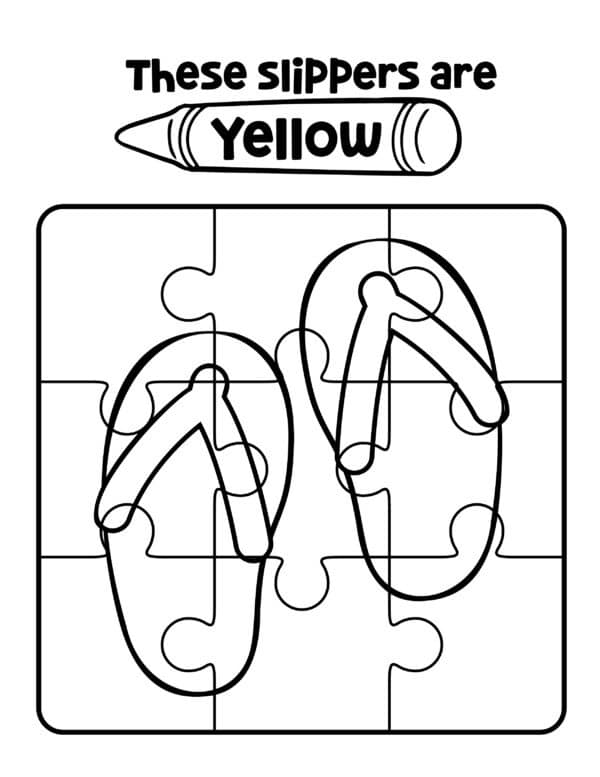
Yellow — A slipper. A fun, unexpected image that prompts conversation (“What color are your slippers?”)
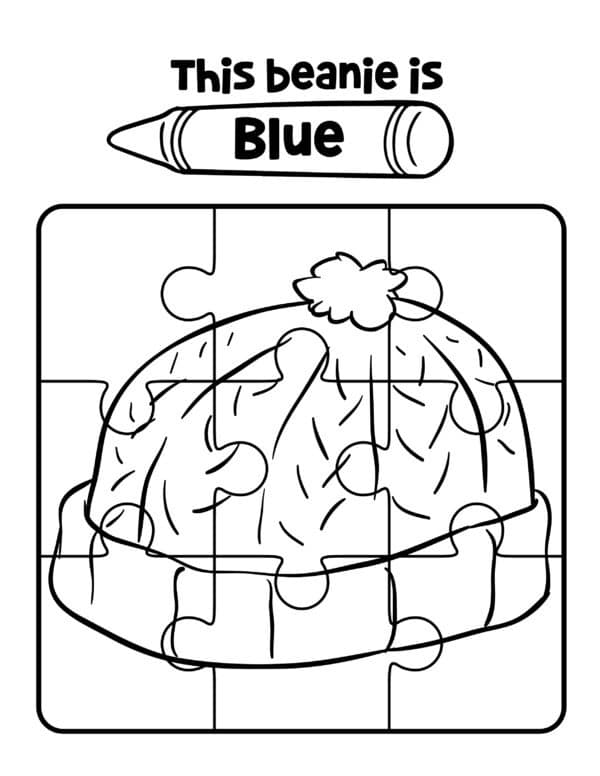
Blue — A beanie hat. Seasonal and familiar — most kids have worn a winter hat.
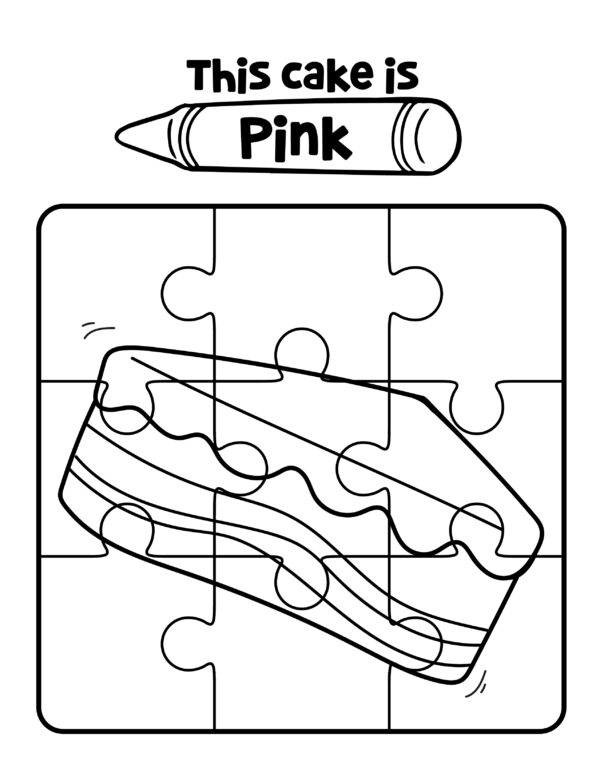
Pink — A birthday cake. An instant crowd-pleaser that naturally connects to celebrations and counting.
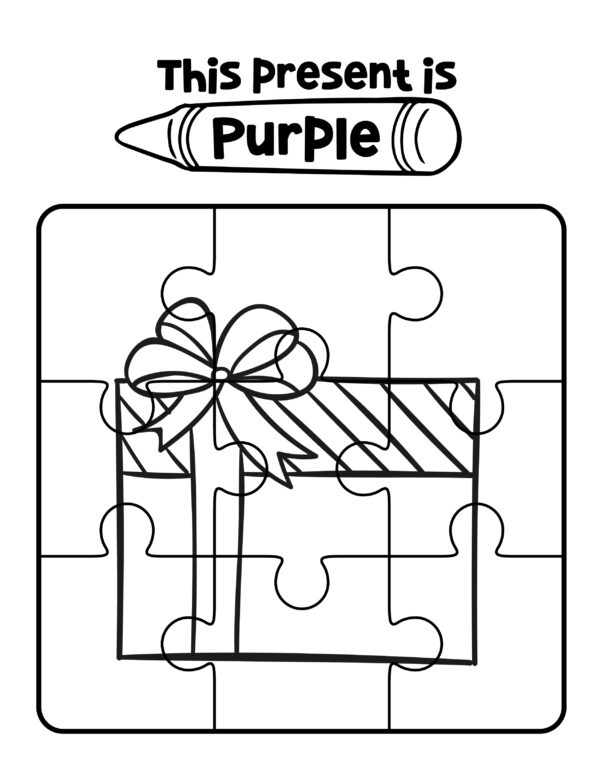
Purple — A wrapped gift. Connects to holidays, birthdays, and the excitement of giving.
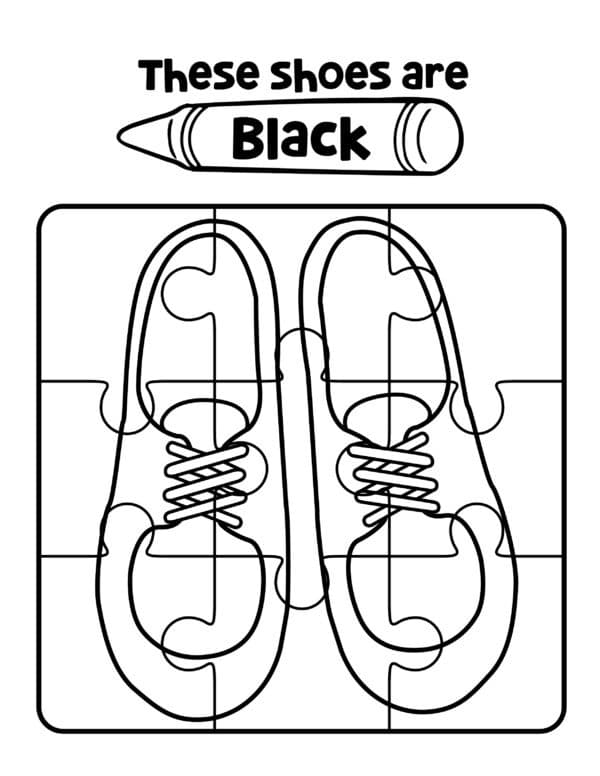
Black — A pair of shoes. Everyday object, easy association.
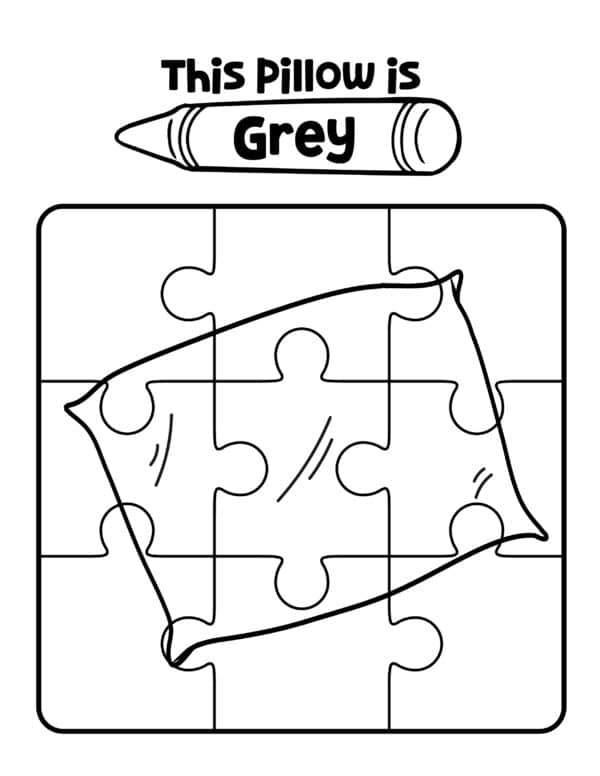
Gray — A pillow. A softer, quieter image for a color that’s sometimes harder to distinguish.
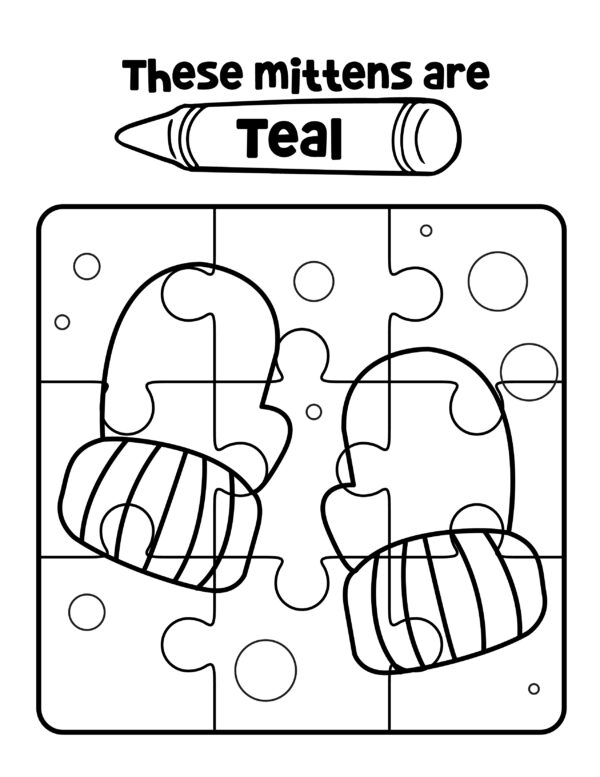
Teal — Mittens. Introduces a more advanced color name while staying connected to a familiar object.
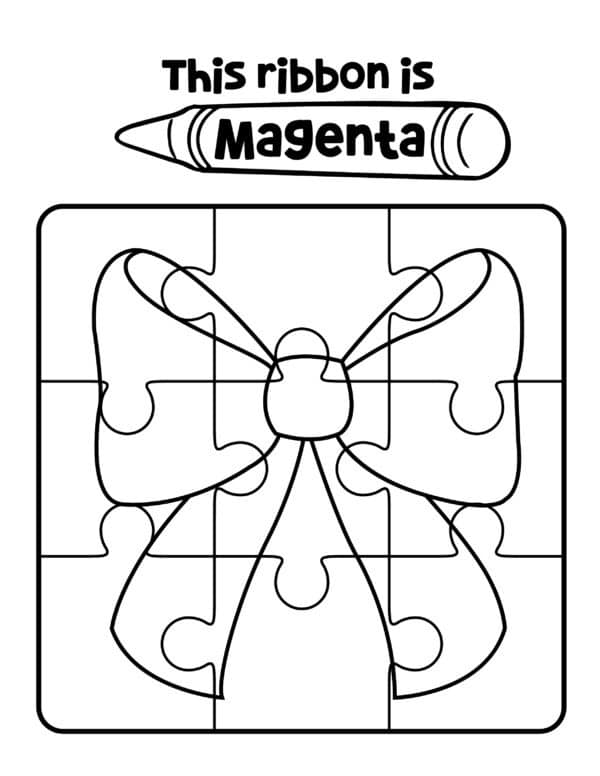
Magenta — Ribbons. A vibrant, harder-to-name color that challenges older preschoolers and pre-K students.
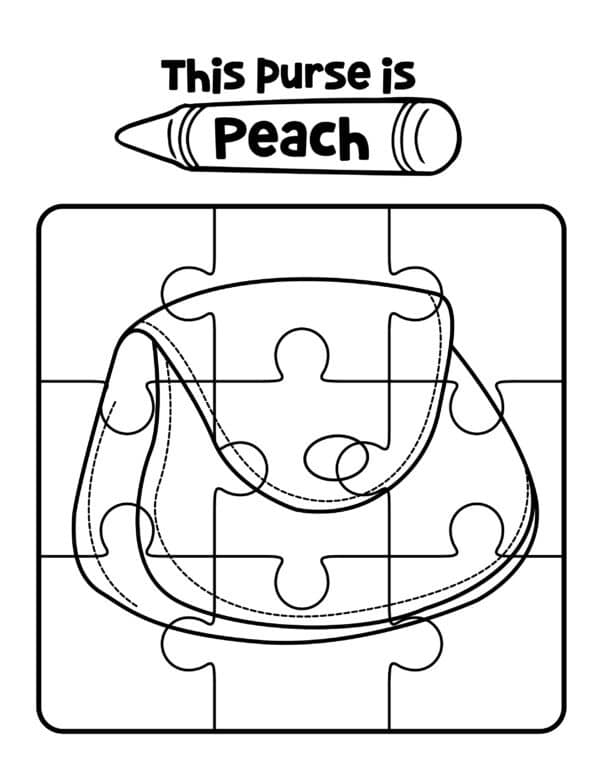
Peach — A purse. Introduces skin-adjacent color vocabulary in a simple, concrete way.
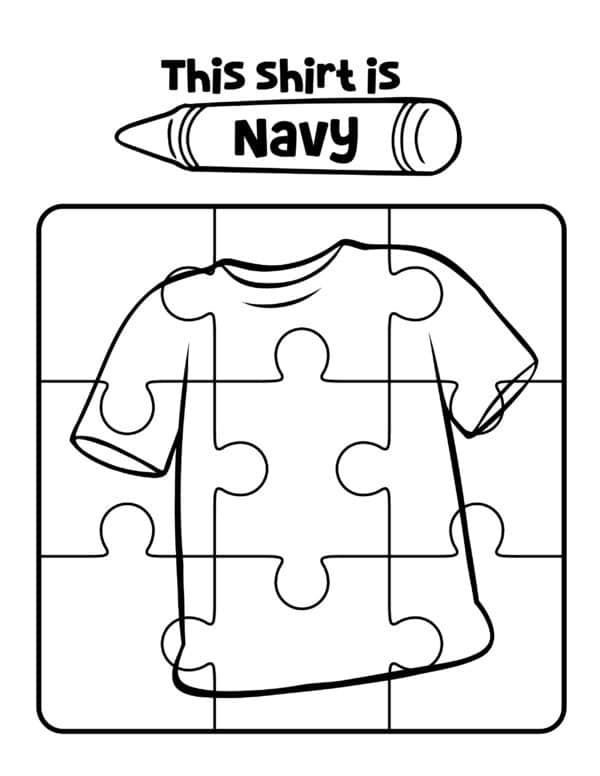
Navy — A shirt. Distinguishes navy from blue — an important color nuance for older students.
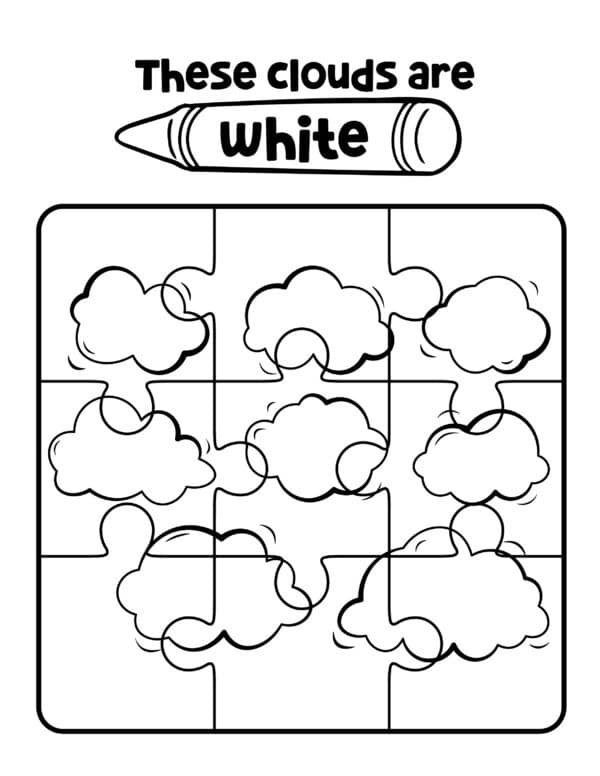
White — Clouds. A classic image for a color that’s sometimes tricky to show on white paper — the outline does the work here.
How to Use These Color and Cut Puzzle Worksheets — Step by Step
These worksheets work best when you walk through the process with a child the first time. After that, most kids can work through them independently.
Step 1: Read the color word together. Before touching a crayon, look at the color word printed at the top of the worksheet. Say it together. Ask your child: “What color is that?” or “Can you find something in the room that’s that color?” This activates prior knowledge and builds the connection between the word and the color before the activity begins.
Step 2: Color the picture. Using crayons, colored pencils, or markers, color the image on the worksheet in the correct color. Encourage kids to try to stay within the lines — but don’t make it a rule. The goal is color application and color-word association, not perfection.
Step 3: Cut along the dotted lines. Using child-safe scissors, cut the worksheet along all the dotted lines. This creates the puzzle pieces. For very young children (ages 2–3), an adult can pre-cut the pieces so the child can focus solely on coloring and reassembly. For ages 4 and up, the cutting step is absolutely manageable with light supervision.
Step 4: Mix up the pieces and reassemble the puzzle. Flip all the pieces face down, mix them up, then flip them back over and put the picture back together. This is the puzzle-solving step — and it’s where kids get the most satisfaction. The picture they colored becomes a puzzle they get to solve.
Step 5: Extend the learning. Once the puzzle is complete, use it as a jumping-off point for a conversation: “What else is that color?” “Can you find three things in the kitchen that are orange?” “What color is your favorite?” These conversations are where color vocabulary really sticks.



Tips for Using These Worksheets in Different Settings
For homeschool families: These work beautifully as a standalone morning activity or as part of a color-themed week. Do one worksheet per day, covering a new color each session. Pair with color-themed books, color sorting activities, and color scavenger hunts around the house for a full color unit.
For preschool classrooms: Print a set for each child or laminate a class set for reuse (just use dry-erase markers for the coloring step). These work well as a morning work activity, a learning center rotation, or a take-home activity. Pre-cut the pieces for younger students who aren’t ready for scissors yet.
For kindergarten classrooms: Use the more advanced color worksheets — teal, magenta, peach, navy — as a differentiation activity for students who have already mastered the basic colors. These colors introduce vocabulary that most kindergarteners don’t encounter in standard curriculum.
For occupational therapy or fine motor support: The combination of coloring and cutting makes these ideal for fine motor practice in OT settings. The dotted cutting lines provide a clear guide for students working on scissor accuracy, and the puzzle reassembly step adds a visual-spatial challenge.
For parents at home: Laminate a few of your child’s favorites so they can be done again and again with dry-erase markers and wiped clean. This turns one printed worksheet into a reusable activity you can pull out whenever you need a few minutes of independent, focused play.
What to Print On and Supplies You Need
Supplies needed:
- Printer (black-and-white printing works fine — kids supply the color!)
- White cardstock or thick paper — cardstock holds up much better than regular printer paper when cutting into puzzle pieces
- Child-safe scissors
- Crayons, colored pencils, or markers
- Optional: glue stick (if you want kids to glue the reassembled puzzle onto a backing sheet to keep)
- Optional: laminator (to make worksheets reusable)
Print tip: Print on cardstock rather than standard printer paper if possible. When the worksheet is cut into puzzle pieces, regular paper can bend and tear easily, especially with younger children. Cardstock holds its shape, making the puzzle pieces easier to handle and reassemble.
Lamination tip: Print the worksheet, laminate it before cutting, then cut through the laminated sheet. The laminated pieces are significantly more durable and can be stored in a small zip-lock bag for repeated use.
What Age Are These Color and Cut Puzzle Worksheets For?
Ages 2–3: Do the coloring step only. Skip cutting and puzzle assembly. Focus on naming the color and applying it to the picture. An adult can pre-cut the pieces and demonstrate how to put them back together.
Ages 3–4: Color independently, then cut with supervision. Puzzle reassembly is manageable at this age with light guidance. Expect the cutting to be imperfect — that’s fine and normal.
Ages 4–5: Full independent use with minimal supervision. This is the sweet spot for these worksheets — preschool and pre-k children who are working on scissor skills, color recognition, and early puzzle-solving simultaneously.
Ages 5–6: Kindergarteners can use these independently and quickly. Focus on the more advanced color worksheets (teal, magenta, peach, navy) for an appropriate level of challenge. Could also be used as a fast finisher activity.
Color learning doesn’t have to be a flashcard drill. When a child reads a color word, applies that color to a picture with their own hand, cuts it into pieces, and puts it back together — they’ve used that color in four different ways in five minutes. That’s the kind of multi-sensory learning that actually sticks.
Download the free pack below and let your preschooler get to work.
More free printables for preschool and kindergarten you might love:
- Learn the Colors Flashcards for Preschoolers — Free Printable
- LEGO Match the Colors Printable — Free Template
- Kids Printables — Full Library
- Color Sorting Buckets Worksheets
- Rocking School Bus Paper Craft
Have a box of crayons ready and maybe some cardstock in the printer tray. The rest is up to them.
