
35 Creative Vision Board Ideas and Dream Board Examples
Vision board ideas can help you turn your goals, dreams, and priorities into something meaningful you can see each day. Your board may focus on career growth, family life, travel, health, finances, faith, personal development, or several areas of your life at once.
The creative examples below include physical, digital, mini, family, faith-based, and goal-focused vision boards. You will also find practical suggestions for choosing pictures, words, quotes, affirmations, and action steps that reflect the future you want to build.
A vision board does not need to be perfect, expensive, or filled with dramatic goals. It simply needs to represent what matters to you and remind you of the steps you want to take next.

What Is a Vision Board?
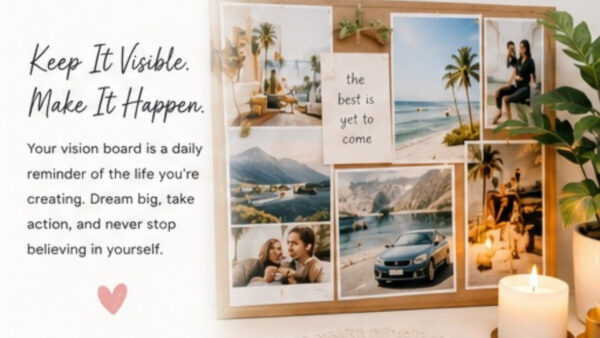
A vision board, sometimes called a dream board or goal board, is a collection of pictures, words, quotes, colors, and symbols that represent something you want to pursue, experience, or remember.
Some people create one large board that includes every area of life. Others choose a single theme, such as travel, health, family, faith, finances, or career goals.
Your vision board can be made on poster board, a corkboard, inside a journal, on a printable page, or with a digital design program. There is no single correct format. The best board is one you will enjoy creating and continue to notice after it is finished.

35 Vision Board Ideas for Every Area of Life
Choose one idea for a focused board or combine several themes to create a broader picture of the year or season ahead.
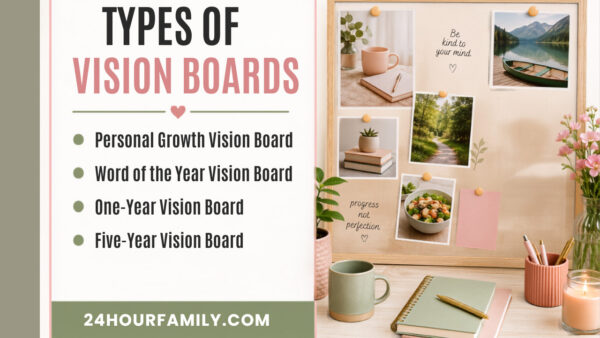
1. Personal Growth Vision Board
A personal growth vision board can represent the qualities, habits, and experiences you want to develop. Include:
- Words describing how you want to feel
- Books you want to read
- Skills you want to learn
- Positive habits you want to practice
- Quotes about courage, patience, or confidence
- Images representing a calmer or more purposeful life
Instead of focusing only on what you want to have, consider who you want to become.
2. Word of the Year Vision Board
Choose one word that reflects the direction you want your life to take. Examples include simplify, grow, create, restore, brave, joyful, intentional, peaceful, or flourish.
Place your word in the center of the board and surround it with:
• Supporting quotes
• Meaningful images
• Related habits
• A Bible verse or affirmation
• Colors that match the mood of the word • Specific ways you can live out the word
This is an easy option when a large board filled with many goals feels overwhelming.
3. One-Year Vision Board
Create a board around what you would like to experience or accomplish during the next 12 months. Divide the board into categories such as:
- Family
- Health
- Home
- Work
- Finances
- Faith
- Travel
- Fun
Choose a few priorities instead of trying to transform every area of life at once.
4. Five-Year Vision Board
A five-year vision board allows you to think beyond your immediate to-do list. Add images that represent:
• Where you would like to live
• Work you would like to be doing
• Relationships you want to strengthen • Financial milestones
• Trips or experiences
• Skills or education
You do not need to know exactly how everything will happen. Use the board to identify the direction you want to move toward.
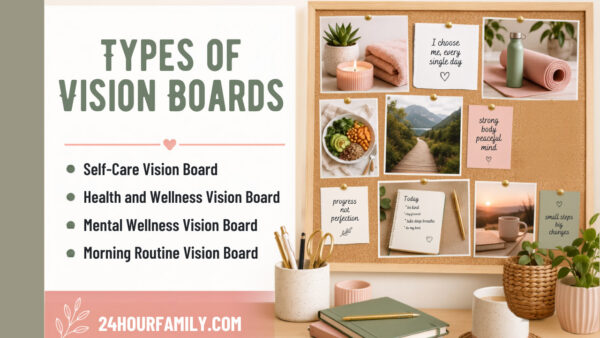
5. Self-Care Vision Board
A self-care vision board can focus on the small routines that help you feel rested, supported, and emotionally refreshed.
Possible images and phrases include:
• Quiet mornings
• Time outdoors
• A consistent bedtime
• Reading for pleasure
• Creative hobbies
• Healthy boundaries
• Time with supportive friends
Keep this board realistic. Self-care can be as simple as drinking water, going for a walk, or creating room in your schedule to rest.
6. Health and Wellness Vision Board
Use a wellness vision board to represent habits that support your physical and emotional health. Include ideas such as:
- Nourishing Meals
- Strength training
- Walking
- Stretching
- Improved Sleep
- Drinking more water
- Spending time outside
- Scheduling preventative appointments
- Reducing Stress
- Celebrating progress that is not tied to a number
Choose images that feel encouraging rather than critical.
7. Mental Wellness Vision Board
A mental wellness vision board can remind you to make room for peace, support, connection, and healthy coping strategies.
Add:
• Calming colors
• Nature scenes
• Breathing or grounding reminders
• Journal prompts
• Encouraging statements
• Boundaries you want to maintain
• People or places that help you feel safe • Activities that help you reset
This board should feel gentle and supportive, not like another list of expectations.
8. Morning Routine Vision Board
Create a board that represents how you would like to begin your day. You might include:
• Waking at a consistent time
• Prayer or devotional reading
• Drinking water
• A nourishing breakfast
• Movement or stretching
• Writing a short priority list
• Avoiding your phone for the first few minutes • Preparing the night before
A morning routine board works especially well as a small printable placed near your desk, mirror, or nightstand.
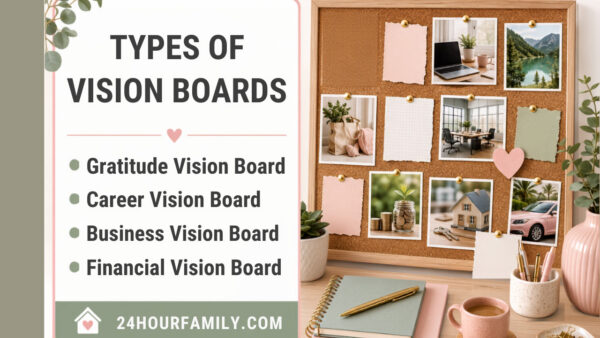
9. Gratitude Vision Board
A gratitude vision board focuses on what you already value rather than only what you want next. Add:
• Family photos
• Favorite places
• Meaningful memories
• Small everyday comforts
• Notes about answered prayers
• Words that describe your current blessings
• Drawings or messages from your children
• Photographs of ordinary moments you want to remember
You can continue adding to this board throughout the year.
10. Career Vision Board
A career vision board can help you identify what professional growth means to you. Include:
- A job title you would like to pursue
- A type of workspace you enjoy
- Skills you want to improve
- A certification or degree
- A salary or income goal
- A business you want to build
- People whose work inspires you
- A healthy work-life rhythm
- A conference or networking event
- A date for completing an important project
Add practical action steps so the board becomes more than a collection of attractive office images.
11. Business Vision Board
A business vision board can combine creative ideas with measurable goals. Possible sections include:
- Products or services to launch
- Monthly revenue goals
- Website traffic goals
- Email list growth
- Content you want to publish
- Customers you want to serve
- Work hours you want to maintain
- Systems you want to create
- A team you want to build
- The impact you want your business to have
Use screenshots, product mockups, numbers, charts, or words that represent progress.
12. Financial Vision Board
A financial vision board can make money goals feel more specific and intentional. Include:
- An emergency fund goal
- A debt payoff amount
- Retirement contributions
- A home repair fund
- A family vacation fund
- A savings tracker
- A monthly budget goal
- A charitable giving goal
- A visual representation of financial peace
Use exact numbers when possible. “Save $3,000 for a family trip” is more actionable than simply adding a picture of money.
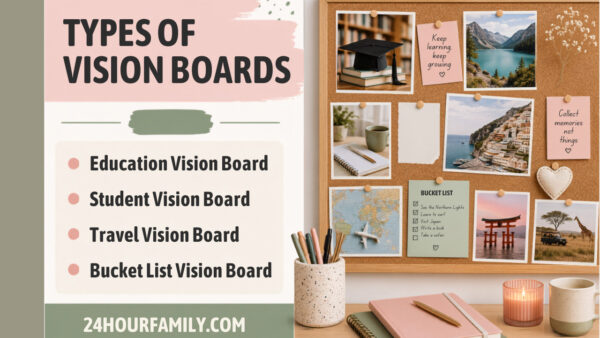
13. Education Vision Board
An education vision board works for adults, college students, teens, and younger children. Add:
- A diploma or certificate
- A school or program
- Books to complete
- A grade goal
- A study schedule
- A new language
- A musical instrument
- A research topic
- A skill you want to master
- A photograph of a future graduation celebration
This board can be displayed near a study area for extra encouragement.
14. Student Vision Board
A student vision board can include academic goals as well as friendships, hobbies, sports, and personal growth.
Ideas include:
- Completing assignments on time
- Improving a specific subject
- Trying a new activity
- Reading more books
- Making new friends
- Preparing for college
- Learning to manage time
- Getting enough sleep
- Joining a club or team
- Celebrating effort and improvement
Let children and teens choose their own images so the finished board reflects their interests.
15. Travel Vision Board
A travel vision board can focus on one dream trip or many places you hope to visit. Include:
- Destination photos
- Maps
- Landmarks
- Foods you want to try
- Hotels or cabins
- Road trip routes
- National parks
- Beaches or mountain destinations
- Passport stamps
- A travel savings goal
Add smaller local adventures alongside major vacations so the board includes experiences you can begin planning now.
16. Bucket List Vision Board
A bucket list vision board represents experiences you hope to have during your lifetime or within a specific season.
Ideas may include:
- Seeing a favorite landmark
- Learning to paint
- Taking a family cruise
- Writing a book
- Attending a concert
- Planting a garden
- Running a race
- Learning to cook a special meal
- Taking a mother-daughter trip
- Volunteering for a meaningful cause
Use checkboxes or removable notes so you can mark experiences as they happen.
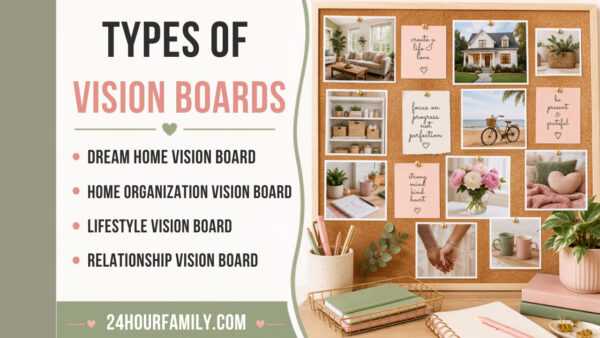
17. Dream Home Vision Board
A dream home vision board can represent a future home or changes you want to make in your current space.
Add:
- Exterior styles
- Room layouts
- Paint colors
- Storage solutions
- Furniture
- Garden ideas
- Outdoor living spaces
- A peaceful reading corner
- A family gathering space
- Home maintenance goals
You can create a board for the entire house or focus on one room at a time.
18. Home Organization Vision Board
This board focuses less on decorating and more on creating a home that functions well. Include pictures of:
• Organized closets
• Clear kitchen counters
• Labeled storage
• A family command center
• Simplified toy storage
• A practical laundry area
• A manageable cleaning routine • Items you want to donate
• A peaceful, uncluttered room
Add one small project to complete each month.
19. Lifestyle Vision Board
A lifestyle vision board represents what you want your ordinary days to look and feel like. Instead of filling it only with luxury purchases, consider:
- Slow mornings
- Family dinners
- Flexible work
- More time outdoors
- Creative hobbies
- A less crowded schedule
- Time with friends
- A cozy home
- Meaningful traditions
- Better boundaries
This kind of board can help you notice whether your daily routines match your larger priorities.
20. Relationship Vision Board
A relationship vision board can focus on a spouse, partner, family member, or close friendship. Include:
- Ways you want to communicate
- Activities you want to enjoy together
- Traditions you want to begin
- Date ideas
- Trips or experiences
- Words such as trust, laughter, patience, or connection
- Photographs of meaningful memories
- Goals you share
- Ways you can support each other
Focus on actions within your control rather than creating an idealized picture of another person.
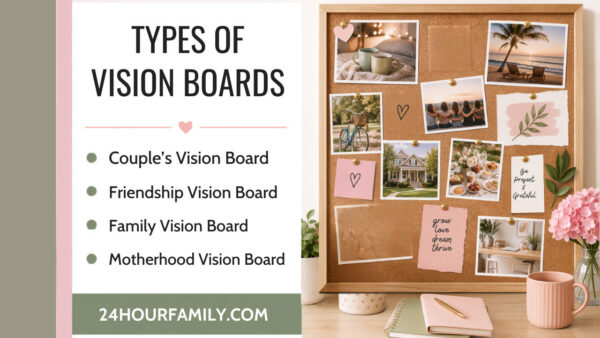
21. Couple’s Vision Board
Create this board together and include shared as well as individual goals. Possible categories include:
- Finances
- Home
- Travel
- Family
- Faith
- Health
- Fun
- Career
- Traditions
- Time together
Discuss why each image matters before placing it on the board. The conversation may be as valuable as the finished project.
22. Friendship Vision Board
A friendship vision board can help you become more intentional about connection.
Add ideas such as:
- Hosting a monthly dinner
- Planning a girls’ weekend
- Sending handwritten notes
- Remembering birthdays
- Making time for phone calls
- Trying a new activity together
- Supporting friends during difficult seasons
- Building new friendships
- Being a more encouraging friend
Include photos of people you love and blank spaces for new memories.
23. Family Vision Board
A family vision board allows everyone to contribute ideas for the year ahead. Include:
• Places to visit
• Books to read together
• Family movie nights
• Service projects
• Outdoor activities
• Holiday traditions
• Faith goals
• Chores or home projects
• Savings goals
• Ways to spend more time together
Younger children can draw pictures or choose stickers when they cannot yet write their goals.
24. Motherhood Vision Board
A motherhood vision board can focus on the memories, routines, and relationships you want to nurture. Consider adding:
- Ordinary moments you want to notice
- Activities to enjoy with your children
- Family traditions
- Ways to care for yourself
- Prayers for your children
- Qualities you want to model
- Memories you want to record
- One-on-one time with each child
- Photos that reflect the current season of family life
Leave room for notes, funny sayings, and small moments you do not want to forget.
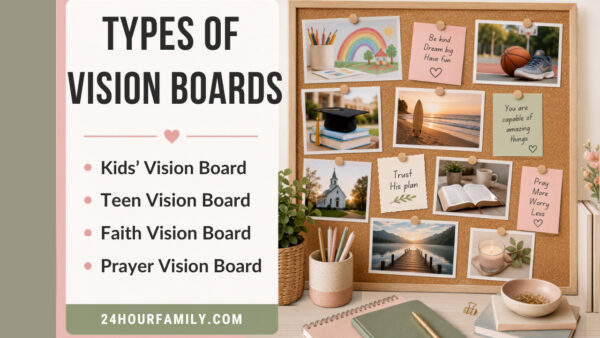
25. Kids’ Vision Board
Children can make simple boards around school, friendships, hobbies, family, kindness, and fun. Provide age-appropriate prompts such as:
- Something I want to learn
- A place I want to visit
- A book I want to read
- Something kind I want to do
- A skill I want to practice
- A family activity I want to try
- Something I am proud of
- A word that describes how I want to feel
Avoid directing every choice. Let the board represent the child’s ideas rather than an adult’s goals for them.
26. Teen Vision Board
A teen vision board may include:
- College or career interests
- Friendships
- Sports
- Creative interests
- Personal style
- Travel
- Saving money
- Learning to drive
- Mental wellness
- Faith
- Independence
- Healthy routines
Digital boards and phone wallpaper designs may feel especially natural for teens.
27. Faith Vision Board
A faith vision board can represent spiritual growth, prayer, service, and the values you want to live by. Include:
- Bible verses
- Prayer requests
- Scripture promises
- Worship lyrics
- Words such as trust, grace, wisdom, courage, or peace
- A church or ministry goal
- Ways to serve others
- People you are praying for
- Spiritual habits you want to strengthen
Rather than treating the board as a promise that every wish will happen, use it as a visual reminder to pray, listen, trust, and take faithful action.
28. Prayer Vision Board
A prayer vision board can be divided into categories such as:
• Family
• Friends
• Health
• Work
• Church
• Community
• Personal growth
• Gratitude
• Answered prayers
Use small cards or sticky notes that can be moved when a prayer changes or is answered.
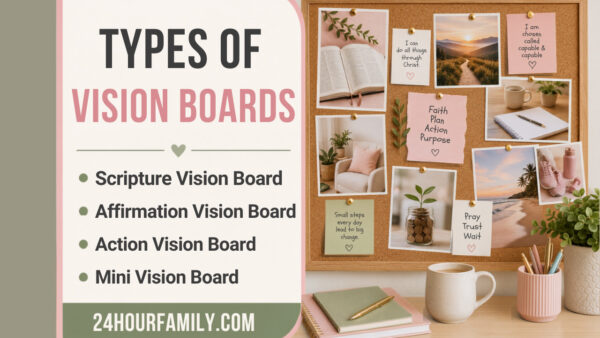
29. Scripture Vision Board
Choose a verse or passage that reflects the season you are in. Place it in the center and add:
• Key words from the passage
• Related verses
• Images that reflect its message • Written prayers
• Personal applications
• A habit inspired by the verse
This can also be made as a journal page, bookmark, phone background, or small framed print.
30. Affirmation Vision Board
An affirmation vision board focuses on encouraging statements you want to remember.
Examples include:
• I can take one step at a time.
• Progress matters more than perfection. • I am allowed to rest.
• I can learn difficult things.
• My daily choices shape my future.
• I will make room for what matters.
• I can ask for help.
• I will celebrate little progress.
Choose statements that feel honest and supportive rather than unrealistic.
31. Action Vision Board
An action vision board connects every dream with a practical next step. For each major goal, add:
- The desired outcome
- The first action
- A target date
- A progress tracker
- A person who can help
- A possible obstacle
- A plan for overcoming it
For example, place a travel photo beside a savings tracker, estimated cost, and booking deadline.
32. Mini Vision Board
A mini vision board is a good choice when you have limited space or want to focus on one short-term goal. Create one on:
• An index card
• A notebook page
• A clipboard
• A small cork tile
• A bookmark
• A printable template
• The inside cover of a planner
Mini boards can be updated monthly or seasonally.
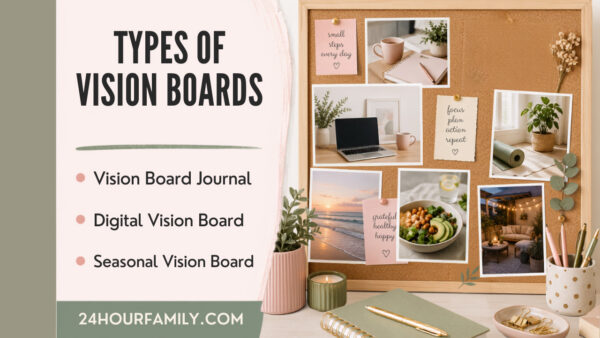
33. Vision Board Journal
Dedicate a journal or binder to your goals and ideas.
Each spread can include:
• One goal
• Inspiring pictures
• A written reason the goal matters • Action steps
• Progress notes
• Obstacles
• Reflections
• Photos or keepsakes
A journal offers more privacy than a wall display and provides room to record how your goals change.
34. Digital Vision Board
A digital vision board can be created with design software, a presentation program, or a simple photo collage app.
Use it as:
- A computer background
- A tablet wallpaper
- A phone lock screen
- A private Pinterest board
- A digital planner page
- A rotating slideshow
Upload your own photographs along with inspirational images so the design feels personal rather than generic.
35. Seasonal Vision Board
Create a smaller board for spring, summer, fall, or winter. Include:
- Seasonal activities
- Family traditions
- Home projects
- Recipes
- Outdoor plans
- Books
- Holidays
- Short-term health goals
- Places to visit
- Memories you want to make
A seasonal vision board can feel more manageable than planning an entire year at once.
Questions to Ask Before Making a Vision Board
Before gathering images, spend a few minutes thinking about what you want the board to represent. Ask yourself:
• What matters most to me in this season?
• How do I want my ordinary days to feel?
• Which area of my life needs the most attention?
• What would I regret not pursuing?
• What do I want to learn?
• What habit would make the biggest difference?
• Which relationships do I want to strengthen?
• What would financial peace look like?
• Where would I like to travel?
• What do I want my home to feel like?
• How do I want to grow spiritually?
• What do I want to remember about this season?
• Which goal feels exciting rather than expected?
• What is one small step I can take this month?
• What can I remove from my life to make room for what matters?
Write your answers before deciding what belongs on the board.
What to Put on a Vision Board
A vision board can include much more than magazine clippings. Consider using:
- Personal photographs
- Magazine pictures
- Printed online images
- Handwritten goals
- Quotes
- Bible verses
- Affirmations
- Numbers and dates
- Maps
- Tickets or small keepsakes • Drawings
- Stickers
- Fabric or ribbon
- Paint samples
- Lists
- Habit trackers
- Savings trackers
- Checkboxes
- A word of the year
- Meaningful symbols
Choose images because they represent something important to you, not simply because they are attractive.
How to Make a Vision Board: Choose a Theme or Timeframe
Decide whether your board will represent one goal, one area of life, the coming year, or a longer season.
A focused board may be easier to create than one that tries to include every dream you have ever had.
Gather Your Supplies
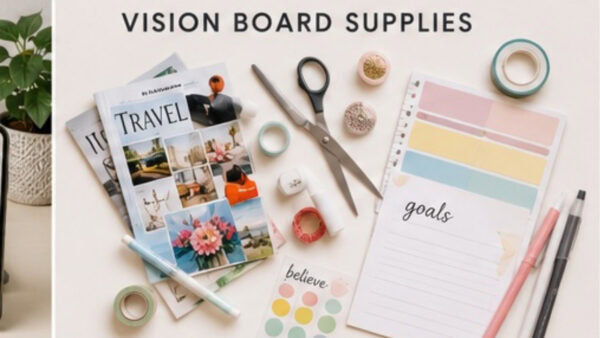
For a physical board, you may need:
- Poster board, cardstock, foam board, or corkboard
- Magazines or printed pictures
- Personal photographs
- Scissors
- Glue or tape
- Markers or pens
- Stickers or decorative paper
- Printable quotes or planning pages
For a digital board, gather photographs and save them in one folder before beginning your design.
Brainstorm Before Choosing Pictures
Write down the goals, feelings, values, habits, and experiences you want the board to represent.
This makes it easier to choose meaningful images rather than filling the space with random pictures.
Select Images and Words
Look for pictures that create a personal connection.
A photograph of a peaceful porch may represent more family time. A stack of books may symbolize finishing a degree. A trail may represent improved health, adventure, or perseverance.
Add words and phrases that clarify what the images mean to you.
Arrange Everything Before Gluing
Place the largest or most important images first.
Try arranging the board by:
- Life category
- Goal
- Color
- Timeline
- Priority
- A central word or image
Move the pieces until the layout feels balanced and easy to understand.
Add Action Steps
Include at least one practical next step for each important goal. Write down:
• What you will do first
• When you will begin
• A target date
• How you will measure progress
This turns the board into a useful planning tool rather than a decoration you stop noticing.
Display It Where You Will See It
Place a physical board near your desk, inside a closet door, in your bedroom, or beside your planner. Save a digital board as a phone or computer background.
The board should be visible enough to remind you of your priorities without making you feel pressured. Review and Update Your Board
Look at your board regularly and ask:
• Is this goal still important?
• What progress have I made?
• What is my next step?
• Does anything need to be removed?
• What new goal or memory should be added?
A vision board can change as your life, responsibilities, and priorities change.
How to Turn Vision Board Ideas Into Real Goals
A board may help you clarify what you want, but progress comes from the choices you make afterward.
Choose three priorities from your board and write one measurable goal for each. For example:
Vision: Take a family beach vacation.
Goal: Save $2,400 by June.
First step: Open a separate savings account and transfer $200 each month.
Vision: Feel stronger and more energetic.
Goal: Complete two strength workouts each week. First step: Schedule the workouts on Sunday evening.
Vision: Grow spiritually.
Goal: Complete one devotional reading five mornings each week. First step: Place the devotional and a pen beside the coffee maker.
Small, repeated actions are what move a goal from the board into everyday life.
Vision Board Ideas for a Group or Party
A vision board party can be a meaningful activity for friends, families, women’s groups, classrooms, homeschool groups, or church gatherings.
Provide:
- Poster boards or printable templates
- Magazines
- Scissors
- Glue
- Markers
- Stickers
- Printed quotes
- Snacks and drinks
- A list of reflection questions
Begin with a few quiet minutes for brainstorming. Allow everyone to choose whether they want to share their board, since some goals may feel private.
For children or teens, offer prompts but allow them to make their own choices.
More Vision Board Resources to Explore
- Inspirational Vision Board Quotes – Find uplifting quotes that add encouragement, positivity, and purpose to your vision board.
- Vision Board Coloring Pages – Combine creativity and goal setting with printable coloring pages designed to inspire big dreams.
- Vision Board Quotes Printable – Print motivational quotes, ready to cut out and add to your vision board.
- Vision Board Worksheets – Organize your goals, ideas, and action steps with helpful worksheets before creating your dream board.
Are vision boards and dream boards the same thing?
Of course. Most people use both terms interchangeably. While some distinguish between aspirational dreams and actionable goals, both represent a visual collection of future aspirations.
What are other ways to visualize my goals?
If vision boards aren’t your preferred planning method, try a vision journal, written goal planner, mood board, digital lock screen, or daily reflection notebook.
What should adults and teens include on their vision boards?
Adults often focus on careers, finances, family, and health, while teens may emphasize school, hobbies, friendships, and future education. Both can use this approach to organize their goals and priorities.
How do I turn my goals into a digital vision board?
Use Canva or another design platform with a vision board template. Add personal photos, quotes, and goals, then save the finished design as your desktop or phone background.
Do vision boards actually work?
A vision board helps turn your goals into daily reminders that support consistent action. It won’t accomplish your goals by itself, but it can inspire and motivate you while keeping your goals visible every day.
How often is it a good idea to refresh a vision board?
Many people refresh their board at the beginning of each year, but there’s no fixed schedule. Refresh your board whenever your priorities shift, or you celebrate a major achievement.
What size poster should I use for a vision board?
A standard poster board works well for hanging on a wall, while a mini board on an index card, planner page, or cork tile is ideal if you want something portable.
Are vision boards appropriate for children?
Absolutely. Kids often enjoy choosing pictures that reflect their hobbies, school achievements, favorite activities, and future dreams. The possibilities are endless, and creating one together is a fun way to talk about hopes for the future.
Create a Vision Board That Feels Personal
The best vision board ideas are not necessarily the most dramatic or visually perfect. They are the ones that reflect your real priorities, values, hopes, and responsibilities.
Your board might include a major career goal beside a reminder to have dinner with your family more often. It may include an exciting trip, a peaceful morning routine, a prayer for your child, or a small habit you have been trying to build.
Choose images and words that mean something to you, connect them with practical action steps, and allow the board to change as you do.
