
Free Farm Animals Finger Puppets Printable (20 Animals PDF)
These free farm animal finger puppets bring the barnyard to life one finger at a time, and kids will want to make every single one.
This free printable set includes 20 farm animals across 4 pages — pig, cow, goat, horse, sheep, duck, chicken, cat, dog, bunny, donkey, goose, turkey, baby chick, bee, turtle, crow, frog, and more — each designed to color, cut out, and wear on your fingers for imaginative play, storytelling, and classic farm songs like Old MacDonald. Print them in minutes, color them in, and your little ones have their very own barnyard puppet show ready to go.
These printable farm animal finger puppets are perfect for preschool, pre-k, kindergarten, and first grade — at home, in a classroom, or as part of a farm-themed unit. No prep required beyond printing and a pair of scissors.

What’s Included in This Farm Animal Finger Puppet Set?
This free printable pack includes 20 farm animals across 4 pages — one of the most complete free farm finger puppet sets available anywhere.
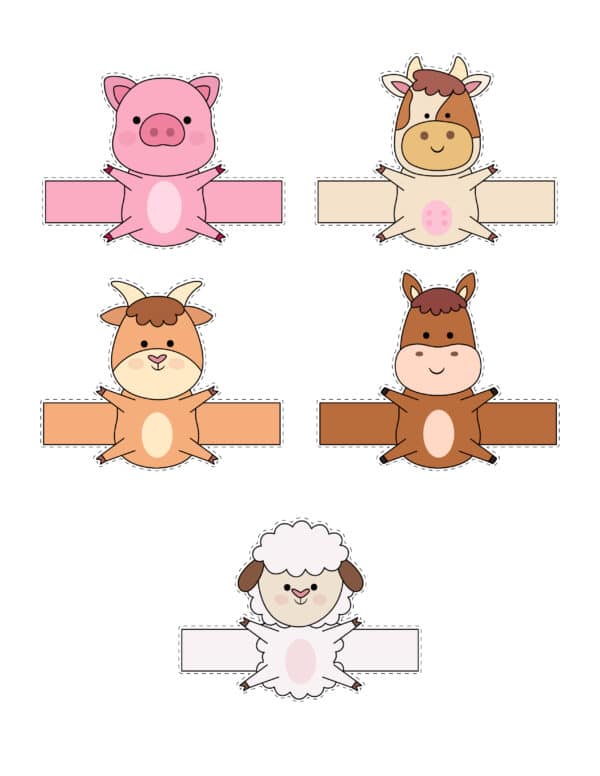
PAGE 1 — The Classic Barnyard Five
Pig — The undisputed favorite of almost every preschooler in the room. The pig puppet is round, pink, and immediately recognizable, which makes it a natural starting point for the whole set. Use it to kick off an Old MacDonald session or as the star of a retelling of The Three Little Pigs.
Cow — The classic barnyard centerpiece. The cow puppet is great for practicing the “moo” sound and sparks instant recognition in even the youngest children. A natural pairing with discussions about where milk comes from and how dairy farms work.
Goat — A fun addition that many kids don’t expect to see on a farm. The goat puppet is a great conversation starter — goats are curious, mischievous animals, and kids love giving this one a personality to match. Pairs naturally with discussions about what goats eat and why farmers keep them.
Horse — One of the most popular farm animals with young children. The horse puppet is a natural prop for acting out barn stories and opens up conversations about how horses help on a working farm. Expect this one to be requested repeatedly.
Sheep — A fluffy, lovable puppet perfect for singing “Baa Baa Black Sheep” or counting along with nursery rhymes. The soft, rounded shape makes this one of the easier puppets in the set for younger cutters to work with.
PAGE 2 — The Farmyard Favorites
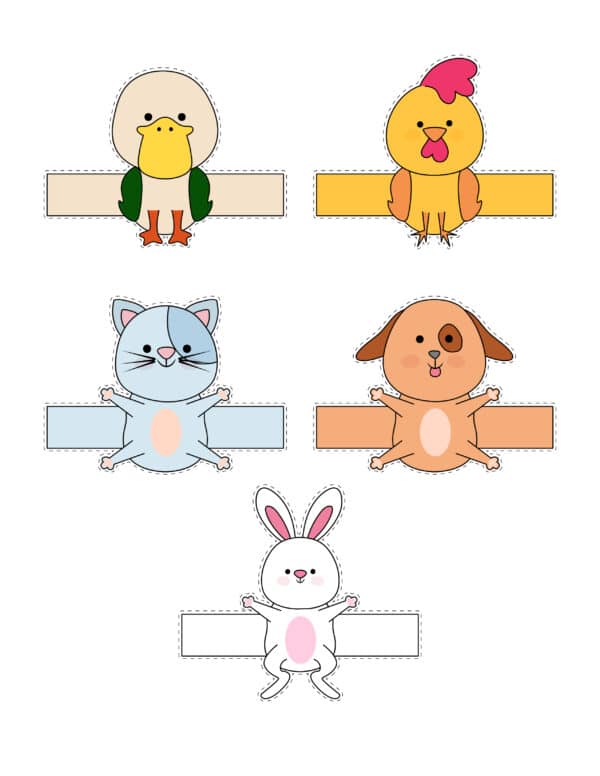
Duck — Ducks are a staple of early childhood songs and stories, and this one is instantly recognizable with its green wings and orange feet. Use it alongside “Five Little Ducks” or Old MacDonald and watch how quickly kids connect the puppet to a song they already know.
Chicken/Rooster — Chickens are endlessly entertaining for preschoolers — the clucking, the pecking, the bright red comb. This puppet pairs perfectly with discussions about where eggs come from and works beautifully as a prop for “The Farmer in the Dell.” The rooster is also a natural prompt for talking about morning routines on a farm.
Cat — A farm cat is a real working animal, and kids are often surprised to learn this. This blue-gray cat puppet opens up a natural conversation about comparisons — what does a cat do on a farm versus what does a dog do? A great critical thinking prompt wrapped up in a simple craft.
Dog — Farm dogs are faithful and hardworking, and kids who have dogs at home connect with this one immediately. Use it to talk about how dogs help farmers by herding sheep, guarding the barn, and keeping an eye on the animals.
Bunny — A white rabbit with pink ears that immediately captures every child’s attention. While rabbits aren’t always thought of as farm animals, they live on many small farms and homesteads. This puppet pairs beautifully with spring themes, Easter activities, and farm units.
PAGE 3 — The Extended Farm Family
Donkey — A gray, soft-faced donkey that is surprisingly popular with kids — probably because donkeys are funny and a little unexpected. A natural prop for the nativity story as well as farm units, making this puppet one of the most seasonally versatile in the set.
Goose — A white goose with a yellow beak and orange feet. Perfect for “Old MacDonald Had a Farm” and for discussing the difference between ducks and geese — a surprisingly rich comparison activity for preschoolers who think they look the same.
Turkey — One of the most striking puppets in the entire set, with its dramatic fan tail in deep red and brown. This puppet does double duty — it works beautifully in a farm unit and then again as a Thanksgiving craft, making it one of the most seasonally flexible puppets you’ll find here.
Cow (Bull) — A darker brown cow that pairs naturally with the lighter cow from Page 1. Having two versions of the same animal opens up a great discussion about different breeds, male versus female animals on a farm, and the different roles animals play in farm life.
Horse (Dark/Pony) — A darker, shaggier horse or pony that makes a perfect companion to the lighter horse on Page 1. Kids love having two horses to play with — they naturally start giving them different names, personalities, and stories, which is exactly the kind of imaginative play these puppets are designed to spark.

PAGE 4 — The Farm Garden Creatures
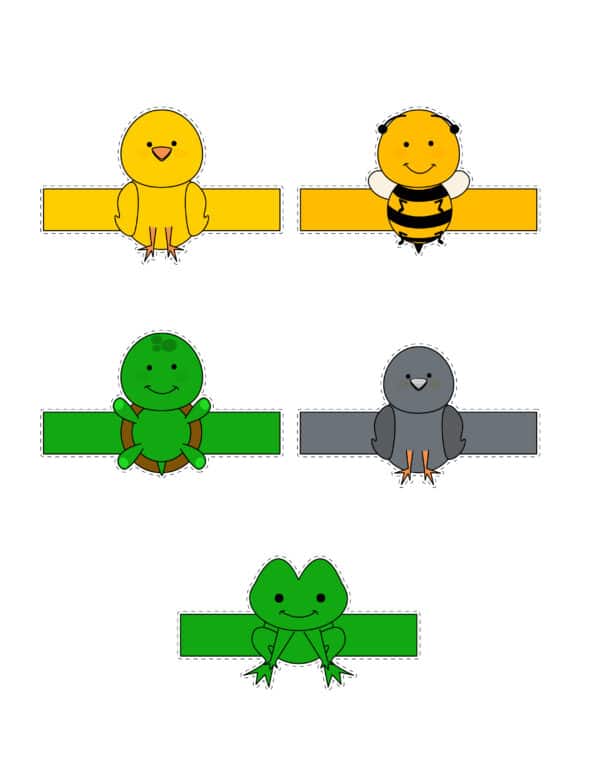
Baby Chick — A bright yellow baby chick that makes this set even more complete. Baby chicks are irresistible to young children, and this puppet pairs naturally with discussions about life cycles, hatching eggs, and what happens on a farm in spring.
Bee — A bumblebee with classic black and yellow stripes. Bees are essential to every farm and garden, and this puppet is a wonderful way to introduce young children to pollinators and why they matter. One of the most unique additions in this set — you won’t find a bee in most competing finger puppet packs.
Turtle — A cheerful green turtle that makes this set genuinely unusual. Turtles are found near farm ponds and in garden patches, and kids who have seen a turtle in a garden will connect with this one immediately. A fun springboard for discussing pond life and the different creatures that share a farm’s habitat.
Crow — A gray-black crow that rounds out the bird collection beautifully. Crows are a real part of farm life — and a great way to talk about why farmers use scarecrows! This puppet pairs naturally with a scarecrow craft or harvest theme and is one of the most unexpected and delightful additions in the set.
Frog — A bright green frog in a classic sitting pose. Farm frogs live near ponds, ditches, and wet fields, and kids absolutely love them. This puppet is a natural pairing with “Five Little Speckled Frogs,” spring-themed nature, and any pond or wetland unit. Like the bee, turtle, and crow, the frog is what makes this set stand out from every other farm finger puppet printable available.
Pages 1 and 2 cover the animals most children immediately associate with farm life — the classic barnyard crew that stars in Old MacDonald and most farm-themed picture books.
Pages 3 and 4 extend the set into less expected territory: a turkey perfect for Thanksgiving, a donkey that works for the nativity, a bee that introduces the topic of pollinators, and a frog that opens up a whole pond-life discussion.
Together, all 20 puppets make this one of the most versatile free farm printable sets available — useful not just for farm units but for spring nature themes, Thanksgiving, Easter, and even Christmas nativity storytelling.
What You Need to Make These Finger Puppets
This craft requires almost nothing:
- Printer and paper (white cardstock works best — more durable than regular printer paper)
- Crayons, colored pencils, or markers
- Child-safe scissors
- Glue stick or tape
One important note: These are finger puppets, not hand puppets — they’re sized to fit over a single finger. If you’d like to use them as hand puppets, simply adjust your printer settings to print at 200% scale across two pages, and they’ll work perfectly as larger hand puppets too.
How to Make Farm Animal Finger Puppets — Step by Step
Step 1: Print the template. Download and print the free farm animal finger puppet template onto white cardstock. Cardstock holds up much better than regular printer paper, especially for younger children who will be wearing and playing with these repeatedly.
Step 2: Cut out each puppet. Cut around the outer edge of each animal. Younger children can cut along the outer dashed line (a looser cut that’s easier to manage). Older children can try cutting more precisely around the animal’s details.
Step 3: Cut the finger loop strips. Each puppet has two small rectangular strips at the bottom. Cut these out carefully — they’re what make the puppet wearable.
Step 4: Form the finger loops. Wrap each strip into a small ring sized to fit comfortably over a finger. Glue or tape the ends together to hold the ring shape in place.
Step 5: Attach the loops to the puppet. Glue one loop to the back of the puppet near the top (for the index finger) and one near the bottom (for the thumb). Press firmly and let the glue dry before playing.
Step 6: Put on a puppet show. Slide fingers through the loops and bring your barnyard to life.
Extension options:
- Glue puppets onto clothespins to create clothespin animal puppets that clip onto books, bags, or puppet theater edges
- Glue onto popsicle sticks for simple stick puppets
- Print at double size for use as hand puppets
Please note that this post contains affiliate links.



How to Use These Farm Animal Finger Puppets
Sing Old MacDonald. This is the most natural use for this entire set — and the most fun. Give each child a different animal puppet, assign them their animal’s sound, and sing through Old MacDonald together. When the song reaches their animal, they wiggle their puppet and make the sound. Simple, joyful, and genuinely educational.
Act out farm stories. Use the puppets to retell favorite farm books — Click, Clack, Moo, Barnyard Dance, Big Red Barn, or any farm animal book your class loves. Having puppets in hand transforms passive listening into active participation.
Finger plays and counting rhymes. Farm animals and counting rhymes go together perfectly. Use the puppets to act out “Five Little Ducks,” “Baa Baa Black Sheep,” or “This Little Piggy.” Pop each puppet off as its animal’s verse ends — kids love the physical act of removing puppets from their fingers as part of the counting sequence.
Dramatic play center. Add these to your dramatic play area with a toy barn and some small farm accessories. Kids can use them independently during free play, creating their own barnyard stories without any adult direction required.
Farm unit extension activity. If you’re running a farm theme week, these puppets tie every lesson together. Use them to introduce new animals on Monday, retell a farm book on Tuesday, sing Old MacDonald on Wednesday, do a counting activity on Thursday, and put on a class puppet show on Friday.
One-on-one storytelling. For kids who are reluctant speakers or shy in group settings, finger puppets are remarkable conversation starters. Something about having a puppet on your finger gives children permission to speak in a voice that isn’t quite their own — which makes it much easier to tell a story.
Why Finger Puppets Are So Good for Young Children
They build language naturally. When a child gives a puppet a voice — makes it moo, tells it to come eat, has it argue with the pig — they’re practicing vocabulary, sentence structure, and narrative without any of it feeling like a lesson. The puppet is the character; the child is the author.
They develop fine motor skills in two different ways. First through making: the cutting, coloring, and assembling of the puppet itself. Then through playing: manipulating the puppet on a finger requires the same grip and hand control that children need for writing. Both phases of this craft build the hand strength that teachers look for in kindergarten readiness.
They give shy children a voice. A puppet can say things a child might not feel comfortable saying directly. This is especially true for children who are hesitant during circle time or in group discussions — a puppet on their finger creates a small distance that makes speaking much easier.
They make abstract concepts concrete. Counting is more memorable when you count the ducks off your fingers one by one. Animal sounds are stickier when you make them in the voice of a puppet you colored yourself. The physical, hands-on nature of puppet play is exactly why early childhood educators rely on puppets so heavily.
What age are these finger puppets for?
These puppets work well for ages 2–7 — toddler through early elementary. Younger children (ages 2–3) may need help with the cutting and assembly steps but can wear and play with finished puppets independently. By age 4–5, most children can complete the full activity with light supervision.
Do I need cardstock or can I use regular printer paper?
Cardstock is strongly recommended. Regular printer paper works, but the puppets become floppy quickly, especially with repeated play. White cardstock at 65–80 lb weight is the sweet spot — sturdy enough to hold its shape but still easy for kids to cut.
Can these be used as hand puppets instead of finger puppets?
Yes — print at 200% scale across two pages in your printer settings, and the puppets will be large enough to use as hand puppets.
Can I laminate these for repeated use?
Yes — laminate the printed sheet before cutting out the puppets to ensure they withstand repeated play. Laminated puppets are also easier to wipe clean.
What songs work best with these farm animal finger puppets?
Old MacDonald Had a Farm is the most natural pairing. Other great options include Five Little Ducks, Baa Baa Black Sheep, Mary Had a Little Lamb, and The Farmer in the Dell.
These puppets are small, simple, and completely free — and they consistently deliver that moment.
