
Free Junk Journal Vintage Printables
Old letters, faded photographs, pressed flowers, handwritten notes, and timeworn book pages can make an ordinary journal feel as though it holds stories collected over generations.
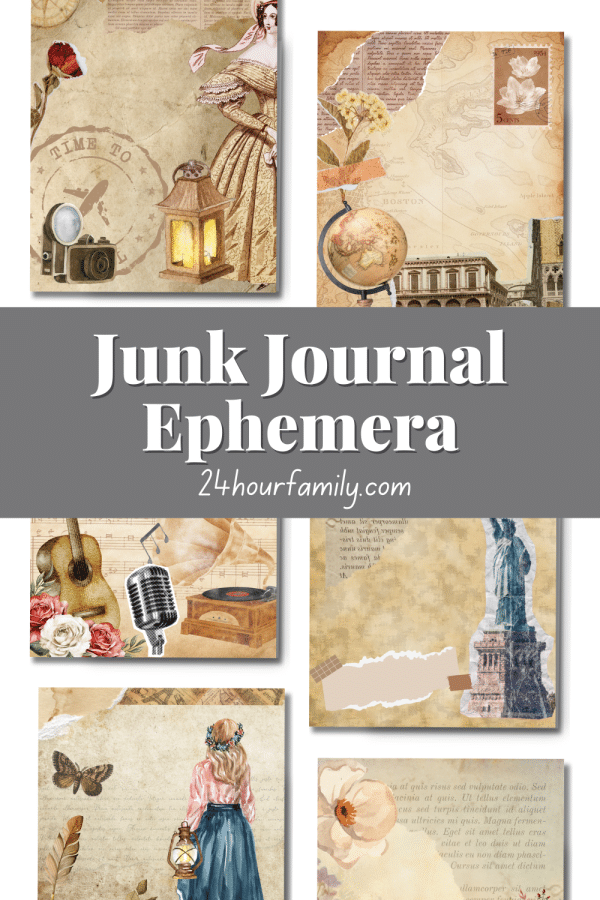
This set of free junk journal vintage printables gives you 11 beautifully layered pages filled with antique-inspired paper textures, florals, travel imagery, handwriting, maps, music, and nostalgic illustrations. Print the designs at home and use them as full journal pages, decorative backgrounds, decorative inserts, scrapbook paper, or cut-apart embellishments.
Free Junk Journal Vintage Printables
Each page has its own personality while sharing the same warm, aged color palette. You can use the complete collection to create one coordinated vintage junk journal or mix individual sheets into travel journals, botanical projects, memory books, altered books, and handmade cards.
What Is Included in the Vintage Junk Journal Printable Set?
The free PDF includes 11 full-page vintage designs.
Rather than repeating one pattern throughout the collection, the pages combine several complementary themes:
- European and American travel
- Antique architecture
- Vintage maps and globes
- Roses and botanical illustrations
- Handwritten letters and aged documents
- Old books and sheet music
- Victorian-style people
- Postage stamps and postal markings
- Cameras, lanterns, and travel keepsakes
- Romantic florals
- Music-themed imagery
The soft beige, cream, muted rose, faded blue, sepia, and warm brown colors make the pages easy to combine with kraft paper, lace, ribbon, book pages, pockets, tags, and other vintage-inspired papers.

A Closer Look at the Printable Pages
Vintage European Travel Page
The first design features an antique airplane, European architecture, a river bridge, torn handwritten paper, and an inspirational travel quote.
This page would make a lovely cover, title page, or opening spread for a travel-themed junk journal.
Statue of Liberty Vintage Page
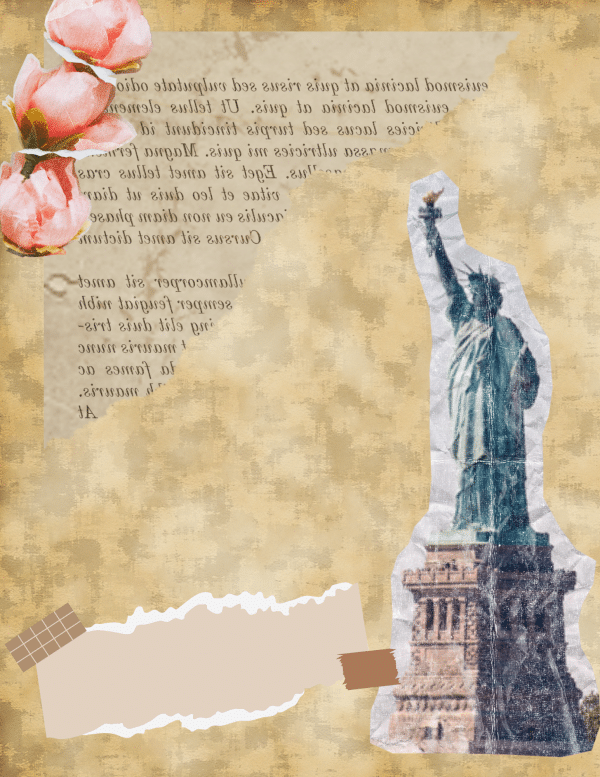
A faded Statue of Liberty image, weathered paper, pink roses, torn text, and strips of decorative tape give the second page a nostalgic travel feel.
Use the blank areas for journaling, photographs, ticket stubs, or a handwritten travel memory.
Antique Map and Globe Page
This page combines an aged map, a vintage globe, pressed flowers, a postage stamp, and a historic canal scene.
It works especially well in an explorer journal, geography notebook, travel diary, or heritage scrapbook.
Victorian Traveler Page
A Victorian woman, an old-fashioned camera, a glowing lantern, faded paper, and a travel-inspired postal mark create a dramatic vintage scene.
This page could be used as a journal cover or paired with family photographs and stories from the past.
Junk Journal KitLeather Journal
Vintage Garden Page
Soft florals, watercolor flowers, an old watering can, and faded script create a light botanical page.
Use it in a garden journal, nature notebook, floral scrapbook, or spring-themed altered book.
Antique Book and Music Page
This design features sheet music, roses, an open book, and a pressed flower against a cracked and aged background.
It would be beautiful in a reading journal, poetry journal, music journal, or romantic vintage project.
Romantic Victorian Portrait Page
An antique woman’s portrait, roses, torn lace, handwritten paper, and an old lantern give this page an elegant Victorian appearance.
The open center area leaves room for writing, photographs, labels, quotes, or additional embellishments.
Vintage Floral Woman Page
A woman in a sunhat, peach roses, pressed flowers, faded handwriting, and antique postal imagery create a softer cottage-style design.
This page would work well in a garden journal, feminine memory book, or summer scrapbook.
Vintage Correspondence Page
The ninth page features Victorian figures, pressed blue flowers, an old paper pocket, a heart, torn papers, and aged book text.
Use it for a love-letter journal, genealogy project, friendship book, Valentine journal, or family history album.
Antique Letter and Rose Page
A large piece of faded handwritten paper fills this page, with a vintage rose and aged markings over the writing.
Because the design is less crowded, it can be used as writing paper, folded into a pocket, or trimmed into journaling cards and bookmarks.
Vintage Music Page
The final printable combines an acoustic guitar, musical notes, handwriting, a postage stamp, and aged paper textures.
Add it to a music journal, concert scrapbook, song lyric notebook, or creative journal about a favorite musician.

Supplies for Making a Vintage Junk Journal
You do not need specialized equipment to begin. Gather a few basic paper-crafting supplies and add optional embellishments as your journal develops.
You may need:
- Printed vintage junk journal pages
- Printer paper, presentation paper, or lightweight cardstock
- Scissors or a paper trimmer
- Glue stick or paper-safe craft glue
- Double-sided tape
- Bone folder or ruler for making clean folds
- Hole punch
- Needle and strong thread, optional
- Brown distressing supplies (optional)
- Lace, ribbon, or twine
- Old book pages
- Paper pockets and paper bags
- Buttons, charms, or fabric scraps
- Photographs, tickets, receipts, and other keepsakes
Begin with what you already have. Part of the charm of junk journaling is transforming ordinary or unwanted materials into something personal and beautiful.
How to Print the Junk Journal Pages
Download and save the PDF before printing. Opening the saved file in a PDF reader generally gives you more control over the final size and quality than printing directly from a browser window.
Choose Actual Size or 100% Scale when you want the designs printed at their original dimensions.
Select Fit to Printable Area when your printer cuts off the edges or cannot print close to the paper border. This may create a narrow white margin, which you can leave in place or trim away.
Use the highest print-quality setting available when you want the detailed textures and faded imagery to appear clearly.
Best Paper for Junk Journal Printables
Regular copy paper works well for folded journal pages, layering, and paper crafts. It is affordable, easy to cut, and does not make a handmade journal excessively bulky.
Presentation paper or matte photo paper can produce richer colors and sharper details. Use these papers for covers, decorative focal pages, or designs you plan to display prominently.
Lightweight cardstock is useful for:
- Covers
- Writing inserts
- Journal cards
- Pockets
- Tuck spots
- Dividers
- Postcards
Avoid using heavy cardstock for every page because it may make the journal difficult to fold and bind.

How to Make a Simple Junk Journal With the Printables
Print Your Favorite Pages
Print the complete collection or choose only the pages that fit your journal’s theme.
You can print each design once or make duplicates of favorite pages. Repeating a design is especially helpful when you want to use one copy as a full page and cut the second copy into smaller decorative pieces.
Add Plain and Recycled Papers
A junk journal becomes more interesting when decorative pages are mixed with papers that have different colors, textures, and purposes.
Try adding:
- Tea-stained paper
- Coffee-dyed paper
- Kraft paper
- Graph paper
- Lined notebook paper
- Old book pages
- Sheet music
- Paper bags
- Maps
- Paper pockets
- Ledger paper
- Children’s drawing paper
- Scrapbook paper
Some pages can remain decorative while others provide space for writing.
Trim and Fold the Pages
Trim away any unwanted white borders, then cut or fold the papers to fit your journal cover.
Several folded sheets placed inside one another form a section known as a signature. A small journal may contain one signature, while a thicker journal can contain several.
Press firmly along each fold with a bone folder, ruler, or the side of a craft tool to create a neat crease.
Arrange the Pages
Lay the pages out before binding the journal. Alternate heavily decorated sheets with simpler writing pages so the finished book feels balanced.
Place sturdier papers near the outside of each signature and lighter papers toward the center.
Bind the Journal
For a simple handmade journal, place the folded pages together and punch evenly spaced holes through the center fold.
Sew the pages together with strong thread, embroidery floss, or waxed cord. You can also use rings, ribbon, staples, or a premade journal binder when you do not want to sew the pages.
Add Pockets and Tuck Spots
Glue only two or three sides of a piece of paper to create a pocket or tuck spot.
You can make these from:
- Envelopes
- Folded book pages
- Paper bags
- Scrap paper
- Journal cards
- Doilies
- Pieces cut from an extra printable page
Fill the pockets with notes, photographs, bookmarks, small cards, recipes, tickets, or meaningful keepsakes.
Decorate and Personalize the Pages
Finish the journal with handwriting, photographs, drawings, stamps, lace, ribbon, labels, pressed flowers, or small paper clusters.
Take your time filling in each page. A junk journal can continue growing as you collect new memories and materials.

Creative Ways to Use the Vintage Printables
These pages can be used for much more than a traditional bound journal.
Create Decorative Journal Backgrounds
Use the complete pages as backgrounds, then layer photographs, notes, quotes, tickets, envelopes, or paper scraps over the designs.
The backgrounds already contain coordinated textures and images, making it easier to create a finished page design without starting with a blank sheet.
Make Journal Cards
Print the pages on sturdy paper and cut them into rectangles.
Round the corners, ink the edges, and add lined paper to the back. Slip the cards into pockets for hidden journaling space.
Make Decorative Page Markers
Cut tag shapes from your favorite sections of the printable pages. Punch a hole at the top and add ribbon, lace, yarn, or twine.
These page markers can be used to mark your place, decorate journal pages, or provide extra space for short notes.
Make Envelopes and Pockets
Print a design on regular paper and use an envelope template to cut and fold it into shape.
A full page can also be folded upward and glued along the sides to form a pocket inside a journal.
Decorate an Altered Book
Use the printables to cover unwanted text or illustrations in an old book. Add layers of paint, paper scraps, stamps, photographs, and writing to transform the book into a personal piece of artwork.
Create Handmade Cards
Fold sturdy paper into a card base and cut smaller sections from the vintage pages for the front.
Add a sentiment, ribbon, lace, or another decorative accent to make a birthday card, thank-you card, anniversary card, or thinking-of-you card.
Make a Vintage Travel Journal
The airplanes, maps, globes, monuments, postal marks, cameras, and architecture found throughout the collection are especially suited to travel journaling.
Add vacation photographs, hotel stationery, restaurant receipts, maps, postcards, boarding passes, and notes about your favorite memories.
Create a Family Memory Book
Pair the antique-style backgrounds with family photographs, handwritten stories, copied recipes, letters, and pieces of family history.
Even recent photographs can feel timeless when placed against aged papers and vintage floral designs.
Use the Pages for Scrapbooking
Trim the pages to create photograph mats, borders, labels, title pieces, decorative corners, or collage backgrounds.
Because the designs coordinate, you can use several pages in one album without the project feeling mismatched.

How to Give Printed Pages a More Aged Appearance
The printables already include faded colors, worn textures, torn-paper effects, and antique imagery. You can add even more character with a few simple techniques.
Ink the Edges
Lightly apply brown distress ink around the edges with an ink-blending tool or makeup sponge.
Use a small amount at first and gradually build the color. Concentrating the ink around corners creates the appearance of natural age and handling.
Tear Instead of Cutting
Torn edges feel softer and less precise than straight cut lines.
Tear the paper toward yourself for one type of edge and away from yourself for another. Experiment on a scrap before tearing an important section.
Crumple the Paper
Gently crumple the printed sheet, unfold it, and smooth it with your hands.
Add a light amount of brown distressing color over the creases to emphasize the aged texture.
Add Coffee or Tea Staining
Coffee and tea can deepen the color of paper, but moisture may cause printed designs to bleed.
Test a small printed scrap first. Another option is to stain plain paper separately and combine it with the printed designs.
Add Machine or Hand Stitching
Sew around the edges of a printable, photograph, tag, or paper cluster.
Straight, uneven, and zigzag stitches can all add texture. Leave loose thread ends in place when you prefer a less polished appearance.

What Can You Put in a Junk Journal?
A junk journal can hold decorative materials, personal memories, or a mixture of both.
Consider saving:
- Greeting cards
- Postcards
- Ticket stubs
- Receipts from meaningful outings
- Travel brochures
- Maps
- Product labels
- Gift wrap
- Notes and letters
- Photographs
- Children’s drawings
- Pressed flowers
- Fabric scraps
- Recipes
- Quotes
- Prayer cards
- Song lyrics
- Book passages
- Lists and journal entries
Choose objects that tell a story, remind you of a season of life, or simply have colors and textures you enjoy.

Vintage Junk Journal Theme Ideas
Once you have made one journal, you may find yourself planning the next.
The printable collection can be adapted to themes such as:
- European travel
- Family history
- Victorian romance
- Botanical gardens
- Vintage music
- Old-fashioned correspondence
- Books and poetry
- Paris or New York travel
- Faith and prayer
- Wedding memories
- Cottage gardens
- Antique photographs
- Favorite quotes
- Seasonal memories
You can also create an eclectic journal without choosing one specific theme. Mix the designs with objects you collect and allow the pages to develop naturally.

Tips for Beginning Junk Journalers
Do not wait until you own every possible paper-crafting supply. Scissors, glue, paper, and a few saved materials are enough to begin.
Avoid comparing your first journal to highly detailed projects online. Many elaborate journals are built slowly and become more detailed over time.
Leave some blank space. Not every corner needs to contain an image or decorative piece. Open areas give you room to write and help important details stand out.
Create movable pieces whenever possible. Journal cards, folded notes, pockets, and flip-out pages make the journal more interactive.
Most importantly, use materials that mean something to you. The irregular pages, worn edges, handwritten notes, and unexpected combinations are what give a junk journal its personality.

More Junk Journaling Resources to Explore
If you enjoyed these Free Junk Journal Vintage Printables, here are a few more journaling ideas, printable collections, and beginner-friendly guides to help you create beautiful handmade journals.
- Winter Junk Journal Printables – Add snowy papers, cozy patterns, and seasonal accents to your winter-themed journal pages.
- Fall Junk Journal Printables – Fill your journal with warm autumn colors, leaves, and vintage-inspired fall designs.
- Pumpkin Junk Journal Printables – Decorate your pages with pumpkin-themed elements that are perfect for fall journaling.
- Junk Journal – Discover more inspiration, ideas, and tips for creating unique handmade junk journals.
- Beginner’s Guide to Bullet Journaling – Learn simple ways to organize your thoughts, goals, and daily plans with bullet journaling.
- Inspirational Quotes About Journaling – Enjoy a collection of uplifting quotes that celebrate writing, creativity, and self-expression.
- Washi Tape Printable – Print decorative washi tape designs to add colorful borders and finishing touches to your journal pages.
Download the Free Junk Journal Vintage Printables
These 11 vintage-inspired pages give you a coordinated starting point without limiting how your journal can look.
Print the entire set for a vintage journal, or select individual designs for bookmarks, pockets, collage backgrounds, cards, memory books, and altered-paper projects. Add your own photographs, writing, saved papers, and meaningful keepsakes to make every page uniquely yours.
What is a junk journal?
A junk journal is a book created with a mixture of new, recycled, found, and decorative papers. It may be used for writing, memory keeping, collage, scrapbooking, sketching, or simply as a creative project.
Are these printable pages full size?
The collection contains 11 full-page designs. You can print them at their original size, reduce them to fit a smaller journal, or print several pages on one sheet to create miniature journal pages and embellishments.
Can I print the pages more than once?
Yes, you can print multiple copies for your own personal crafting projects. Printing duplicates allows you to use one sheet as a complete background and cut another into tags, pockets, cards, or collage pieces.
Add your site’s precise personal-use or commercial-use terms near the download button so readers can easily understand how the files may be used.
Can I use regular printer paper?
Regular copy paper is suitable for most journal pages and collage projects. It folds easily and helps keep a journal from becoming too thick.
Use cardstock when creating covers, tags, pockets, or pieces that need additional strength.
Do I need to bind the pages into a book?
No. You can use the free printables individually for collage art, scrapbooking, greeting cards, gift tags, decoupage, altered books, paper crafts, or framed artwork.
How can I resize the printables?
Use the scale or page-sizing settings in your printer menu.
Printing at 50% creates a design approximately half the original size. You can also select an option such as “multiple pages per sheet” to create smaller images for tags, cards, mini journals, and collage pieces.
What kind of glue works best?
A glue stick works well for lightweight paper and flat collage pieces. Liquid paper glue provides a stronger hold for heavier items, although too much may wrinkle thin paper.
Double-sided tape is helpful when you want a clean application without drying time.
What is the difference between a junk journal and a scrapbook?
A scrapbook commonly focuses on photographs and memories arranged on coordinated pages. A junk journal usually combines writing paper, found materials, recycled items, decorative pages, pockets, tags, and mixed-media elements.
The two crafts can overlap, and there is no reason you cannot use traditional scrapbook techniques inside a junk journal.

Love these images . Shared to FB @CoastalBohemian. Thanks for sharing at Funtastic Friday
These are lovely images. I can imagine them in so many different projects. I’ll be featuring this post at Thursday Favorite Things tomorrow. 🙂
Wow! So many lovely printables! I hope we get to see you at Tuesday Turn About this week!