
What Is Bible Journaling? Meaning and Common Questions
Bible journaling is a way to slow down with Scripture and record your response to what you read. You might write a question beside a passage, copy a verse into a notebook, note something you learned about God, or turn the passage into a prayer. Some people add drawings and color. Others use words alone.
You can do the practice directly in a Bible or in a separate journal. No artistic style, page layout, or time is required. The important part is reading the passage thoughtfully and returning your attention to God’s Word.
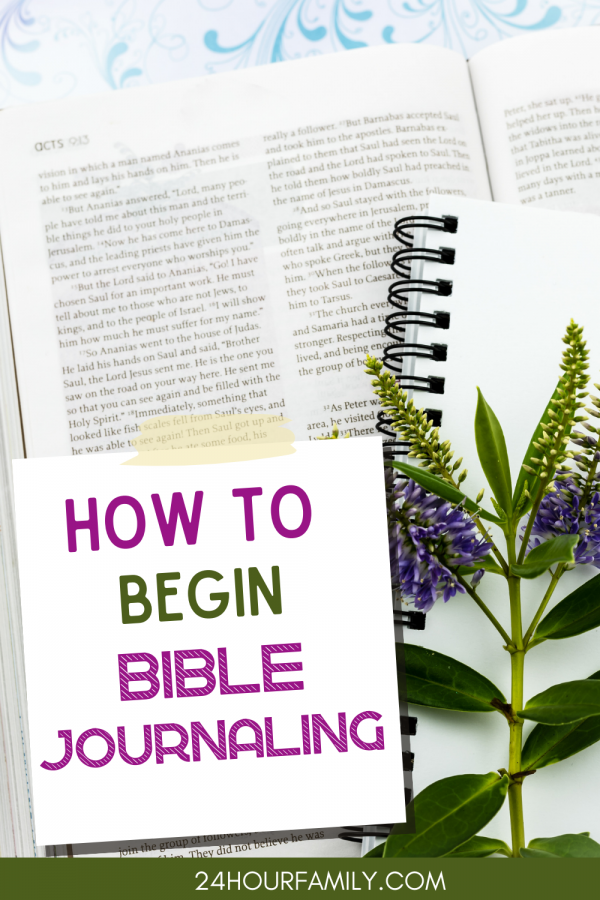
What Does Bible Journaling Mean?
The phrase Bible journaling describes writing or creating in response to Scripture. An entry might record what a passage says, a question it raises, a prayer, or something you want to remember.
Scripture journaling often refers specifically to writing out and reflecting on a Bible passage. Bible art journaling usually includes a visual response, such as lettering or a drawing. People use these terms slightly differently, and a journal can include all of them.
You do not have to make art for your writing to count as Bible journaling.
What Is a Journaling Bible?
A journaling Bible is a printed Bible designed with space for notes, prayers, or artwork. Many have wider margins than a standard Bible. Some provide ruled or blank space beside the text.
A journaling Bible is a tool, not a requirement. You can read the Bible you already own and write in a notebook beside it. This gives you as much room as you need and keeps the printed Bible pages clear.
If you are considering writing or painting directly in your Bible, test your supplies on an inconspicuous page first. Bible paper is often thin, and some ink or paint may show through.
Is Journaling in the Bible Disrespectful?
Christians make different choices about writing in a Bible. Some value the notes they have made beside passages over many years. Others prefer to leave the pages unmarked. Choose the approach that helps you read attentively and treat Scripture with care.
If you feel uneasy about marking your Bible, use a separate notebook. Your prayers and reflections do not have to appear beside the printed text to be meaningful.
Is Bible Journaling Biblical?
The Bible does not command Christians to keep a Bible journal, and a journal is not a measure of someone’s faith. Bible journaling is simply one optional way to spend time reading, remembering, and responding to Scripture.
The distinction matters: the practice can help you engage with the Bible, but your journal entry does not replace studying the passage itself. Read the words in context, consider what they meant to their original audience, and be careful not to treat a personal impression as the meaning of the text.
If journaling helps you pause and pray over what you have read, it can be a useful part of your Bible study. If it does not, you can study and pray without it.
What Might Go in a Bible Journal?
A Bible journal can hold much more than decorated pages. You might record:
- The passage and date
- A brief summary in your own words
- Something the passage shows about God
- A question to research later
- A related passage you want to read
- A prayer prompted by what you read
- A note about how your understanding changes over time
For example, while reading a psalm, you might write down an image the writer uses, ask what it meant in its original setting, and then write a prayer connected to that theme. A few honest sentences make a complete entry.
Do You Need to Be an Artist?
No. Beautiful Bible pages can be inspiring, but they can also make beginning feel intimidating. A pencil note in a margin or a paragraph in a notebook is enough.
If you enjoy art, you may choose to add a small illustration, color, lettering, or printable washi tape. Let those elements help you remember and reflect on the passage. They do not need to be the focus of every entry.
Where Should You Go Next?
If you are ready to make your first entry, follow the step-by-step guide to begin Bible journaling.
If you already journal and want a new prompt, browse these Bible journaling ideas for beginners. You can also visit our Bible journaling guides and printables to find resources for adults, children, and teenagers.
Bible journaling can be as simple as reading a passage, writing down what you notice, and bringing your questions and prayers to God. Start with the Bible in front of you and use the journal as a place to keep listening.