
Gomer Bible Craft for Kids
The account of Hosea and Gomer introduces young learners to one of the Bible’s clearest pictures of God’s mercy and commitment to His people. This Gomer Bible Craft for Kids gives them a hands-on way to remember the woman introduced at the beginning of the Book of Hosea.
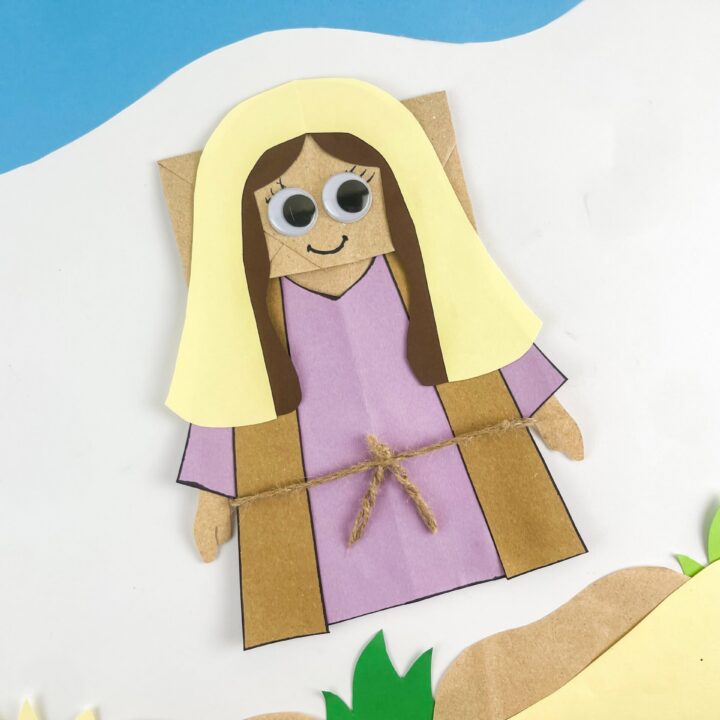
Using a paper lunch bag, construction paper, googly eyes, and the free printable template, they can create a paper bag puppet to use during a Bible lesson, Bible account retelling activity, or dramatic play.
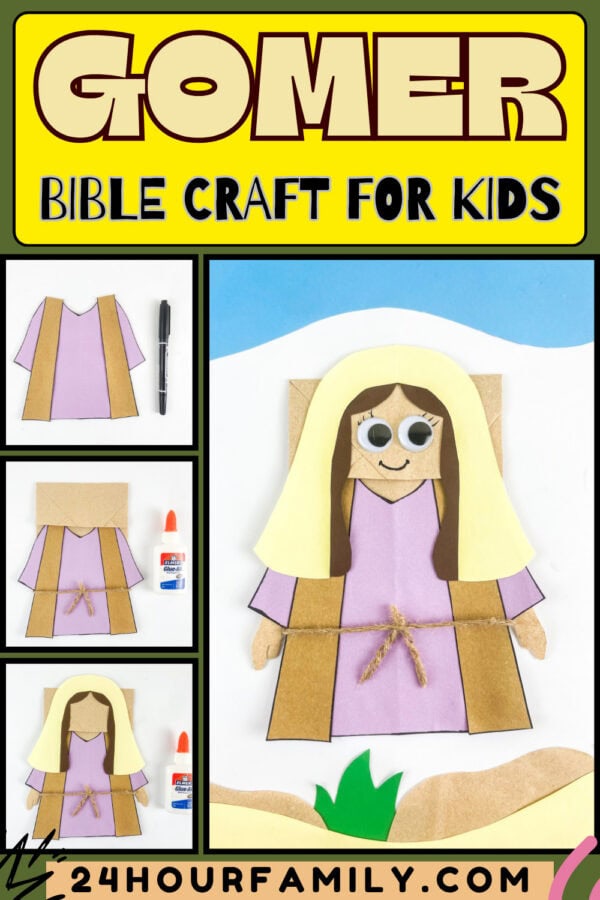
Gomer Bible Craft for Kids
Because this account includes mature themes, it can be explained to younger learners in simple, age-appropriate terms.
Gomer repeatedly walked away, but Hosea continued to care for her. Through their account, children can understand that God remained committed to Israel even when His people turned away from Him.
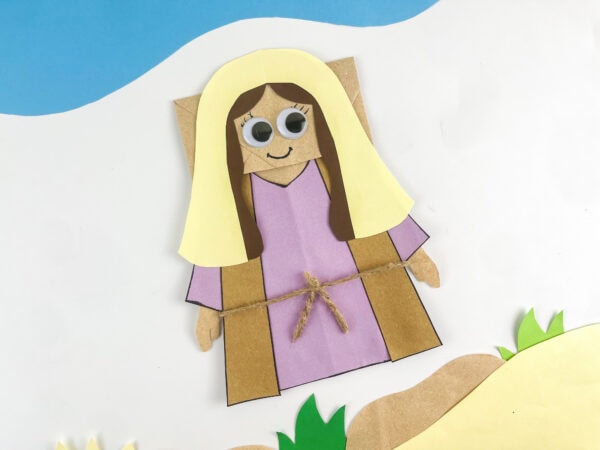
It’s a great activity for Sunday school, children’s church, Christian classrooms, homeschool Bible lessons, and lessons on the Minor Prophets.
What Does the Bible Say About Gomer?
According to Hosea 1, Gomer, the wife of the prophet Hosea, is introduced as “Gomer daughter of Diblaim.” God used Hosea’s marriage and family as a living illustration of His relationship with the people of Israel.
Israel had repeatedly turned away from God and followed other gods. Even so, God continued calling His people to return to Him. Hosea’s experiences communicated both the seriousness of Israel’s unfaithfulness and the depth of God’s covenant love.
The Book of Hosea repeatedly moves between warnings about sin and promises of restoration. Its larger message is that God disciplines His people but continues inviting them back to Himself.
For a children’s lesson, you might explain it this way:
She made choices that hurt her family and took her away from where she belonged. Hosea remained committed to her. God used their family as an illustration that His people had wandered away, yet He still wanted them to return.
What Does the Bible Account of Hosea and Gomer Teach?
This Bible account helps explain several important truths:
- God wants His people to remain faithful to Him.
- Our choices affect our relationship with God and others.
- God does not stop loving His people when they wander.
- God calls people to repent and return to Him.
- Faithful love is demonstrated through actions, not merely words.
The account should not be reduced to the idea that choices do not matter. Hosea contains serious warnings about sin and its consequences. At the same time, the book demonstrates God’s willingness to forgive, heal, and restore those who turn back to Him.
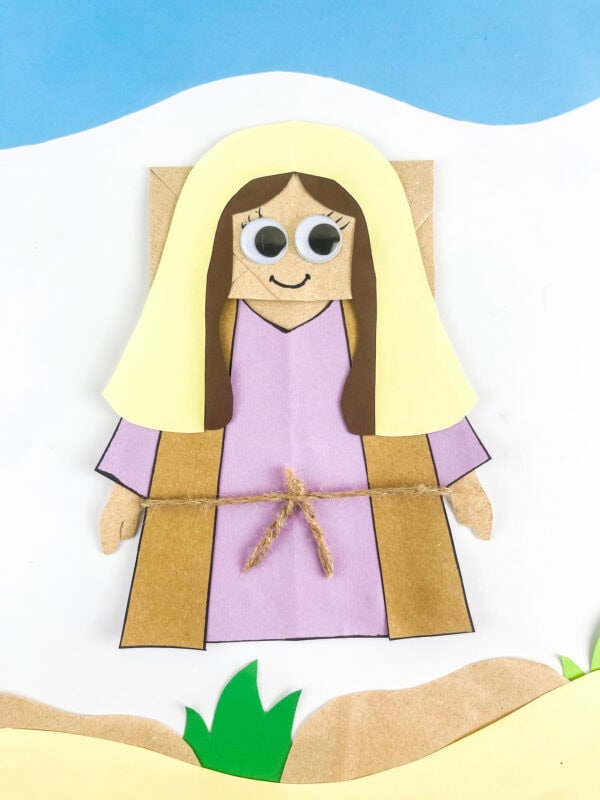
Gomer Paper Bag Puppet Craft
This puppet is made by decorating a standard paper lunch bag with a purple dress, brown outer garment, hair, head covering, arms, and a simple jute belt.
Once completed, kids can place a hand inside the paper bag and use the puppet to retell portions of the Bible account.
The downloadable template includes the main pieces needed to create the clothing, hair, head covering, and arms.
Recommended Ages
This craft is best suited for:
- Preschool children with adult help
- Kindergarten students
- Elementary-age children
- Sunday school classes
- Homeschool Bible lessons
- Children’s church groups
Younger children may need the pieces cut out in advance. Older ones can trace, cut, arrange, and assemble their own puppets.
This post may contain affiliate links. As an Amazon Associate and a participant in other affiliate programs, I earn a commission on qualifying purchases. Read our disclosure policy here.
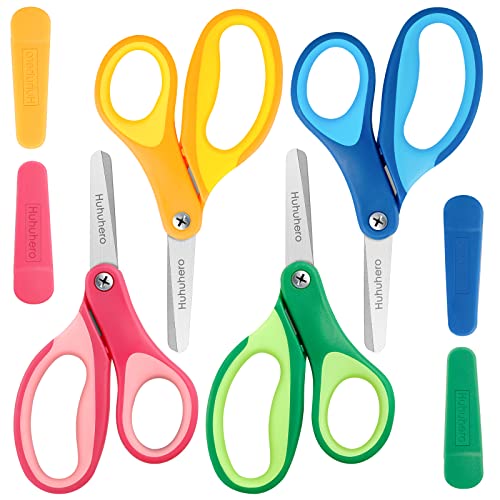
AJM Brown Paper Lunch Bags 40 Count Crafty DAB GLUES DAB N STIC SchoolElmer’s Disappearing Purple School Glue Sticks Washable 22 Grams 3 CountHuhuhero Kids Scissors, 5” Safety Toddler Scissor Blunt Tip with Cover, Small Craft Cutting Paper Scissors for Child Kid Age 4-7 8 9, Assorted Colors, 4 PackCrayola Construction Paper, 120 SheetsCrayola 587722 Non-Washable Markers, Broad Point, Classic Colors, 10/Set




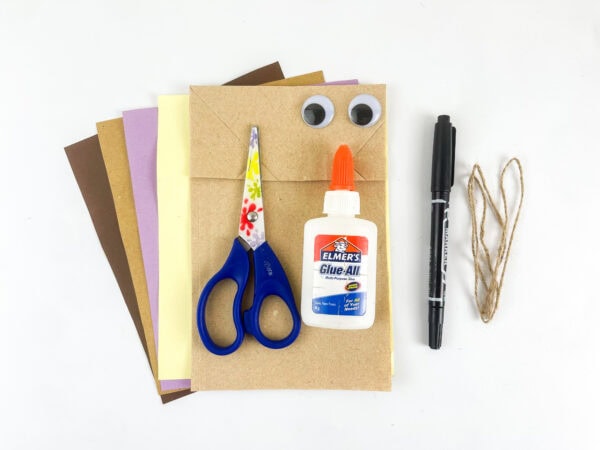
Supplies Needed for the Bible Craft:
- One standard brown paper lunch bag
- Purple construction paper for the dress
- Medium brown or kraft paper for the outer garment
- Dark brown construction paper for her hair
- Pale yellow construction paper for the head covering
- Tan or kraft paper for her arms, if needed
- Two large googly eyes
- Short pieces of jute twine or yarn
- Child-safe scissors
- School glue or a glue stick
- Black marker
- Pencil
- Free printable craft template
The accompanying directions identify a paper bag, construction paper, glue, googly eyes, scissors, markers, and the printable pieces as the basic materials.
Download the Gomer Craft Template
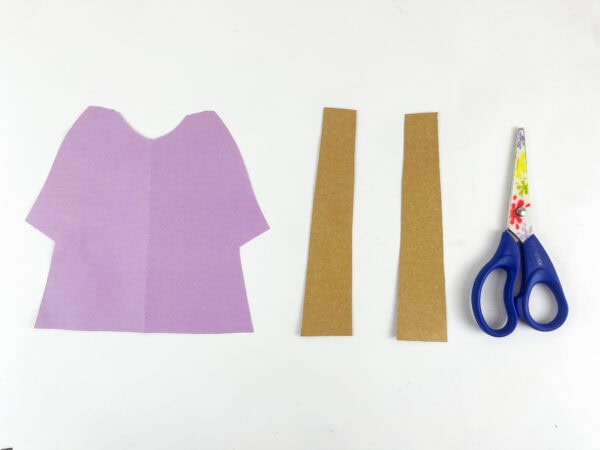
Use the printable template to create the dress, hair, head covering, arms, and two long pieces for the outer garment.
Download the template at the bottom of this blog post.
For best results, print the template at 100 percent or “actual size.” Avoid selecting “fit to page” unless you need to make the pieces smaller for a particular paper bag.
You can print the template on regular printer paper and trace the shapes onto construction paper. Another option is to print the page directly on white cardstock and let kids color the pieces before cutting them out.
Putting Together the Gomer Bible Craft
Print and Prepare the Template
Download and print the template.
Cut out each template piece, including:
- The dress
- Two long outer-garment panels
- The dark hair
- The head covering
- Two arms
Place each template piece on the appropriate color of construction paper. Trace around it with a pencil, and then cut out the construction-paper shape.
Outline the Clothing Pieces
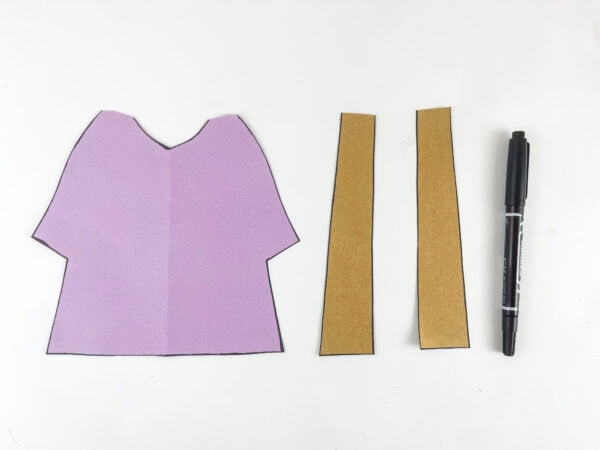
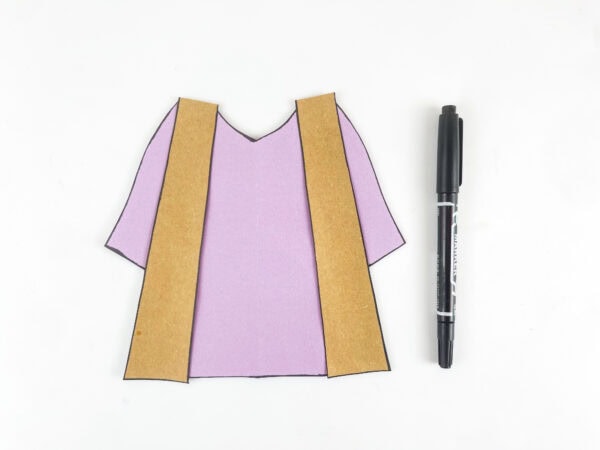
Use a black marker to trace around the outside edge of the purple dress.
Outline the two brown garment panels in the same way. The dark border makes the separate paper layers easier to see after the puppet has been assembled.
This step is optional for very young children, but it gives the finished craft a neat, illustrated appearance.
Assemble the Clothing
Place the two brown garment panels over the purple dress, positioning one along each side.
The panels should begin near the shoulders and extend almost to the bottom of the dress. Allow the purple paper to remain visible through the middle.
Glue the brown panels in place.
Attach the Clothing to the Paper Bag
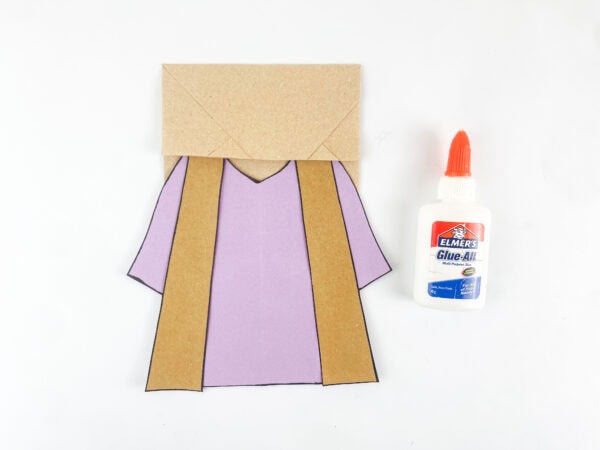
Turn the paper bag so the folded bottom flap faces upward. The flap will become the puppet’s movable face.
Glue the assembled dress to the front of the bag, directly below the flap.
Make sure the bottom edge of the dress does not prevent kids from placing a hand inside the bag.
Make the Twine Belt
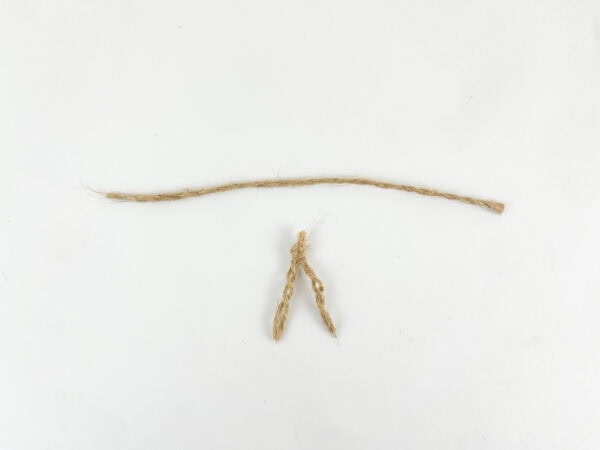
Cut one long piece of jute twine that can wrap across the puppet’s waist.
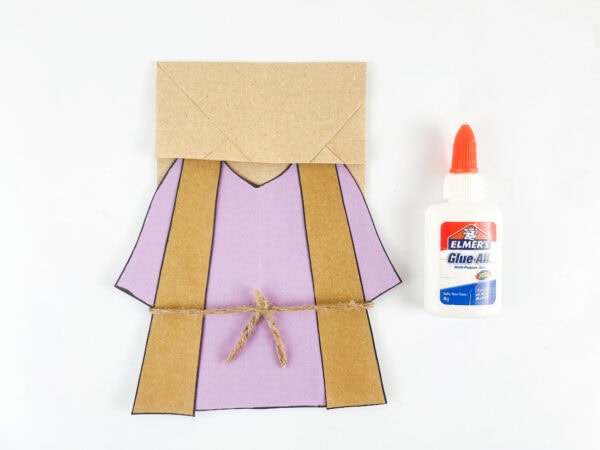
Cut a second, shorter piece and fold it into a narrow V shape. Glue or tie the smaller piece to the center of the longer piece to create the appearance of a knotted belt.
Wrap the belt around the waist and secure it with glue.
The belt can also be made from:
- Brown yarn
- Raffia
- Thin ribbon
- Paper twine
- A narrow strip of brown construction paper
Add the Hair
Cut the inner hair piece from dark brown paper and the larger head covering from pale yellow paper.
Glue the dark brown hair near the top of the paper-bag flap. Position it so the center opening leaves room for the puppet’s face.
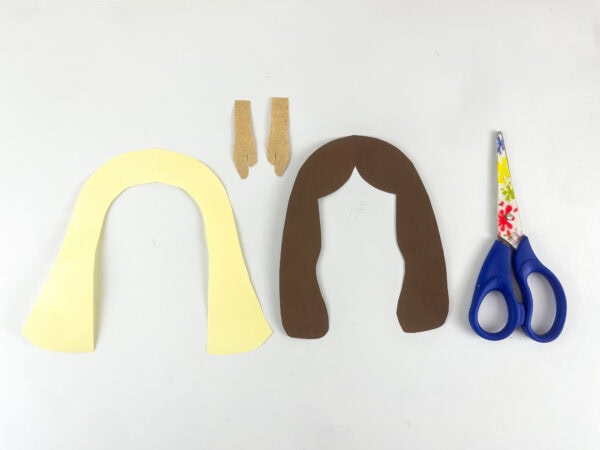
Glue the yellow head covering over the brown hair. The dark hair should remain visible around both sides of the face.
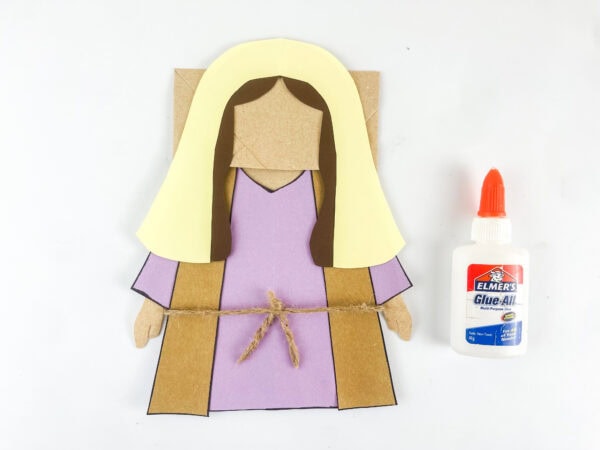
Add the Arms
Glue one arm along each side of the dress.
Position the upper ends underneath the sleeves or garment panels so the arms appear to extend naturally from the clothing.
The hands can hang beside the puppet or be folded slightly toward the front.
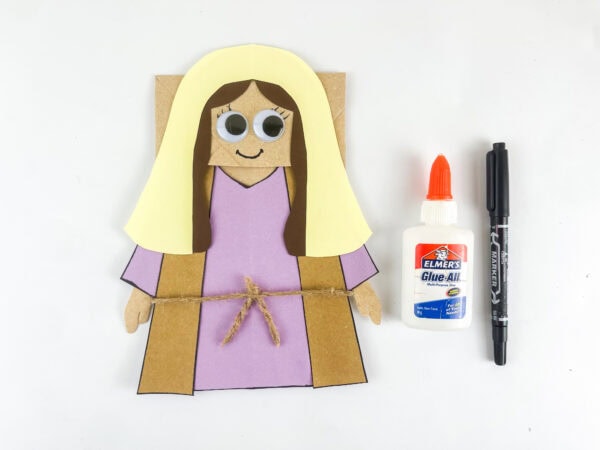
Add the Googly Eyes and Face
Glue two googly eyes onto the paper-bag flap.
Use a black marker to add:
- Eyelashes or eyebrows
- A small curved smile
- Any other simple facial details
Allow the glue to dry completely before kids begin using the puppet.
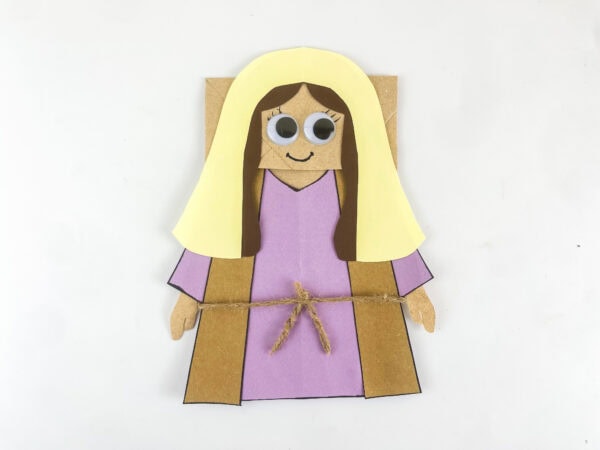
Using the Craft During a Bible Lesson
The craft becomes more meaningful when kids use it after completing the project.
They can place one hand inside the paper bag and move the folded flap while retelling the Bible account. You might also create a matching Hosea puppet and let two kids act out a carefully simplified version of the lesson.
For younger learners, emphasize these main ideas:
- God gave Hosea a task, and he followed God’s instructions.
- Hosea followed God’s instruction to marry the woman He had chosen.
- She did not remain faithful to her family.
- Hosea continued to seek her out and remained committed to her.
- God used their family to teach Israel about His faithful love.
- God wanted His people to turn away from sin and return to Him.
A preschool activity page based on this Bible account summarizes the lesson by explaining that Hosea continued to care for her even when she did not fully return that care.
A Child-Friendly Hosea and Gomer Bible Lesson
You can use the following short lesson before beginning the craft:
Hosea was one of God’s prophets. A prophet told God’s people what God wanted them to know.
At that time, many people in Israel had stopped living according to God’s ways. Instead, they worshipped false gods.
Hosea obeyed God’s command and married a woman named Gomer. She later made choices that took her away from Hosea and her family. Hosea still cared about her and brought her home.
God used their family as an illustration. Just as she had wandered away, the people of Israel had wandered away from God. Just as Hosea continued to care for her, God continued calling His people to come back to Him.
Our wrong choices are serious, but God is merciful. When we confess our sin and turn to Him, He forgives us and helps us follow Him again.
Suggested Bible Passages
Read the passages yourself before deciding how much detail is appropriate for your particular age group.
Hosea 1:1–3
This passage introduces Hosea, God’s instructions to him, and his marriage to Gomer.
Hosea 2:19–20
These verses emphasize God’s righteousness, justice, love, compassion, and faithfulness.
Hosea 3:1–3
This passage describes Hosea’s continued pursuit of Gomer and is commonly used when teaching the theme of redeeming love. A leading Hosea object lesson also uses Hosea 1:1–9 and 3:1–3 as its primary Scripture focus.
Hosea 6:6
This verse teaches that God desires mercy and a true knowledge of Him rather than empty religious actions.
Hosea 14:4
This passage contains God’s promise to heal His people’s unfaithfulness and love them freely.
Memory Verse Suggestions
Choose the verse that best matches your children’s reading abilities and ages.
Hosea 14:4
“I will heal their waywardness and love them freely.”
Hosea 6:6
“For I desire mercy, not sacrifice, and acknowledgment of God rather than burnt offerings.”
1 John 4:19
“We love because he first loved us.”
Psalm 86:15
“But you, Lord, are a compassionate and gracious God, slow to anger, abounding in love and faithfulness.”
Check the wording against the Bible translation used by your church, school, or family before printing a verse for kids.
Questions After the Lesson
Use these questions after reading the account:
- Who was Hosea?
- Who was Gomer?
- What message did God want Israel to understand?
- What did the people do instead of following God?
- What does it mean to stay true to God?
- How did Hosea continue caring for her?
- Does loving someone mean pretending wrong choices are acceptable?
- How do we turn back to God after making wrong choices?
- How does God demonstrate His mercy toward His people?
- What is one way we can remain faithful to God this week?
For younger age groups, ask simpler questions:
- Who did Hosea care for?
- Who always cares for us?
- What should we do when we make a wrong choice?
- How can we show our commitment to God?
Teaching a Difficult Bible Story Appropriately
This passage contains mature subject matter, so the wording should match the age and setting of your group.
For Preschool and Early Elementary Children
You can say that Gomer:
- Left her family
- Broke promises
- Wandered away
- Needed to be brought home
There is no need to explain sexual behavior to young ones.
For Older Elementary Children
You can introduce the biblical concept of marital unfaithfulness without supplying unnecessary details. Explain that marriage involves a promise of faithfulness and that she broke this promise.
Keep the lesson focused on Israel’s broken covenant with God and God’s call to repentance.
Avoid an Oversimplified Message
Be careful not to teach that people must remain in unsafe relationships or tolerate abuse. Hosea is a prophetic account with a specific symbolic purpose. It should not be used to pressure a kid or adult to ignore danger, mistreatment, or appropriate boundaries.
The central lesson for kids is about God’s faithfulness toward His covenant people, rather than a universal formula for every human relationship.
Ways to Adapt the Craft
Turn It Into a Coloring Craft
Print the template on white cardstock and allow little ones to color each part. This reduces the number of construction-paper colors you need to prepare.
Prepare a Preschool Craft Kit
Before class, cut the template pieces and place one complete set in a small bag for each kid.
Include:
- One dress
- Two garment panels
- One hair piece
- One head covering
- Two arms
- Two googly eyes
- Precut twine
Kids can concentrate on assembling the pieces rather than waiting for help with every cut.
Make a Hosea and Gomer Puppet Set
Make a second paper bag puppet representing Hosea. Use the pair for storytelling, review questions, or a puppet presentation.
Add a Bible Verse
Attach a small paper label to the back of the puppet with:
“God’s love is faithful.”
You could also use Hosea 14:4 or 1 John 4:19.
Make a Bulletin Board Display
Display the finished puppets beneath a heading such as:
- God Calls His People Home
- God Is Merciful
- Return to the Lord
- God Never Stops Calling His People
Many Hosea lessons use themes centered on God’s mercy and restoration, making these headings a natural fit for classroom displays.
Additional Hosea Bible Activities
Extend the lesson with one or two simple activities.
Faithful or Unfaithful Choices
Read short scenarios and ask kids whether each action demonstrates faithfulness.
Examples:
- Keeping a promise
- Telling the truth
- Following through on an assigned job
- Praying only when we want something
- Blaming someone else for our mistake
- Returning something we borrowed
Discuss how faithfulness grows through repeated choices.
Come Back Home Path
Create a simple path on the floor using paper footprints. Place a sign reading “Away” at one end and “Return to God” at the other.
Little ones can follow the path while naming ways people return to God:
- Admit the wrong choice
- Ask God for forgiveness
- Correct the wrong when possible
- Accept God’s forgiveness
- Choose to obey
Lost-and-Found Illustration
Hide a classroom object before the lesson. Allow kids to search for it, and discuss how it feels to recover something that was missing.
Connect the activity carefully to the idea that God calls wandering people to return to Him.
Faithfulness Paper Chain
Give each kid a paper strip. Ask them to write or draw one way they can demonstrate faithfulness during the week.
Connect the strips to form a class paper chain.
Why Paper Bag Puppets Work Well for Bible Lessons
Paper bag puppets are inexpensive, easy to store, and useful for several ages. They involve cutting, gluing, arranging, and storytelling, which makes them more interactive than a standard coloring page.
Craft-based Bible resources commonly use materials such as paper, glue, scissors, markers, googly eyes, and yarn because they are accessible for churches, classrooms, and families.
The finished puppet also gives kids something they can take home and use to share what they learned with their families.
More Bible Crafts to Enjoy
If you enjoyed making this Gomer Bible Craft, here are more Bible character crafts that help kids learn about the lives, lessons, and faith of people throughout Scripture.
- Peter Bible Craft for Kids – Create a fun craft while learning about Peter and his journey as one of Jesus’ disciples.
- Cain Bible Craft for Kids – Explore the story of Cain with a hands-on activity that encourages meaningful Bible discussions.
- Abel Bible Craft for Kids – Make a simple craft inspired by Abel while learning about giving your best to God.
- Deborah Bible Craft for Kids – Discover the story of Deborah, a wise judge and leader, through a creative craft.
- Hosea Bible Craft for Kids – This craft complements the Gomer Craft
- Ezekiel Bible Craft for Kids – Learn about the prophet Ezekiel with an engaging activity that’s perfect for Bible lessons.
- Gideon Bible Craft for Kids – Teach kids about Gideon’s courage and trust in God with this easy Bible craft.
This Gomer Bible craft gives children a visual way to remember a challenging but meaningful Old Testament account. As they assemble the paper bag puppet, teachers and parents can guide the conversation toward God’s holiness, the importance of faithfulness, and His merciful invitation to return.
What is the Bible craft about?
The craft represents Gomer, the wife of the prophet Hosea. Her story illustrates how Israel turned away from God and how God continued calling His people back to Himself.
Where is Gomer mentioned in the Bible?
Gomer is introduced in Hosea 1:3 as the daughter of Diblaim and the wife of Hosea. She is central to the symbolic family story in the opening chapters of Hosea.
What is the main lesson of Hosea and Gomer?
The story teaches about covenant faithfulness, the seriousness of turning away from God, the need for repentance, and God’s persistent mercy toward His people.
Is the story of Gomer appropriate for preschoolers?
It can be taught to preschoolers when presented in simple, age-appropriate language. Explain that Gomer broke promises and wandered away rather than discussing adult details.
What age is this craft best for?
It is best for kids approximately ages four through ten. Preschool children will need help cutting and positioning the pieces, while elementary students can complete most of the project independently.
Can I make the craft without googly eyes?
Yes. Draw the eyes directly on the paper bag or cut two circles from white and black construction paper.
Can the template be printed on colored paper?
Yes. You can print separate copies on purple, brown, yellow, and tan paper, although tracing the individual pieces may use less paper.
How long does the craft take?
Plan approximately 20 to 35 minutes. Preparing the pieces before class can reduce the assembly time to about 15 or 20 minutes.
Can this craft be used in Sunday school?
Yes. It is especially suited for a lesson about Hosea, Gomer, the Minor Prophets, God’s faithfulness, repentance, mercy, or restoration.
Rather than avoiding difficult Bible stories entirely, we can present them thoughtfully and truthfully at a level little ones can understand. This account ultimately points beyond human failure to the faithful God who continues to seek, correct, forgive, and restore His people.
Gomer Bible Craft for Kids
Make a Gomer Bible craft from a paper lunch bag and printable template. This hands-on Hosea and Gomer activity helps children learn about faithfulness, repentance, forgiveness, and God’s love.
Materials
- Brown paper lunch bag
- Printable Gomer craft template
- Purple, brown, dark-brown, pale-yellow, and tan construction paper
- Two googly eyes
- Jute twine or yarn
- Glue
- Child-safe scissors
- Black marker
- Pencil
Instructions
- Print and cut out the Gomer craft template pieces.
- Trace each piece onto the matching color of construction paper, then cut it out.
- Outline the dress and garment panels with a black marker.
- Glue the brown garment panels over the sides of the purple dress.
- Attach the assembled clothing below the folded flap of the paper bag.
- Wrap and glue twine or yarn around the clothing to form a belt.
- Glue the hair and head covering to the top of the flap.
- Attach the googly eyes and draw eyebrows and a smile.
- Glue one arm to each side of the puppet.
- Let the craft dry before using it to retell the Bible story.
Notes
- Pre-cut the smaller pieces for preschool children.
- Keep the folded bag flap free so it can move like a puppet mouth.
- Focus the lesson on age-appropriate themes of faithfulness, repentance, restoration, and God’s love.
