
Letter D Cursive Writing Worksheets (Free Printables)
Cursive writing may seem old-fashioned in our digital age, yet it remains an important skill that helps with hand coordination and adds a personal touch to one’s writing. Introducing our Letter D cursive writing worksheets, designed to help young learners master the art of cursive writing.
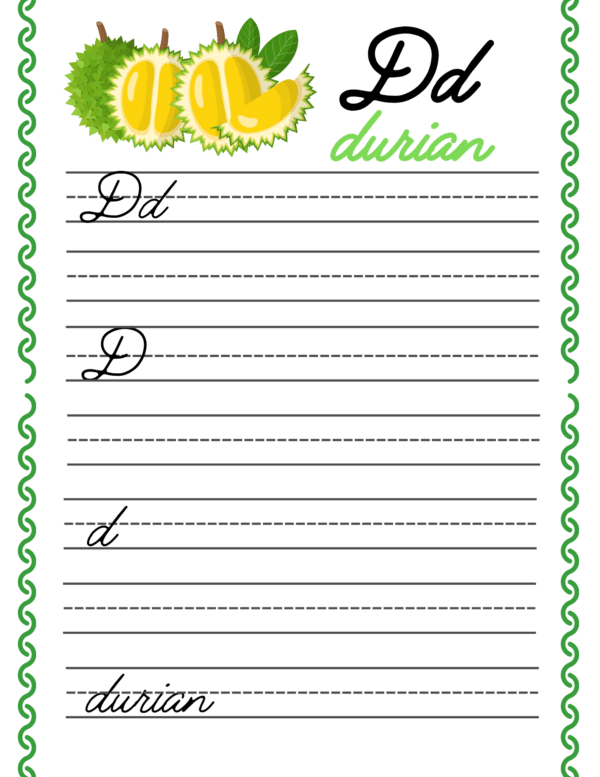
We have included seven free Cursive practice worksheets, including lowercase letter “d” practice and uppercase letter “D” practice. Writing the letter ‘D’ in cursive can be tricky, but it’s worth learning.
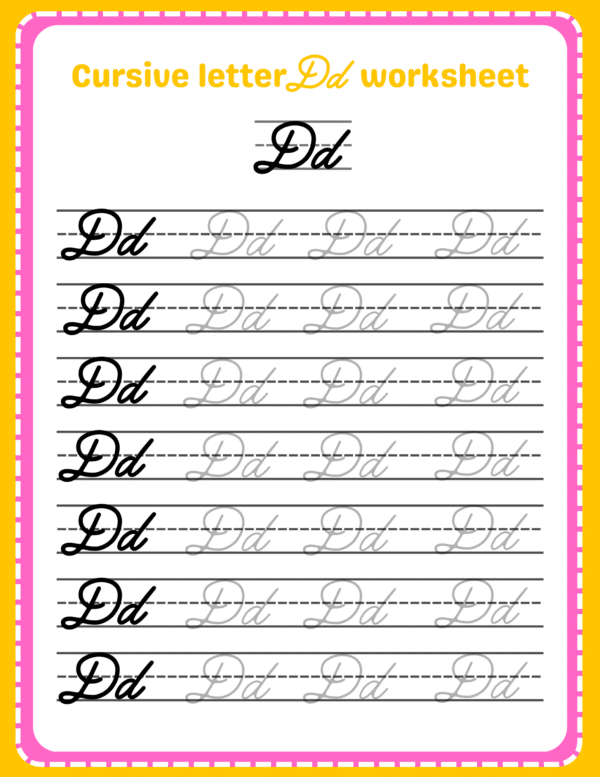
In this blog post, we’ll explore how to use cursive worksheets to practice and perfect the small and big versions of the letter ‘D’.
Letter D Cursive Writing Worksheets for Kids
Cursive worksheets engage hand-eye coordination and fine motor skills, strengthening the muscles in the hands and fingers essential for neat, controlled writing.
This post may contain affiliate links. As an Amazon Associate and a participant in other affiliate programs, I earn a commission on qualifying purchases. Read our disclosure policy here.



Repeatedly tracing and writing the cursive “D” helps kids develop the muscle memory needed for smooth, fluid writing, setting a foundation for learning the entire alphabet in cursive.
Focusing on one letter at a time allows kids to understand its shape and flow in cursive, reinforcing letter recognition and preparing them to connect it smoothly with other letters.
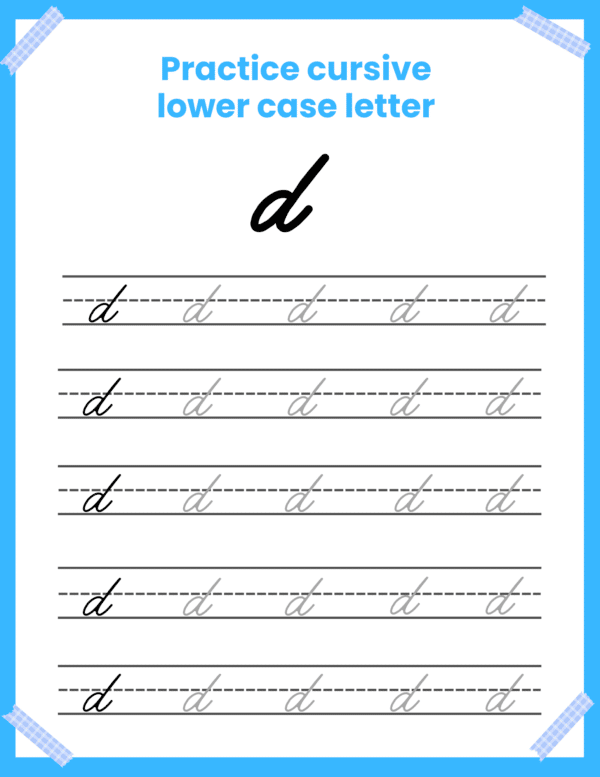
Letter D Cursive Writing Worksheets
Learning cursive typically starts with lowercase letters, which are the most frequently used in writing. Mastering the lowercase ‘d’ is a great way for children or beginners to start.
It lays the foundation for cursive skills, as the lowercase d involves a loop and a line—a combination that recurs in other letters. A cursive D worksheet designed for this letter can help learners practice letter formation efficiently.
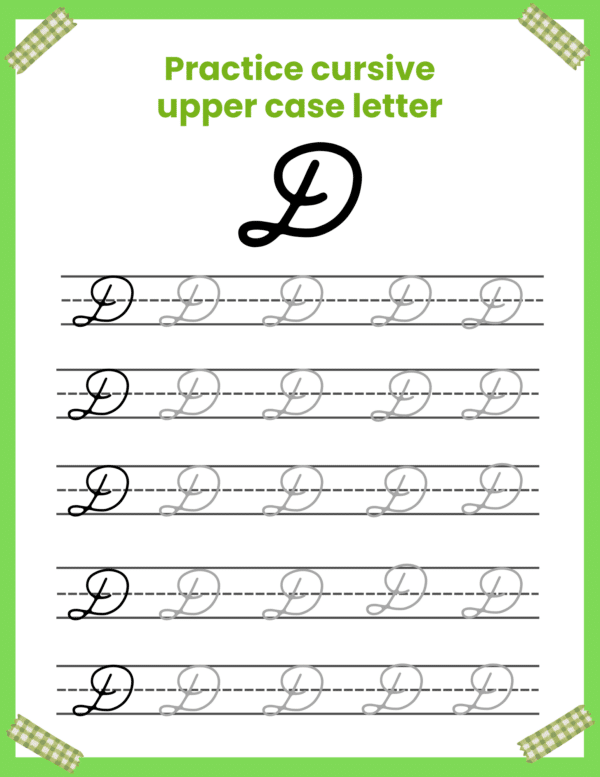
Capital Letter D in Cursive
The capital letter D, also known as the uppercase D, adds a touch of sophistication to writing. Learning to write the capital d in cursive can feel like an accomplishment.
Its sweeping curve and bold presence mark the beginning of sentences and proper nouns, showing their significance. Using a worksheet that focuses on writing uppercase letters in cursive will help get the strokes and connections right, which is important in cursive writing.
Free Cursive Worksheets
Cursive worksheets are structured exercises that help students improve their cursive writing. They start with letters and move on to full sentences, teaching step-by-step. Clear examples guide students and boost their confidence in writing.
Teachers can adjust cursive worksheets to fit students’ needs and goals. They can change the difficulty and content according to students’ performance. Cursive worksheets have engaging visuals and themes to make learning more enjoyable and meaningful.
By adding elements such as illustrations or themes, worksheets capture students’ interest and encourage active participation.

Integrating Cursive into Educational Activities
Cursive writing is used in different school subjects, such as social studies and language arts. Occupational therapists also support it by using it to help with fine motor skills.
From 1st to 4th grade, kids should get comfortable with cursive, with fun learning activities to help. In social studies, cursive can help kids look at old documents and see how writing has changed.
Letter Connections Made Simple
Mastering the flow between letters enhances readability and writing speed in cursive writing. Teaching letter connections straightforwardly ensures learners understand how each letter seamlessly transitions into the next.
By emphasizing smooth transitions between cursive letters, students can gradually build their writing skills in a fluid motion, improving both the aesthetics and efficiency of their handwriting.
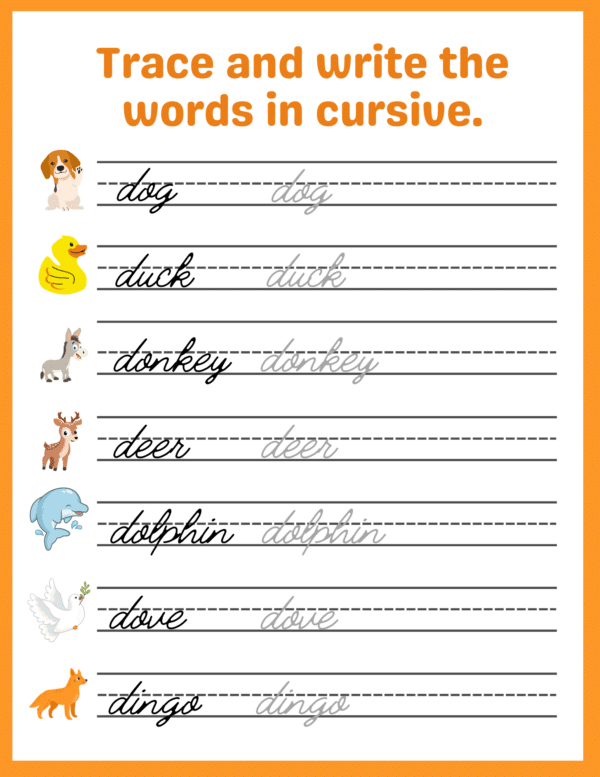
Understanding the nuances of letter connections can initially be challenging, but with consistent practice, it becomes second nature. Encouraging students to focus on the natural flow between letters rather than individual strokes can help them grasp this concept more effectively.
Providing ample guided practice and feedback opportunities enables students to refine their letter connections over time.
As students become more proficient in connecting letters, they gain a sense of accomplishment and autonomy in their writing journey. Encouraging them to experiment with different writing speeds and styles further reinforces their understanding of letter connections.
Ultimately, mastering this aspect of cursive writing equips students with a valuable skill they can apply in various writing contexts throughout their lives.
Cursive in Everyday Life
In cursive writing, getting the flow between letters just right improves how easy it is to read and how quickly you can write. Teaching how letters link up clearly and simply helps learners see how each letter smoothly moves into the next one.
By focusing on making smooth connections between cursive letters, students can learn to write more smoothly, improving the appearance of their handwriting and helping them write faster.

Understanding how letters connect might be hard at first, but with practice, it becomes natural. Encouraging students to think about how letters flow together instead of just how to draw each separately can help them understand better. Giving them plenty of chances to practice with guidance and feedback helps them improve how they link letters over time.
Students feel proud and more confident in their writing as they improve their ability to connect letters. Encouraging them to try writing at different speeds and styles helps them understand the connections between letters even more. Ultimately, mastering this part of cursive writing gives students a useful skill they can use whenever they write in the future.
Cursive Handwriting Practice Worksheets
Cursive handwriting practice sheets give students structured exercises to improve their cursive writing. These sheets help students improve their writing by repeating exercises and building fluency and confidence.
Adding fun themes or activities to the worksheets can make practicing more enjoyable and useful for learners of any age.
Regular practice with cursive handwriting worksheets can improve penmanship over time. Students may also find satisfaction in seeing their progress as they advance through the exercises.
The Art of Cursive in Modern Learning
While cursive may seem old-fashioned to some, it remains an important skill that benefits cognitive development and motor skills. Children can enhance their cursive writing skills by starting with letter d worksheets, moving through flashcards, and writing full words.
Whether you’re a parent or an educator, remember to encourage your child’s cursive handwriting practice with various cursive worksheets that align with their age rating.
Cursive Writing Chart Printable: This is the perfect way to introduce kids to the art of elegant writing.
Cursive B Worksheet – This ensures that learners grasp the correct way to write the cursive letter B.
Cursive Alphabet Chart Printable – This tool improves handwriting, reading skills, brain development, focus, attention, and creativity.
This will help them with their cursive alphabet and instill a love for this beautiful art form. Let’s keep the tradition alive by ensuring that cursive learning becomes as important a part of our children’s education as any other subject.
