
Free Multiplication Chart 1-20 Printable (5 Pages)
Multiplication is a cornerstone of math learning, essential in the classroom and everyday life. As I’ve homeschooled my kids for the last 19 years, learning multiplication has been central to our daily lives.
You can help your students or kids with mastering multiplication using these free printable multiplication charts, designed to make learning and practicing multiplication easy.
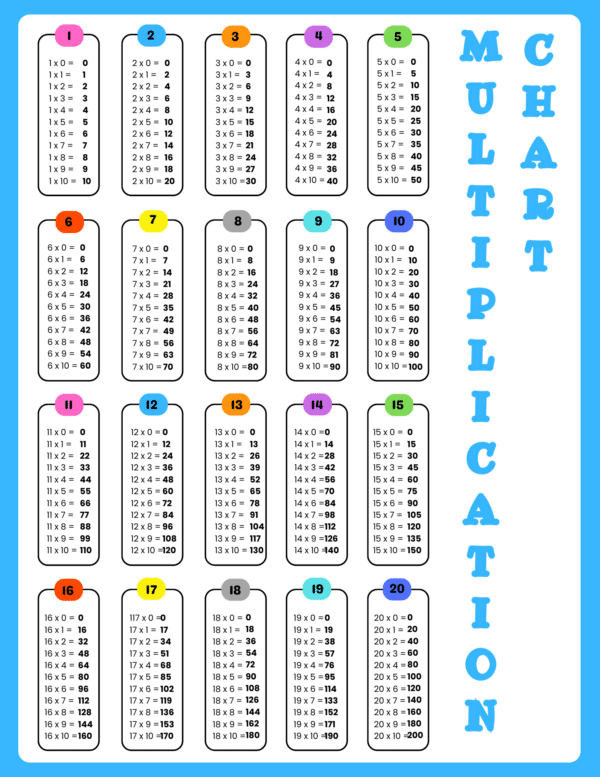
Free Multiplication Chart 1-20 Printable
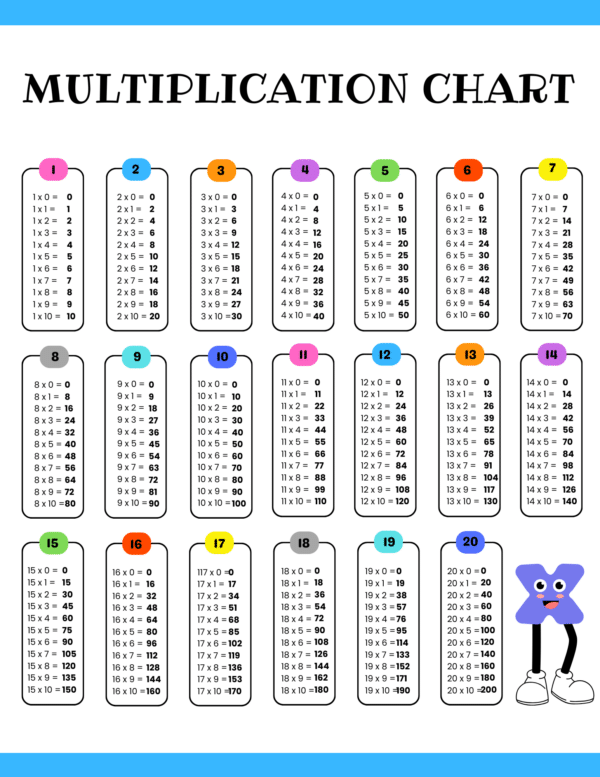
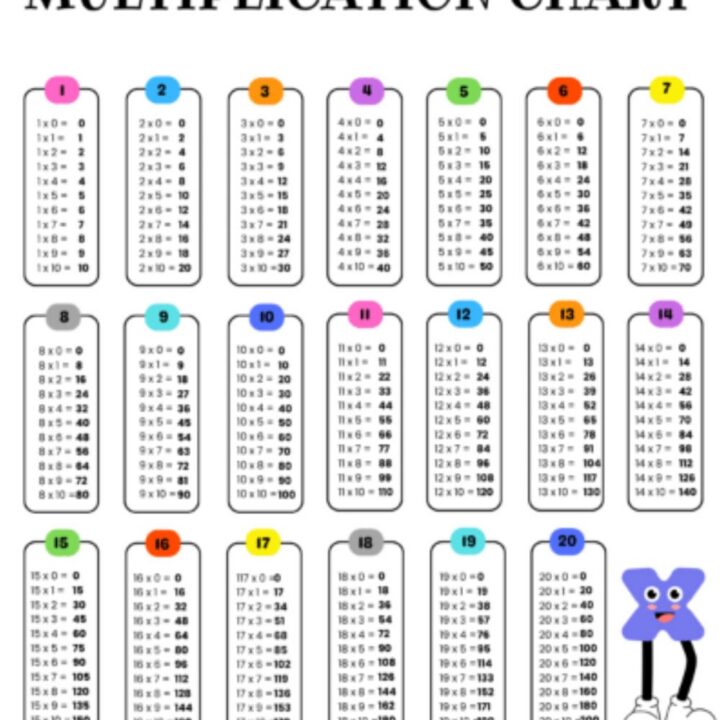
Each multiplication chart organizes the times tables into individual columns, with a different color assigned to each number. These printable multiplication tables cover the numbers 1 through 20, and every multiplication table shows problems from ×0 through ×10.
These printable multiplication pages work well for upper-elementary students who are ready to move beyond the most commonly taught facts through 10 or 12.
Use a completed printable multiplication chart as a desk reference, then introduce the blank version when the child is ready for independent math practice.
What Is Included in the Multiplication Printable?
The attached PDF file contains five portrait pages:
- A completed multiplication chart with a wide blue border and “Multiplication” written vertically
- A completed chart with purple vertical lettering and a rainbow
- A completed chart with a large title and colorful scalloped borders
- A blank multiplication chart with problems but no products
- A completed chart with a blue border and a friendly multiplication-character illustration
The four completed pages contain the same multiplication facts in different designs. Children can choose the page they find easiest to read or the style that best suits their learning style for keeping in a binder or study area.
The blank multiplication page is not a traditional square multiplication grid. Instead, it lists each equation and leaves space after the equals sign for students to write the product.

What Does a Multiplication Chart 1 to 20 Cover?
This multiplication chart 1-20 includes 20 separate fact families:
- 1×0 through 1×10
- 2×0 through 2×10
- Continuing in the same pattern through 20×0 to 20×10
That creates 11 problems for each number, including the zero fact, for a total of 220 math facts on each chart.
The phrase “multiplication chart 1 to 20” can also describe a square table chart that helps students multiply numbers across the top and side from 1 through 20.
This PDF is different: its 1-20 multiplication table teaches the 1–20 number groups only through a multiplier of 10. State that distinction clearly so parents and teachers get the format they expect, not a 20 × 20 grid.
When Are Children Ready for Multiplication Tables 1-20?
Students should first understand that multiplication represents equal groups or repeated addition. A reference chart supports that understanding, but it should not replace hands-on modeling with counters, arrays, number lines, drawings, or skip counting.
Most children begin learning basic multiplication facts in 3rd grade and continue developing fact fluency in later grade math. The 13–20 tables are usually extension work, not the first facts a beginner learns. Introduce the printable according to the child’s readiness rather than assigning the entire page at once.
A helpful progression is:
- Begin with the 0, 1, 2, 5, and 10 tables.
- Move on to the 3, 4, 6, 8, and 9 tables.
- Practice 7, 11, and 12 to build confidence with 1-12 facts.
- Extend to 13 through 20 after the earlier facts are reasonably secure.
This post may contain affiliate links. As an Amazon Associate and a participant in other affiliate programs, I earn a commission on qualifying purchases. Read our disclosure policy here.

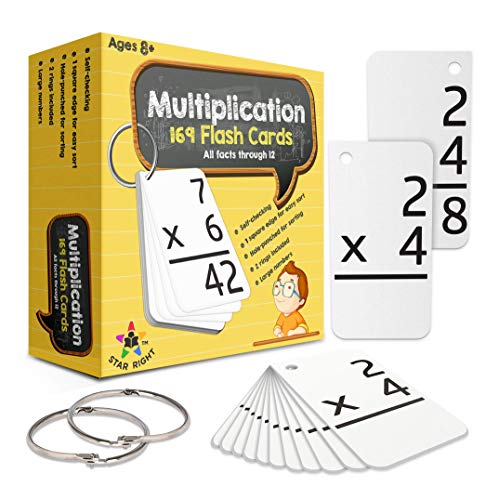

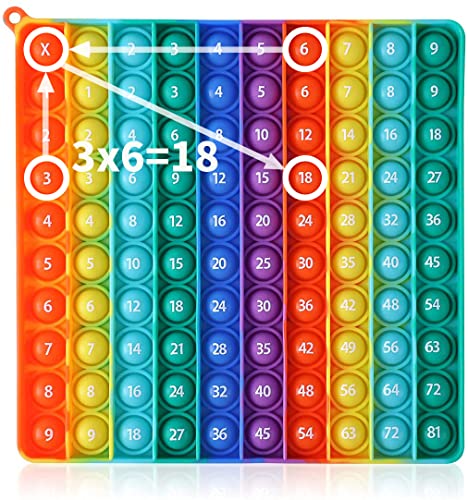
How to Use the Completed Multiplication Charts
Keep one nearby for reference
Place a completed chart in a math binder, homework folder, or plastic sleeve to use as one of your child’s study guides. When a child gets stuck, encourage them to find the correct fact family and problem instead of immediately supplying the answer.
Look for number patterns
Ask the child to study one column and describe what changes. In the 5 times table, products end in the digit 0 or 5. Products in the 10 table increase by ten. Even products appear throughout the 2, 4, 6, 8, and other even-number tables, helping children notice patterns and relationships between numbers.
Connect related facts
Use the chart to demonstrate the commutative property and other properties of multiplication. Switching 4 × 7 to 7 × 4 does not change the product; both give 28. The 1–20 format also helps students connect a harder multiplication fact with one they already know: 15 × 6 can be understood as 10 × 6 plus 5 × 6.
Check work after solving
Ask students to complete multiplication problems without looking, then use the chart to verify each product. This keeps the chart from becoming a shortcut used before the child attempts the calculation and helps improve their multiplication skills.
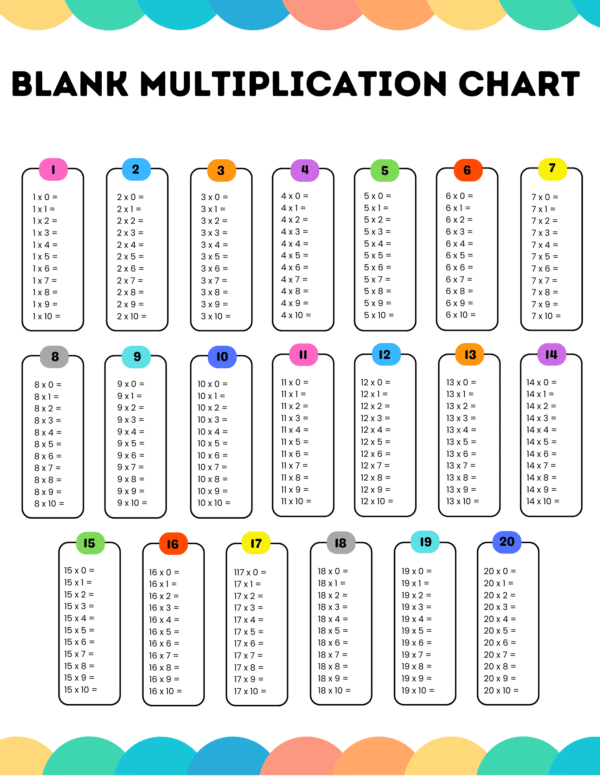
How to Use the Blank Multiplication Chart
The printable blank chart provides practice in a predictable order. Here are several ways to use it:
- Complete one fact family each day.
- Fill in only the tables currently being studied.
- Use different pencil colors for facts the child knows, is learning, and still needs to memorize.
- Cover the completed reference page, fill in one column, and check the answers afterward.
- Write answers with a dry-erase marker after placing the page in a reusable sleeve.
- Time one familiar column as a short drill, but focus on accuracy before speed.
- Ask the student to circle patterns after completing the answers.
Avoid requiring a child to fill in all 220 products in one sitting. A single column provides a more manageable way to practice multiplication and makes it easier to notice which facts need review before moving on to memorizing multiplication.
Five Multiplication Chart Activities
1. Number hunt
Call out a product such as 48 and ask the student to find every equation on the chart that equals it. This reinforces factor pairs and shows that a product may appear in multiple tables.
2. Cover and recall
Use a small sticky note to cover the answer in one problem. The child says or writes the missing product, then lifts the note to check. Use this alongside flashcards for extra practice.
3. Pattern detective
Choose a table and ask what the student notices about odd and even products, final digits, or how much each answer increases. Recognizing these patterns can support memorization and help children learn multiplication tables more confidently.
4. Build an array
Select an equation from the chart and model it with counters, blocks, or dots. For 4 × 6, build four rows of six and count the total. This gives children a visual way to use multiplication rather than relying only on memorized answers.
5. Compare two tables
Place two number groups side by side, such as the 5- and 10-tables. Ask how the products are related. Children may notice that every product in the 10 table is double the corresponding product in the 5 table.
For more focused practice, pair the chart with these multiplication tables 1-10 printable worksheets or the multiplication jar practice sheets. These multiplication worksheets give children another way to strengthen their multiplication skills. You can also browse more free math printables for additional charts and worksheets.
How to Print the Multiplication Chart
The current printable PDF pages are approximately 8.97 × 11.47 inches, slightly larger than standard US Letter paper. Select Fit, Fit to Printable Area, or a similar printer setting so the outer border and crop marks are not cut off. Use portrait orientation and print one test page before printing the complete set.
Regular copy paper is suitable for each worksheet. For a reference chart you’ll use often, choose cardstock or laminate the page. Another inexpensive option is to place the chart in a clear page protector and use a dry-erase marker on the blank version.
Color helps distinguish the fact families, but the black problems remain usable when printed in grayscale. Choose a completed design with a simple background if ink use is a concern. The download comes as a PDF rather than a PNG, so the pages are ready to print.
More Math Activities for Kids
Keep building math confidence with these hands-on activities and printables. They give kids different ways to practice numbers, counting, and everyday math skills at home or in the classroom.
- Preschool Math Counting Worksheets – Simple worksheets that help young learners practice counting and strengthen early number skills.
- Grocery Store Math Game Worksheets – Turn everyday shopping into a learning activity with worksheets that introduce practical math in a familiar setting.
- Feed the Monster Numbers Printable Math Game – A playful number activity where kids can practice early math skills while feeding a hungry monster.
- Learn Math 1 to 100 Number Flashcards – Printable flashcards that make it easy to work on number recognition and counting from 1 to 100.
Download the Free Multiplication Chart 1-20 Printable
Use the download form or button below to receive the five-page tables PDF. Print a completed chart for reference and the blank chart for practice.
These free multiplication tables give students a colorful reference without replacing meaningful math instruction. Study one group of facts at a time, connect the equations to arrays and repeated addition, and use the blank chart to measure progress and build stronger math skills.
Is this a multiplication chart through 20 × 20?
It does not. The printable includes the 1 through 20 number groups, and each multiplication table runs from ×0 through ×10. The largest fact shown is 20 × 10 = 200, so it differs from larger grids such as 1-100 or 50×50 charts.
How many pages are in the PDF?
The PDF includes five pages: four completed reference charts and one blank practice chart. Together, they create a useful set of free printable multiplication resources for home or classroom practice.
What grade is a multiplication chart 1-20 for?
It is most appropriate for upper-elementary students who already understand basic multiplication. Children commonly begin multiplication in third grade, but readiness and curriculum vary. Once students are confident with facts through 10 and 12, they can move on to the higher tables for an extra challenge.
Do Children Need to Memorize Multiplication Tables Up to 20?
Students benefit most from understanding multiplication and becoming fluent with the facts their curriculum requires. The 13–20 tables can strengthen mental math, pattern recognition, and preparation for more advanced work, but children don’t need to memorize multiplication facts all at once or immediately commit every answer to memory.
Can I reuse the blank chart?
Of course. Laminate it or place it in a clear page protector, then write the products with a dry-erase marker. Wipe it clean after each practice session and reuse it to help children learn their multiplication facts over time.
Multiplication Chart 1-20 Practice Activity
Use completed and blank multiplication charts to study, practice, and check the 1–20 fact families through ×10.
Materials
- Five-page multiplication chart PDF
- Printer paper or cardstock
- Pencil
- Optional clear page protector or laminating pouch
- Optional dry-erase marker
- Optional counters or blocks
Instructions
- Print a completed chart and the blank practice page using the Fit setting.
- Choose one fact family based on the student’s current skill level.
- Review the completed column and model several facts with arrays or counters.
- Cover the reference chart and have the student complete the matching blank column.
- Use the completed chart to check every answer.
- Mark missed facts for additional practice rather than repeating the entire worksheet.
Notes
- The charts include fact families 1–20, each multiplied by 0–10.
- Practice one or two columns at a time instead of assigning all 220 equations.
- Laminate the blank chart or use a page protector for repeated practice.
- Correct the “117 × 0” typo in the 17 table before distributing the printable.
