
16 Free Printable Playdough Shape Mats for Preschoolers
These 16 free printable playdough shape mats give preschoolers a hands-on way to build, name, and trace common shapes.
Each full-page mat features a large colored shape designed to resemble rolled playdough. Children can roll their own dough into long ropes and place it directly over the colored shape. After building the shape, they can trace its name at the bottom of the mat with a dry-erase marker.
The printable PDF includes basic shapes such as the circle, square, rectangle, triangle, and oval, along with more advanced shapes such as the pentagon, hexagon, octagon, parallelogram, and trapezoid.
Print the mats on cardstock and laminate them or place them inside reusable dry-erase pockets for an easy preschool math and fine-motor activity.
The complete free printable PDF is available near the bottom of this post.
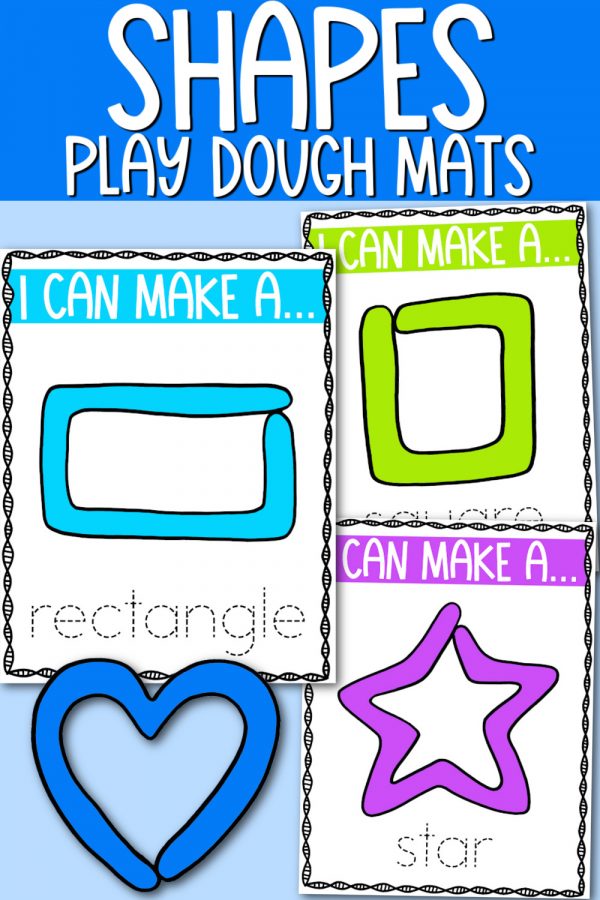
Whether you call it playdough, play dough, Play-Doh, or Play-Doh modeling compound, these printable mats can be used with any soft modeling dough.
Free Printable Playdough Shape Mats
This printable set contains 16 full-page color playdough mats.
Each page includes:
- One large colored shape
- A thick shape path for holding rolled playdough
- The prompt “I Can Make a…”
- The shape’s name in dotted tracing letters
- One shape per US Letter page
- A decorative black-and-white border
The colored path provides children with a clear visual model. Instead of trying to form the shape without guidance, they can roll the dough and position it directly over the example.
The dotted word at the bottom adds an early handwriting activity. Once the mat is laminated, children can trace the shape name with a dry-erase marker and wipe it clean afterward.
The free printable playdough mats PDF contains:
- Circle
- Crest
- Diamond
- Half circle
- Hexagon
- Heart
- Crescent moon
- Octagon
- Oval
- Parallelogram
- Pentagon
- Rectangle
- Square
- Star
- Triangle
- Trapezoid
The collection begins with familiar curved and straight-sided shapes and also introduces several shapes preschoolers may not encounter as often.
You do not need to use all 16 mats in a single lesson. Begin with two or three familiar shapes, then add more as your child becomes comfortable forming and naming them.
This post may contain affiliate links. As an Amazon Associate and a participant in other affiliate programs, I earn a commission on qualifying purchases. Read our disclosure policy here.




Supplies Needed:
Gather these supplies before beginning:
- Free 16-page playdough shape mats PDF
- Printer
- White cardstock or printer paper
- Laminator and laminating sheets, optional
- Reusable dry-erase pockets, optional
- Store-bought or homemade playdough
- Dry-erase marker
- Small playdough rolling pin, optional
- Plastic playdough knife, optional
Laminating the pages is strongly recommended. Modeling dough may leave oil, color, or small pieces on unprotected paper.
If you do not have a laminator, place the pages inside clear sheet protectors or reusable dry-erase pockets. These options protect the paper while allowing children to trace the dotted words.
How to Prepare the Printable Playdough Mats
1. Download the PDF
Use the download box near the bottom of the post to receive the complete 16-page file.
Save the PDF to your device before printing. Opening the downloaded file in a PDF reader usually yields more reliable printouts than printing directly from a browser window.
2. Print the pages
The mats are formatted for US Letter paper.
Print the complete set or select only the shapes you want to use. Choose color printing so children can see the colored shape paths.
Use white cardstock for sturdier pages. Regular printer paper is fine if the pages will be laminated or placed inside protective pockets.
3. Protect the mats
Laminate each page or place it in a reusable dry-erase pocket.
If you plan to use the mats at a preschool math center, laminating them will make the set easier to clean and reuse.
4. Gather the playdough
Give each child one or two colors of playdough. Starting with a small amount makes the activity easier to manage.
Add a small rolling pin or a plastic knife if desired, though children can complete the activity with only their hands.
How to Use the Playdough Shape Mats
- Choose one shape mat.
- Say the shape’s name aloud.
- Ask your child to point to the large colored shape.
- Demonstrate how to roll playdough between both hands to form a long rope or “snake.”
- Place the rope directly over part of the colored shape path.
- Add, shorten, bend, or connect additional ropes until the entire shape is covered.
- Talk about whether the shape has straight sides, curves, points, or corners.
- Count its straight sides and corners when applicable.
- Use a dry-erase marker to trace the dotted shape name.
- Peel the playdough from the mat, roll it back into a ball, and select another page.
Some younger children may prefer pressing small pieces of dough over the colored path rather than forming long ropes. That is completely fine. Pressing, pinching, and placing the pieces still strengthen the hands and reinforce the shape.
Playdough Shapes for Preschoolers
Learning shapes becomes more meaningful when children can touch, build, and compare them.
A picture of a triangle introduces its appearance, but forming that triangle from three playdough ropes encourages children to notice its construction. They can feel where two sides connect and see how three separate pieces create one complete shape.
These mats can help preschoolers explore:
- Which shapes have straight sides
- Which shapes have curved edges
- How many sides a shape has
- How many corners a shape has
- Which shapes look similar
- How changing the length or angle of a side changes a shape
- Where shapes appear in everyday objects
Children also hear and trace the name of each shape, connecting the visual shape with its spoken and written word.
Skills Children Practice
Shape recognition
Children practice identifying circles, squares, triangles, rectangles, and other shapes by their visual characteristics.
Fine-motor strength
Rolling, pressing, pinching, pulling, and flattening playdough exercise the small muscles in the hands and fingers.
These muscles are later used for:
- Holding pencils and crayons
- Cutting with scissors
- Fastening buttons
- Using utensils
- Manipulating small objects
- Completing other classroom activities
Hand-eye coordination
Children look at the colored shape path and adjust the playdough to match it.
Bilateral coordination
Rolling dough often requires both hands to work together. One hand may also hold the dough steady while the other presses or adjusts it.
Early handwriting
Tracing the dotted shape of a word introduces letter formation and helps children connect a written word to its meaning.
Math vocabulary
Children can practice words such as:
- Shape
- Side
- Corner
- Point
- Curve
- Straight
- Long
- Short
- Same
- Different
- Round
- Equal
Concentration
Forming a complete shape requires children to remain focused, make adjustments, and finish a multistep activity.
Start With These Basic Shapes
If your child is new to shape playdough mats, begin with:
- Circle
- Square
- Triangle
- Rectangle
- Oval
These are familiar shapes that appear frequently in children’s toys, books, puzzles, and surroundings.
Once your child can recognize and form the basic shapes, introduce:
- Diamond
- Heart
- Half circle
- Star
- Crescent moon
Finally, try the shapes with more sides or less familiar names:
- Pentagon
- Hexagon
- Octagon
- Parallelogram
- Trapezoid
- Crest
There is no required order. Follow your child’s interest and readiness.
The 16 Play Dough Shape Mats
Circle Playdough Mat
The circle has one continuous curved edge with no straight sides or corners.
Ask your child to roll a long rope and then bend it into a circle. If one rope is not long enough, connect two smaller pieces.
The circle mat is a good starting page for toddlers and younger preschoolers.
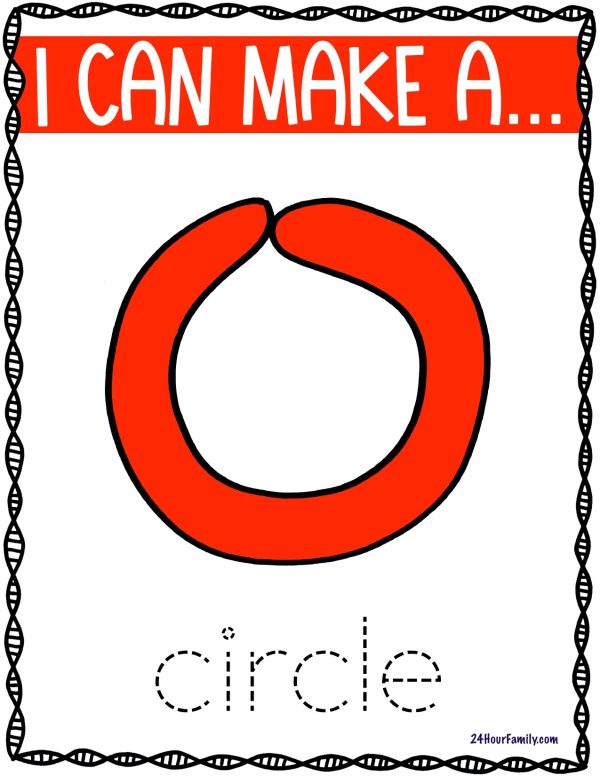
Try finding circular objects nearby, such as:
- Plates
- Coins
- Buttons
- Wheels
- Clocks
- Jar lids
Crest Playdough Mat
The crest has a rounded shield-like outline with a decorative curved top and a point near the bottom.
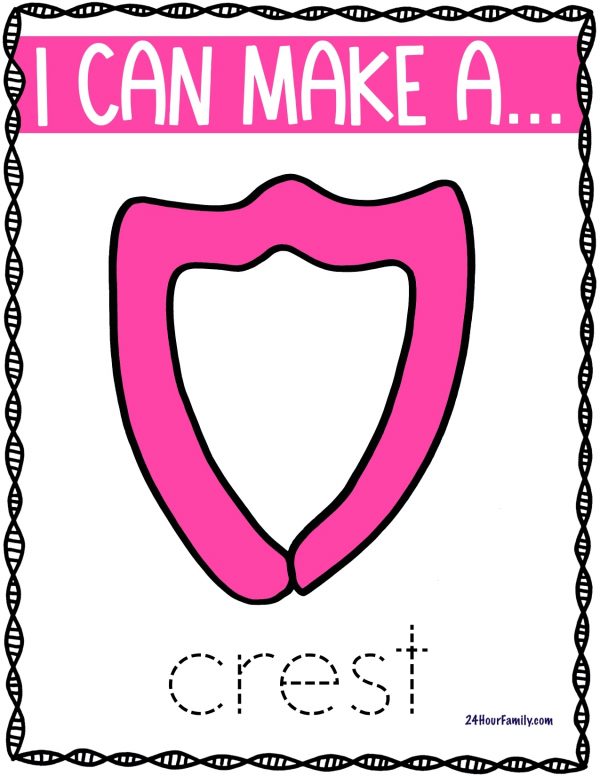
This is not one of the standard basic geometric shapes, but it gives children additional practice following curves, forming a point, and creating a symmetrical design.
Ask your child whether the two sides look alike and where the shape becomes narrower.
Diamond Playdough Mat
The diamond has four straight sides and four corners. It resembles a square turned onto one of its corners, although the pictured diamond has elongated upper and lower points.
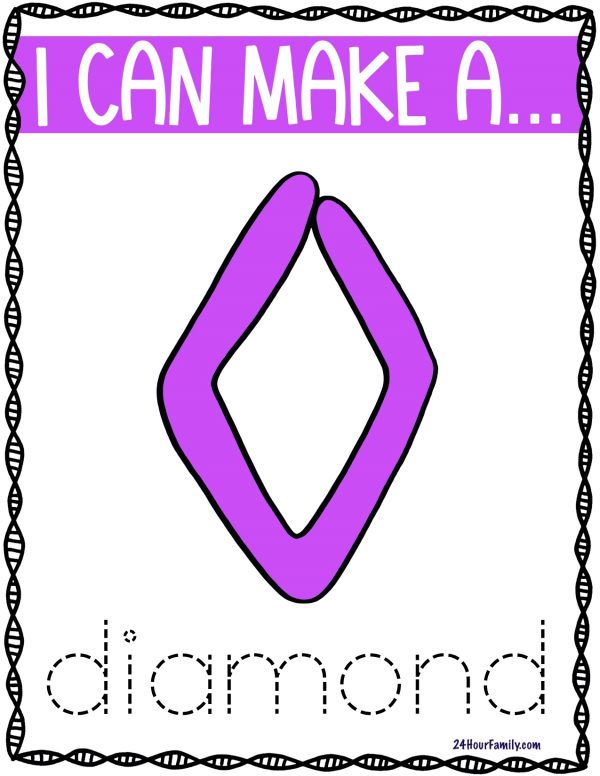
Compare the diamond mat with the square mat. Ask:
- How are the two shapes alike?
- How are they different?
- Do they have the same number of sides?
- Do they point in the same direction?
Half-Circle Playdough Mat
A half-circle has one straight side and one curved edge. It can be described as one-half of a complete circle.
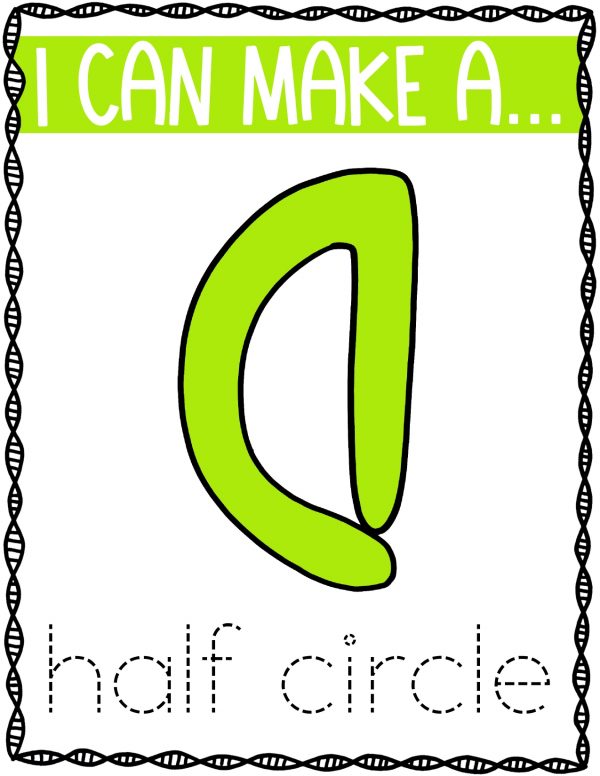
Place the half-circle mat beside the circle mat so children can compare them. Talk about what the circle might look like if it were divided into two equal pieces.
Hexagon Playdough Mat
A hexagon has six straight sides and six corners.
Ask your child to count each side as the playdough pieces are placed on the mat.
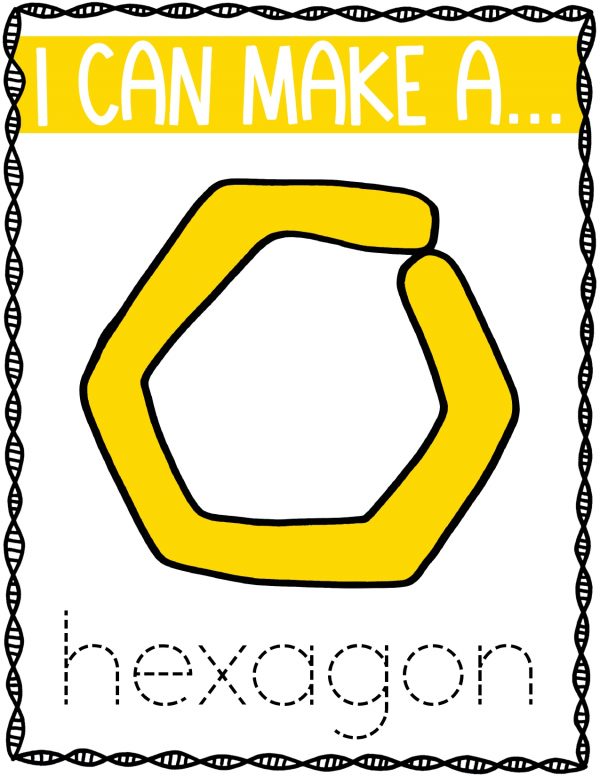
Real-world examples include:
- Honeycomb cells
- Some floor and wall tiles
- The heads of many wooden pencils
- Certain nuts and bolts
Heart Playdough Mat
The heart provides practice with curves, a dip at the top, and a point at the bottom.
It is not a standard geometric shape, but it is familiar and motivating for many children. It can also be used for a Valentine’s Day playdough activity.

Ask your child to notice that the right and left sides are approximately symmetrical.
Crescent-Moon Playdough Mat
The crescent moon has two long curved edges that meet near the tips.
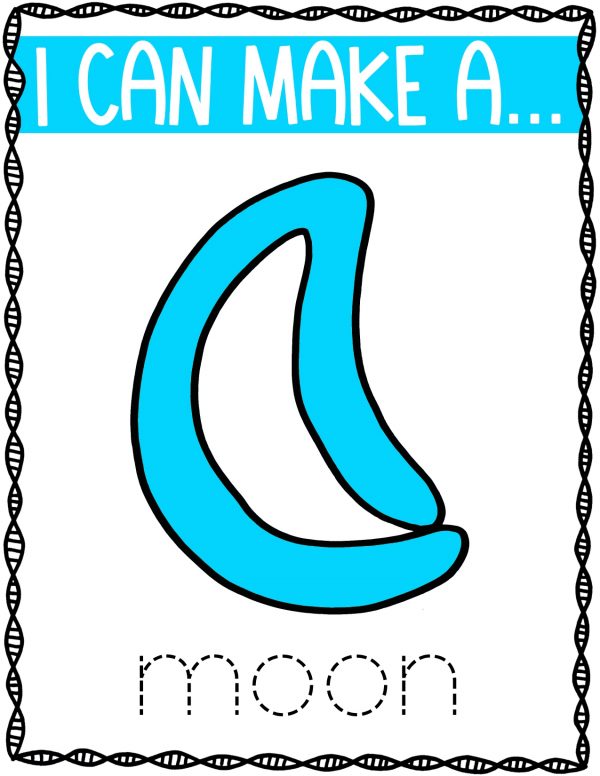
This page requires more control than the circle because the dough must follow two different curves. Pair it with a nighttime, moon, or outer-space lesson.
Octagon Playdough Mat
An octagon has eight straight sides and eight corners.
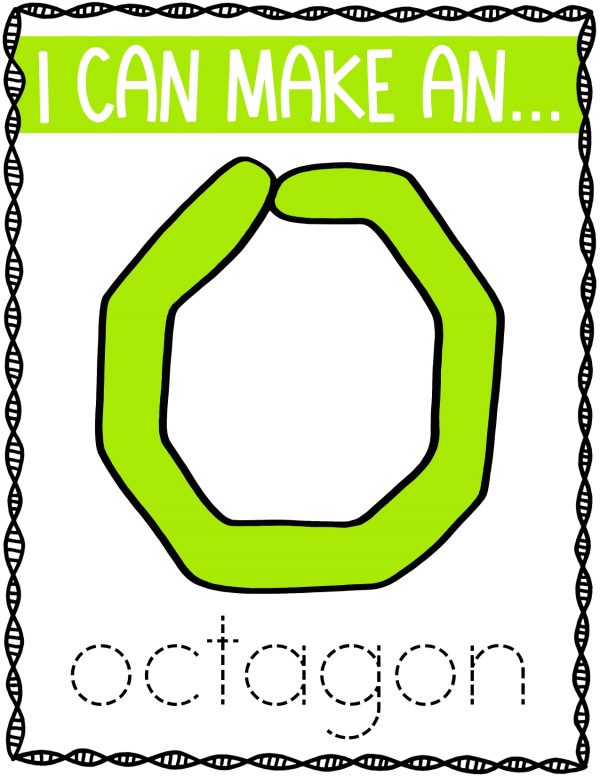
A stop sign is one of the most familiar real-world examples. Show children a picture of a stop sign and compare it with the playdough mat.
Count all eight sides and corners together.
Oval Playdough Mat
An oval has a continuous curved edge with no corners. It looks similar to a circle that has been stretched longer in one direction.
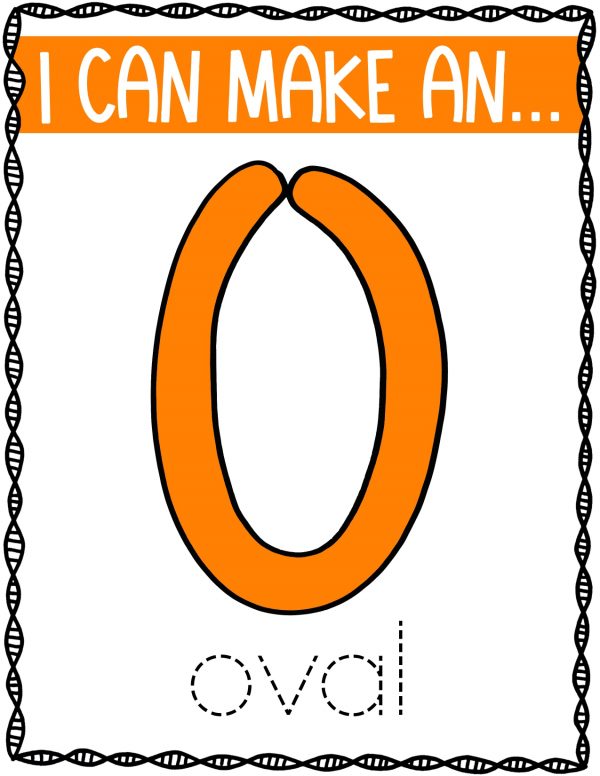
Compare the circle and oval mats and ask which one is taller or longer.
Objects that may resemble an oval include:
- Eggs
- Some mirrors
- Some leaves
- Certain serving platters
- Running tracks
Parallelogram Playdough Mat
A parallelogram has four straight sides. Its opposite sides are parallel, but its corners are slanted rather than square.
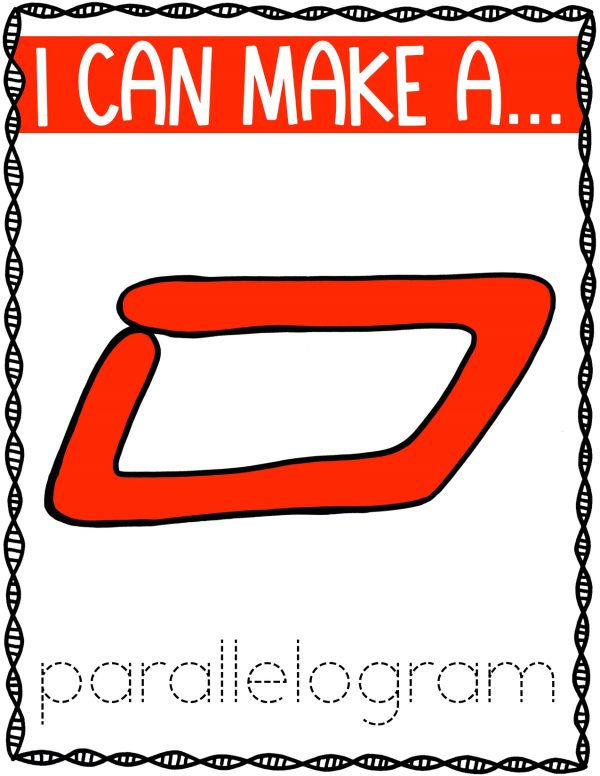
This is one of the more advanced shapes in the set. Compare it with the rectangle and trapezoid to help older preschoolers notice how the sides are positioned.
Pentagon Playdough Mat
A pentagon has five straight sides and five corners.
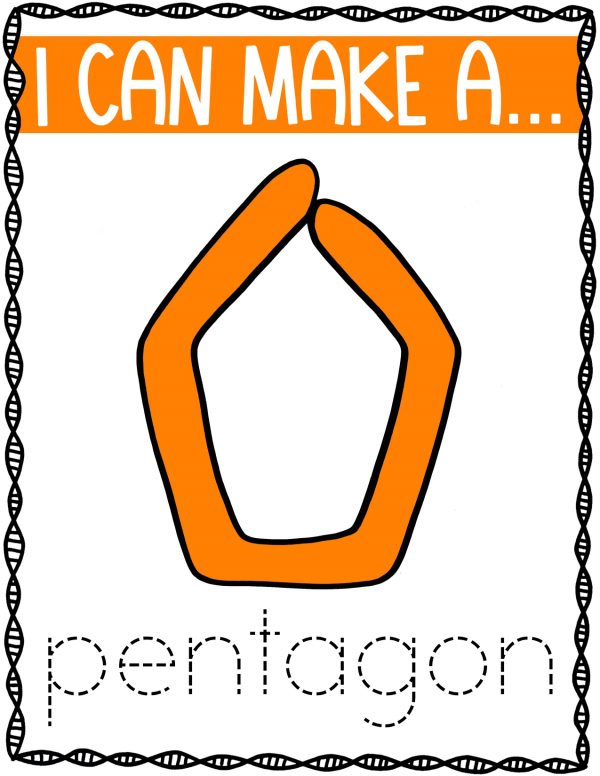
Ask your child to place one playdough piece along each side and count from 1 to 5.
A traditional baseball home plate is shaped like a pentagon.
Rectangle Playdough Mat
A rectangle has four straight sides and four corners. Its opposite sides are equal in length, with two longer sides and two shorter sides.
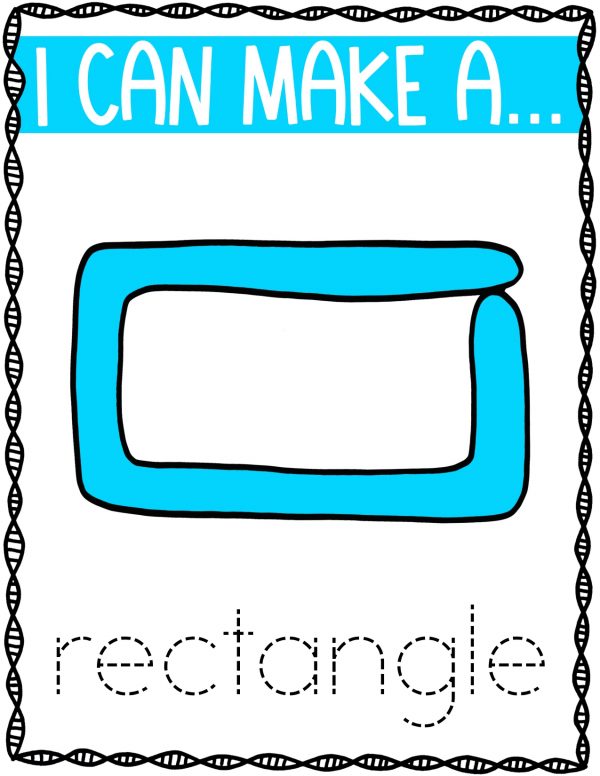
Compare the rectangle with the square. Both have four sides and four corners, but all four sides of a square are the same length.
Rectangular objects include:
- Books
- Doors
- Tables
- Television screens
- Sheets of paper
Square Playdough Mat
A square has four equal straight sides and four corners.
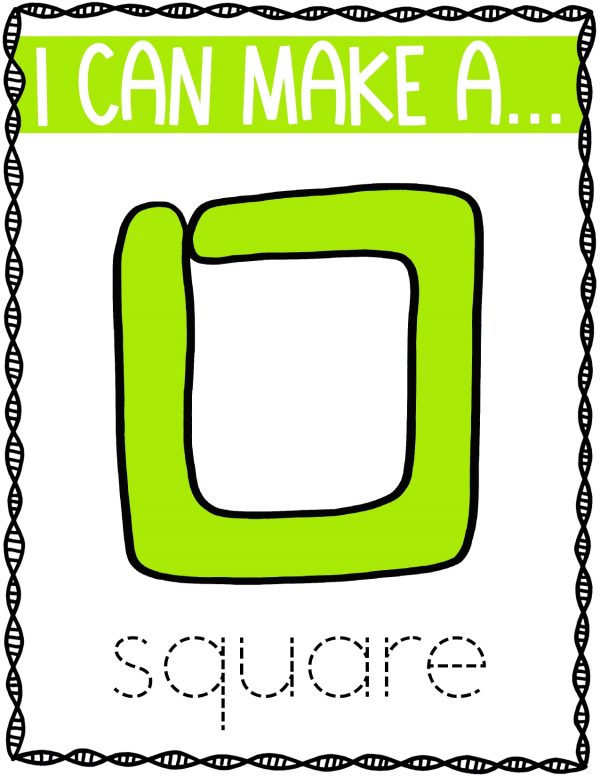
Ask your child to form four playdough ropes of approximately the same length. Connect the pieces at the corners and compare the finished shape with the colored model.
Star Playdough Mat
The five-pointed star is one of the most detailed pages in the set.
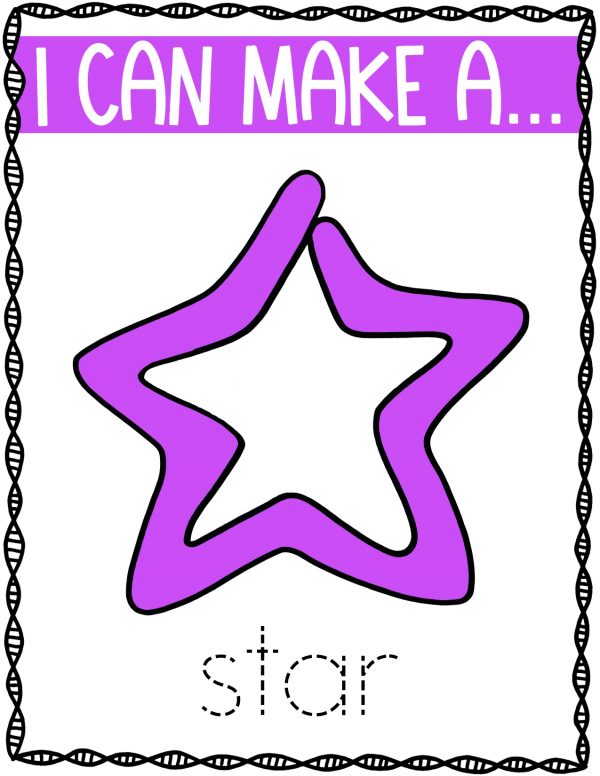
Children must change the direction of the dough repeatedly to form its points and inward corners. Save this mat until your child is comfortable bending, pinching, and connecting smaller pieces.
Triangle Playdough Mat
A triangle has three straight sides and three corners.
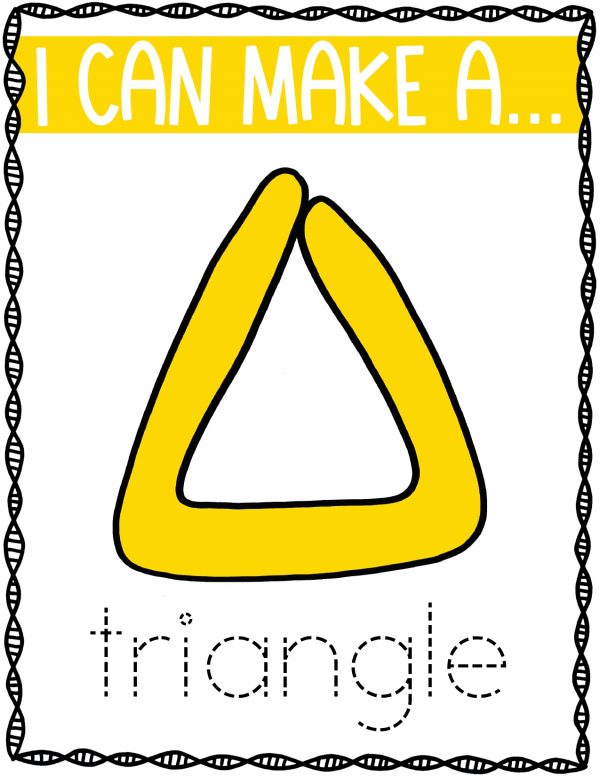
This is a useful early shape for counting. Place one playdough rope on each side and count:
One, two, three sides.
One, two, three corners.
Triangles can be found in:
- Roofs
- Road signs
- Sandwich halves
- Pizza slices
- Pennant flags
Trapezoid Playdough Mat
A trapezoid has four straight sides. In the pictured shape, the top and bottom are parallel, with the upper side shorter than the lower side.
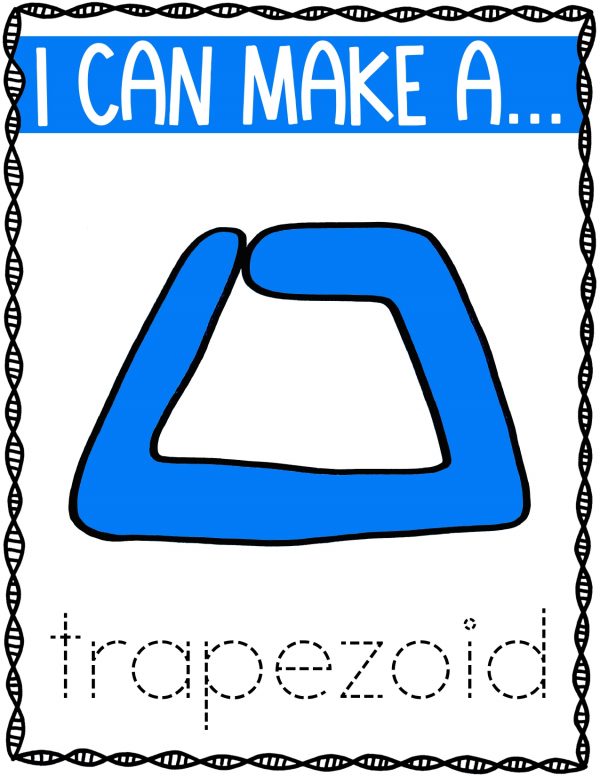
Compare it with the rectangle and parallelogram. All three have four sides, but the sides and corners are arranged differently.
How Many Sides and Corners Does Each Shape Have?
After children build each shape with playdough, use this chart to compare the number of straight sides and corners. The printable uses rounded playdough-style pieces, so its corners appear softer than the corners in a traditional geometry diagram.
| Shape | Straight Sides | Corners |
|---|---|---|
| Circle | 0 | 0 |
| Oval | 0 | 0 |
| Half circle | 1 straight side and 1 curved edge | 2 |
| Triangle | 3 | 3 |
| Square | 4 | 4 |
| Rectangle | 4 | 4 |
| Diamond | 4 | 4 |
| Parallelogram | 4 | 4 |
| Trapezoid | 4 | 4 |
| Pentagon | 5 | 5 |
| Hexagon | 6 | 6 |
| Octagon | 8 | 8 |
Because the printable uses rounded playdough-style pieces, its points and corners appear intentionally soft rather than perfectly sharp.
The crest, heart, crescent moon, and star are not included in this basic geometric comparison.
Questions to Ask While Children Play
You can extend the activity by asking simple questions:
- What is the name of this shape?
- Does it have straight sides?
- Does it have a curved edge?
- How many sides can you count?
- How many corners can you find?
- Which side is the longest?
- Are any sides the same length?
- What color is the shape on the mat?
- Can you find this shape in the room?
- Which other mat looks similar?
- How is this shape different from a circle?
- Can you make the shape without looking at the mat?
Keep the questions conversational. Children do not need to answer every question during one activity.
More Ways to Use the Printable Shape Mats
These pages can be used with more than playdough.
Trace the shape
Place the page inside a dry-erase pocket and let children trace around the inside and outside edges with a marker.
Trace the shape word
Children can trace the dotted lowercase letters and then try writing the word independently on a separate sheet of paper.
Use small manipulatives
Cover the colored path with:
- Pom-poms
- Large buttons
- Counting bears
- Plastic links
- Craft sticks
- Small blocks
- Large beads
Use only age-appropriate items and supervise children closely, as small manipulatives can pose a choking hazard.
Make a shape collage
Children can place paper scraps, tissue paper squares, or stickers along the shape path.
Match real objects
Gather safe household or classroom objects and match each item to the mat with a similar shape.
Use as shape posters
Display selected mats near a preschool math center as colorful shape references.
Practice colors
The shapes are printed in several bright colors. Ask children to identify both the color and the shape.
Preschool Math-Center Ideas
Place several laminated mats in a math or fine-motor center with containers of playdough.
Begin with four familiar shapes:
- Circle
- Square
- Triangle
- Rectangle
Change the selection periodically so children encounter different shapes throughout the year.
You can also organize the mats into groups:
Shapes with curves
- Circle
- Oval
- Half circle
- Heart
- Crescent moon
Shapes with three or four sides
- Triangle
- Square
- Rectangle
- Diamond
- Parallelogram
- Trapezoid
Shapes with five or more sides
- Pentagon
- Hexagon
- Octagon
Place the mats upright in a file organizer so children can select a page independently.
Tips for Using Playdough Mats With Toddlers
These mats can be used with toddlers, but their activity will look different from that of an older preschooler.
Toddlers may:
- Press dough onto the colored area
- Pinch small pieces
- Flatten dough with their palms
- Pull the dough apart
- Name or point to a shape
- Match a color
- Attempt to roll short pieces
They are not expected to form every shape accurately or trace the words independently.
Always supervise young children and use a taste-safe homemade dough if they are still likely to place materials in their mouths.
Tips for Preschoolers and Kindergartners
Older children can:
- Roll thinner and more consistent ropes
- Match the complete shape path
- Count sides and corners
- Compare two shapes
- Trace the shape name
- Copy the shape without using the mat
- Find matching shapes in the room
- Sort shapes by their characteristics
- Explain how two shapes are different
Kindergartners may be ready to compare the square, rectangle, diamond, parallelogram, and trapezoid as different four-sided shapes.
Cleaning and Storing the Mats
Remove all playdough before storing the mats. Wipe laminated pages with a slightly damp cloth and dry them completely.
Avoid submerging laminated pages in water, as moisture can seep in around the edges.
Store the complete set:
- In a large envelope
- In a file folder
- In a resealable bag
- In a three-ring binder
- Inside a preschool math-center container
Keep the dry-erase marker and playdough tools in a separate bag or container.
Toddlers can press and pinch dough onto the colored shapes. Preschoolers can roll ropes, form the shapes, and trace the words. Kindergartners can count sides and corners and compare shapes by their characteristics.
Download the Free Printable Playdough Shape Mats PDF
This free printable PDF includes 16 colorful playdough shape mats with large shape guides and traceable shape names.
To use the set:
- Print the pages.
- Laminate them or place them inside reusable pockets.
- Roll the playdough into ropes.
- Cover the colored shape path.
- Trace the shape word.
- Wipe the mat clean and reuse it.
These mats combine sensory play, fine-motor practice, shape recognition, math vocabulary, and early handwriting in one low-preparation preschool activity.
Enter your information in the download box below to receive the complete free printable playdough shape mats PDF.
More Playdough and Shape Activities
- Cutting Shapes Worksheets
- Number Playdough Mats
- Heart Pattern-Block Printable
- Parallelogram Pattern-Block Printable
- Triangle Pattern-Block Printable
- Playdough Crafts and Printables
- Letter T Play-Doh Mat and Worksheets
- Camping Playdough Mats for Preschoolers
- Outer Space Play-Doh Mats (Free Printable)
- How to Make Edible-Themed Play-Doh
- How to Make Play-Doh from Crayons
- How to Make Edible Lemon Play-Doh
- Spring Play-Doh Mats
What age are these shape mats best for?
They work well for children ages 2 to 6. Younger toddlers benefit from the sensory and hand-strengthening practice alone, while preschoolers and kindergartners can work on matching the printed outlines precisely.
Do I need to laminate the mats before using them?
Lamination isn’t required, but it does make the mats last much longer. Printing onto cardstock without laminating is a good middle option if you don’t have access to a laminator.
What kind of playdough works best with these mats?
Standard store-bought playdough or homemade playdough both work fine. A slightly firmer dough holds its shape better when pressed into the mat’s lines than a very soft, sticky dough.
Can these mats be used for anything besides playdough?
Yes. The same printable shapes work well for tracing with a dry-erase marker, gluing on pom-poms or buttons to fill the outline, or cutting out with safety scissors as a scissor-practice activity.
Print the full set once, and you’ll have a shape-learning activity ready to pull out anytime.

One Comment