
How to Begin Bible Journaling: A Beginner’s Guide
You want to spend more time with God’s Word, but starting a Bible journal feels intimidating. What do you write? Do you need a special Bible? What if you cannot draw?
Start with the Bible you already own, a notebook, and a pen. Read a short passage and write one honest response. That is enough for your first entry. You can explore colors, lettering, and art later if you want to.
This guide walks you through that first page, then offers a few methods you can try as you grow more comfortable.
What Do You Need for Bible Journaling?
Your basic Bible journaling supplies are:
- A Bible you are comfortable reading
- A notebook, journal, or paper
- A pen or pencil
If you prefer writing in your Bible, a wide-margin or journaling Bible gives you space beside the text. You don’t need to buy one before you start. You can also add colored pencils, highlighters, stickers, or washi tape, but those are optional.
Bible journaling is a way to record your response to Scripture. For more on what the practice means, read What Is Bible Journaling?.
Should You Use an ESV, NKJV, or Another Journaling Bible?
Choose a Bible translation you will read and use regularly. Both ESV and NKJV journaling Bibles exist, but the layout matters as much as the translation for this activity. Look at the margin space, print size, and whether you want blank or lined space for notes.
If you already have a Bible you enjoy, start with a separate notebook. After a few entries, you will have a better idea of whether a dedicated journaling Bible would be useful to you.
How to Start Your First Bible Journal Entry
Set aside a few minutes and choose a short passage. You could begin with a psalm or a section of one of the Gospels. Keep your Bible open while you write so your notes stay connected to the passage.
Step 1: Read the Passage in Context
Read the full section once before selecting a favorite line. Notice who is speaking, what is happening, and how the verses fit together. If a word or phrase is unfamiliar, write down your question rather than feeling you must answer it immediately.
Step 2: Read It Again and Notice One Detail
On your second reading, choose one thing to focus on. It might be a repeated word, an image, a promise, a command, or a question you have about the passage.
You do not have to find a dramatic insight. Careful attention is a good place to begin.
Step 3: Write a Few Lines
At the top of your page, write the date and passage reference. Then finish one or two of these sentences:
- “This passage says…”
- “I notice…”
- “I wonder…”
- “This shows me…”
- “My prayer today is…”
Try to separate what the passage says from how you are responding to it. That simple distinction can help you reflect personally while still reading Scripture carefully.
Step 4: Pray and Leave Room to Return
Write a short prayer connected to what you read, or pray without writing it down. If you have an unanswered question, leave it on the page. You can return to the passage, consult a study resource, or discuss it with someone you trust.
You have now made your first Bible journal entry.
A Simple Bible Journaling Example
Imagine you are reading Psalm 23. After reading the whole psalm, your notebook entry might look like this:
Passage: Psalm 23
What I notice: The psalm uses the image of a shepherd to describe God’s care and guidance.
What I wonder: What would the original listeners have understood about a shepherd’s work?
My prayer: Lord, help me trust your guidance as I make decisions this week.
This entry uses no art or special supplies. If you want a visual element, add a small drawing beside your notes or underline the image you want to remember.
Bible Journaling Methods to Try Next
Once you have made a few entries, try a different approach and see which one helps you engage with Scripture.
Write and Reflect
Copy a short verse into your notebook, then read the surrounding passage. Write what the verse means in context and why it stood out to you. This works well if you enjoy writing more than drawing.
Use a Simple Scripture Marking System
Choose a few marks you can use consistently. For example:
- Underline a repeated word.
- Circle a word you want to study.
- Put a question mark in the margin beside something you do not understand.
- Write a cross-reference when another passage comes to mind.
Keep the system small enough that it helps you read. You don’t need to assign a different color to every possible theme.
Journal a Prayer
After reading, write a prayer shaped by the passage. You might thank God for something it reveals about Him, ask for help in an area it brings to mind, or confess where you need to change.
Make a Visual Reminder
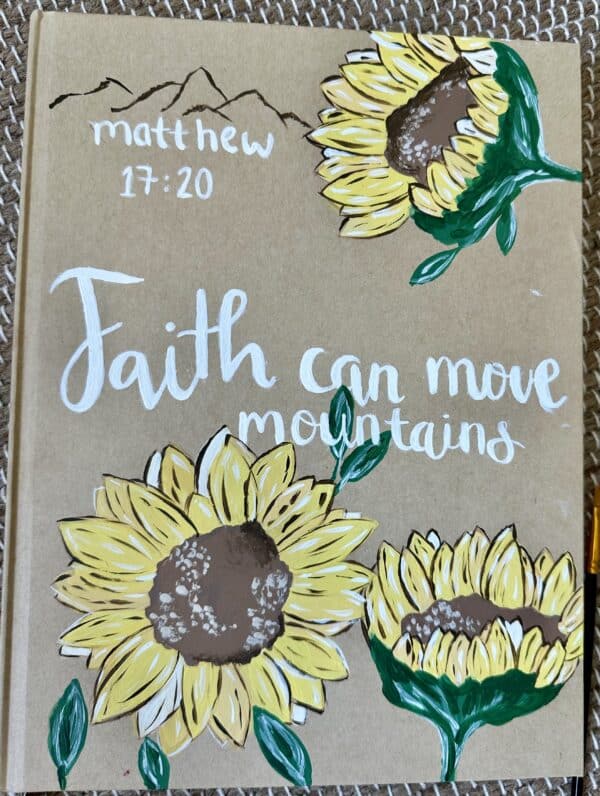
Use hand lettering, a small illustration, or colored pencil to represent an image in the passage. Read and reflect first, then let the art help you remember what you studied.
Use a Printable Page
A printable can provide space for the passage, observations, questions, and prayer. Our Bible journaling ideas for beginners post includes a free template. If you enjoy decorating pages, you can also try printable washi tape.
Can You Write in Your Bible?
Yes, if you are comfortable doing so. You may write notes, underline words, or add art in the margins of your own Bible. You can also choose a separate notebook if you want more space or prefer to keep the pages unmarked.
Before using a new pen, marker, or paint in a Bible, test it on an inconspicuous page. Thin paper may allow ink to show through. Colored pencils and a regular pencil can be simple starting options.
How Often Should You Bible Journal?
There is no required schedule. You might journal several times a week, once a week, or whenever a passage gives you something you want to remember. A short, thoughtful entry is more useful than a daily page you feel pressured to complete.
If a routine would help, attach journaling to a time you already spend reading Scripture. Begin with five or ten minutes and adjust from there.

What If You Cannot Draw?
You do not need to draw at all. Write a question, copy a key word, or record a prayer. If you want to try art without starting from a blank page, use a printable Bible journaling template or color a separate Bible verse coloring page.
The journal is a place to pay attention to Scripture, not a test of your handwriting or artistic skill.
Keep Going at Your Own Pace
For your next entry, return to the same passage or read the next section. You can try a new method, but you do not need a new technique every time. Let your pages reflect what you are reading and praying through.
For more prompts, visit Bible journaling ideas for beginners. For guides for children and teenagers, browse the Bible journaling resource collection.
Open your Bible, choose a short passage, and write what you notice. Your first page can begin with a single sentence.
