
Free Scientific Method Worksheet PDF for Kids
Help young scientists turn a curious question into an organized investigation with this free scientific method worksheet pack.
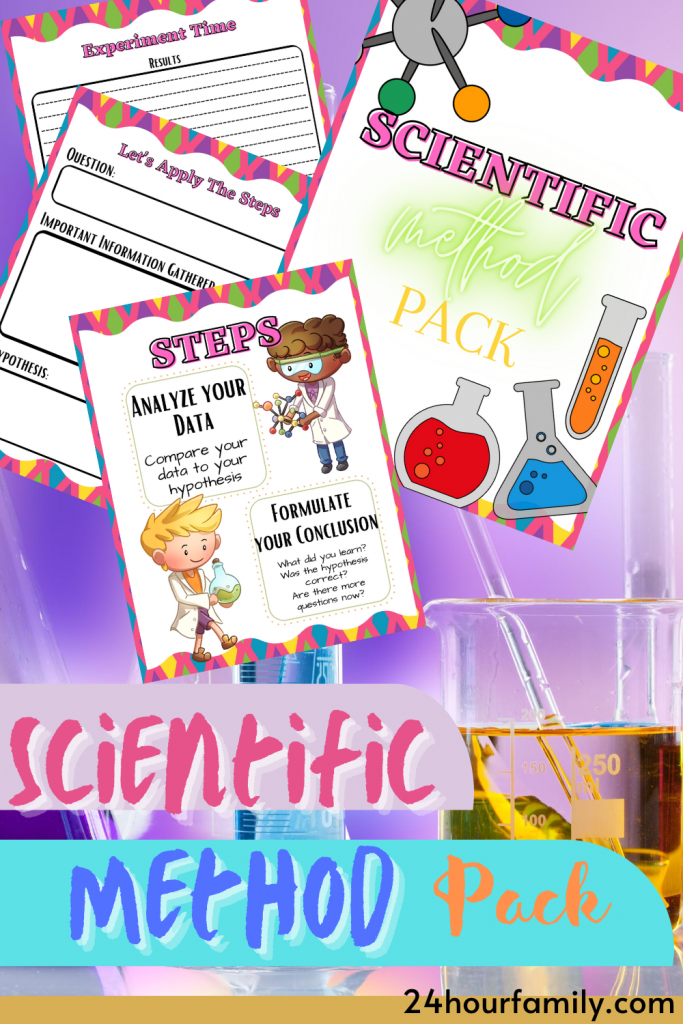
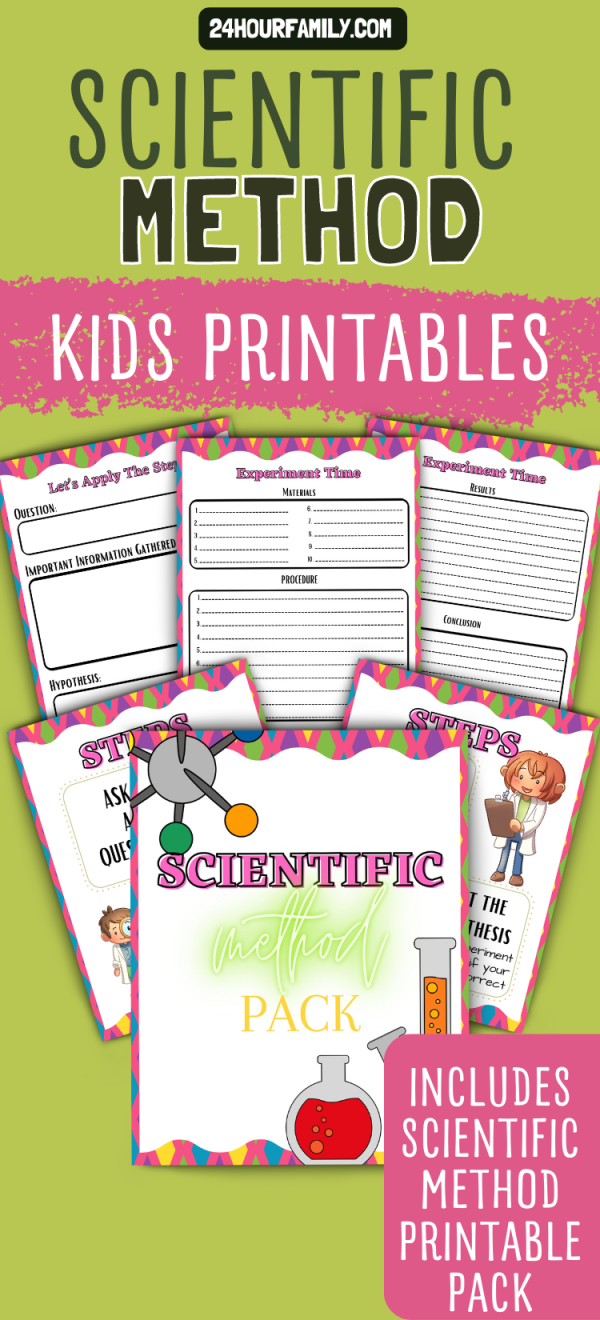
The seven-page PDF introduces six basic steps and gives elementary students space to plan an experiment, list materials and procedures, record results, and write a conclusion.
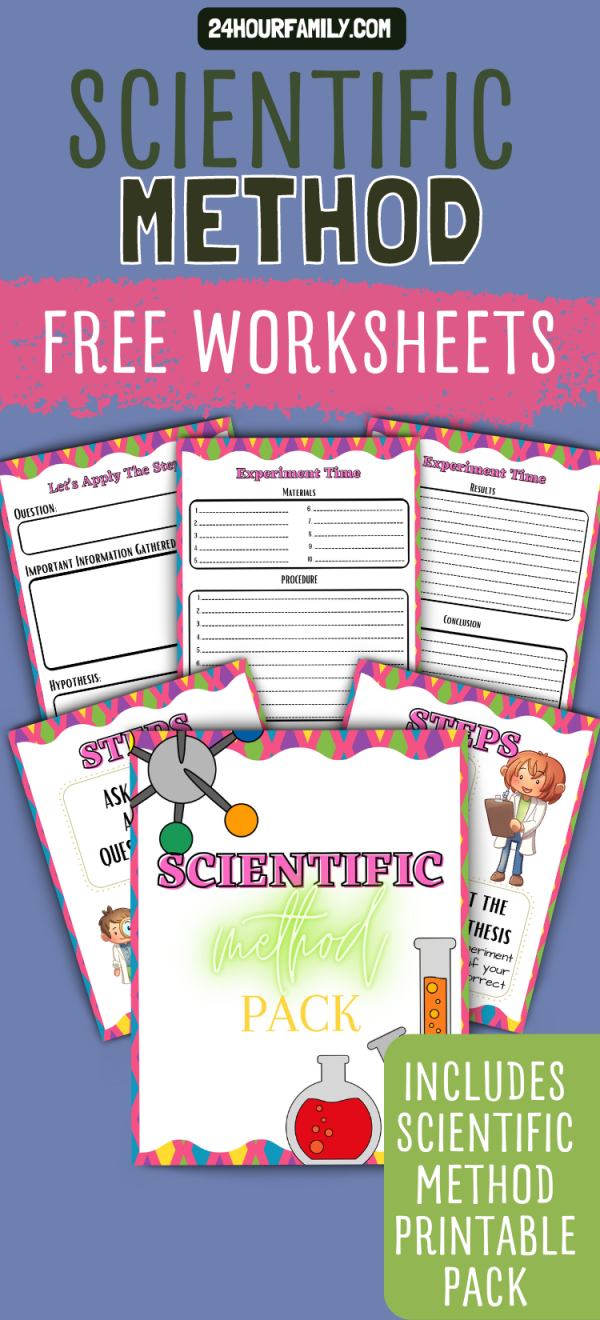
Free Scientific Method Worksheet Pack for Kids
The printable can be used with many simple science activities because it does not prescribe a particular experiment.
Choose an age-appropriate question, review the illustrated reference pages, and guide students through the recording sheets as they investigate and practice the scientific method.
This resource is best suited to grades 3–5, including 3rd, 4th, and 5th grade, although younger elementary students can complete it with an adult acting as a scribe.
Older students may use it as a basic planning form, but middle school investigations usually require additional sections for variables, controls, repeated trials, measurements, and data tables.
What is included in the scientific method PDF?
The download contains seven US Letter pages:
- Scientific Method Pack cover
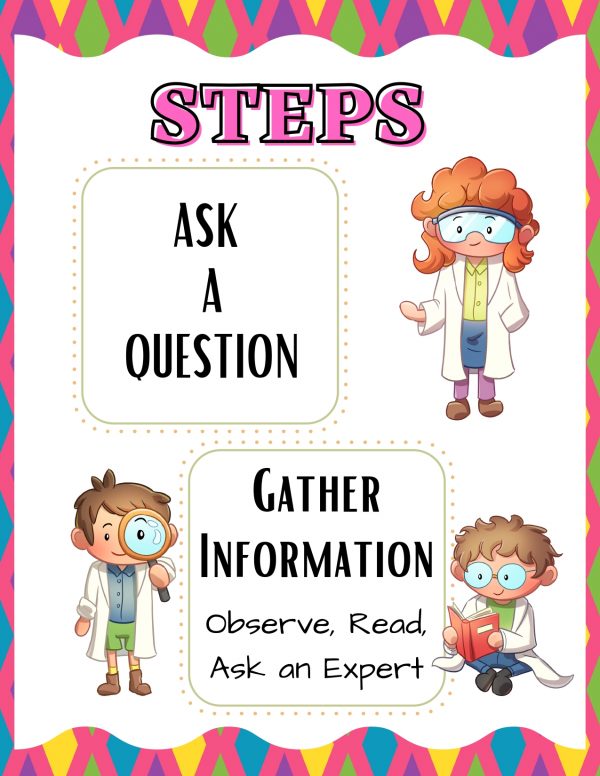
- Ask a Question and Gather Information reference page
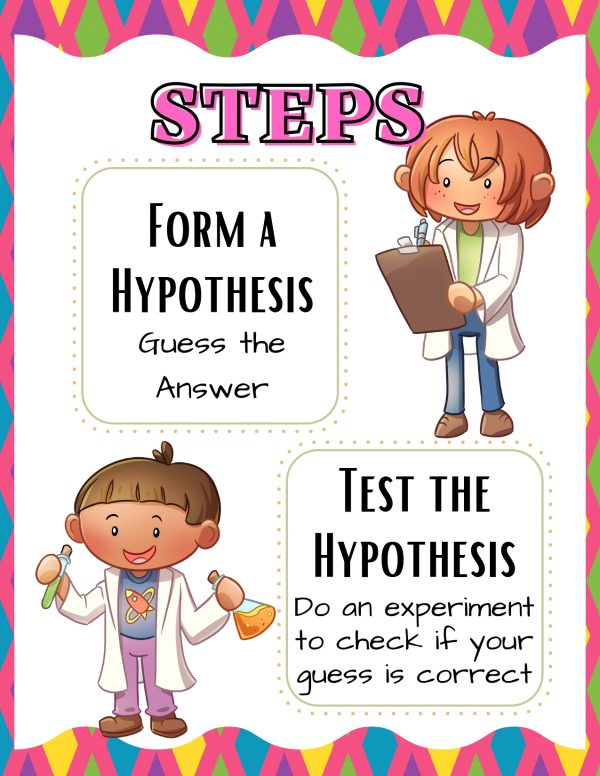
- Form a Prediction and Test It reference page
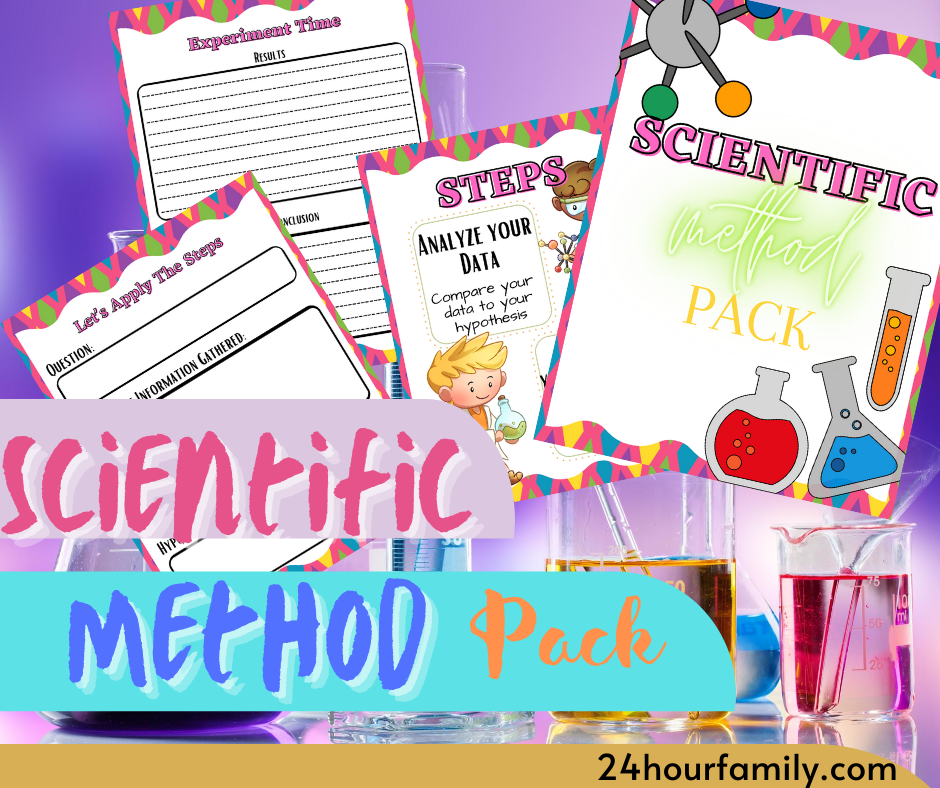
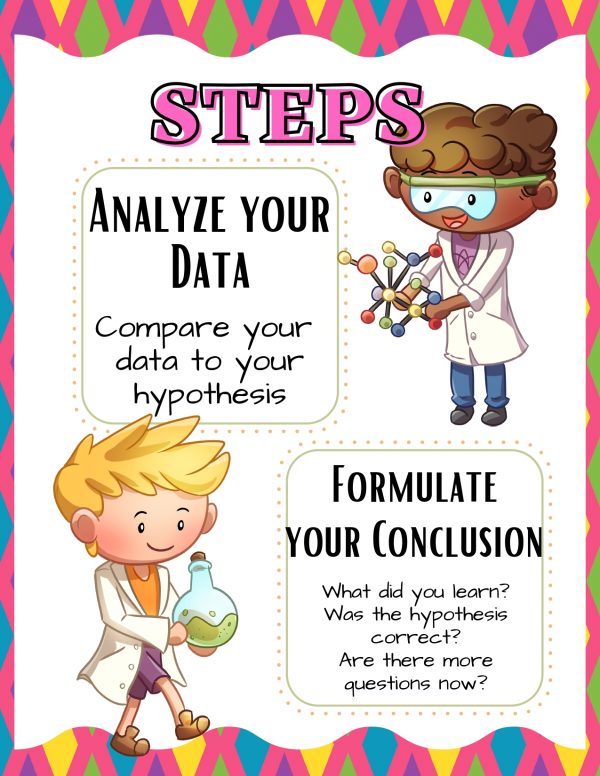
- Analyze Your Data and Formulate Your Conclusion reference page
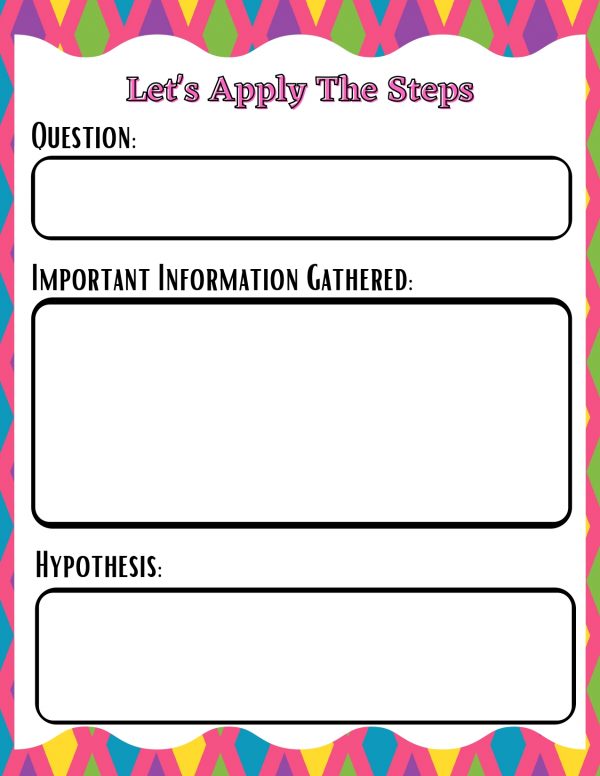
- Question, Important Information Gathered, and Prediction worksheet
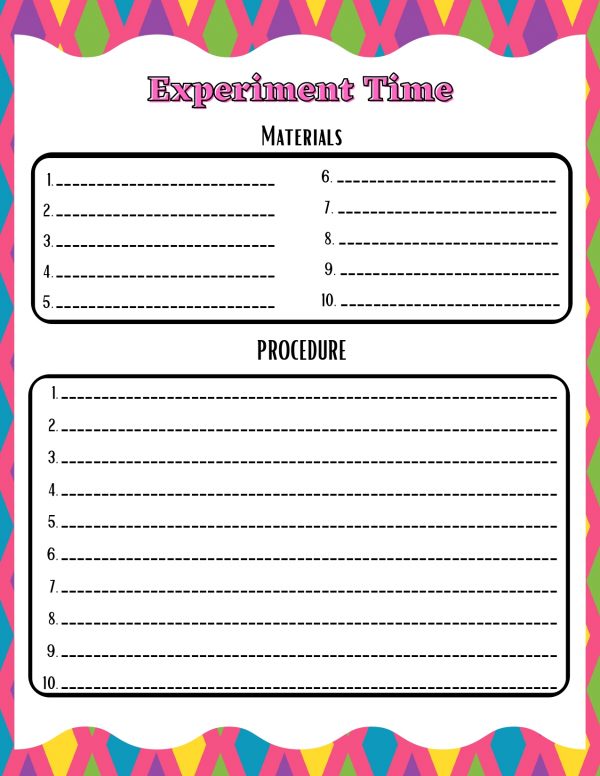
- Materials and Procedure worksheet
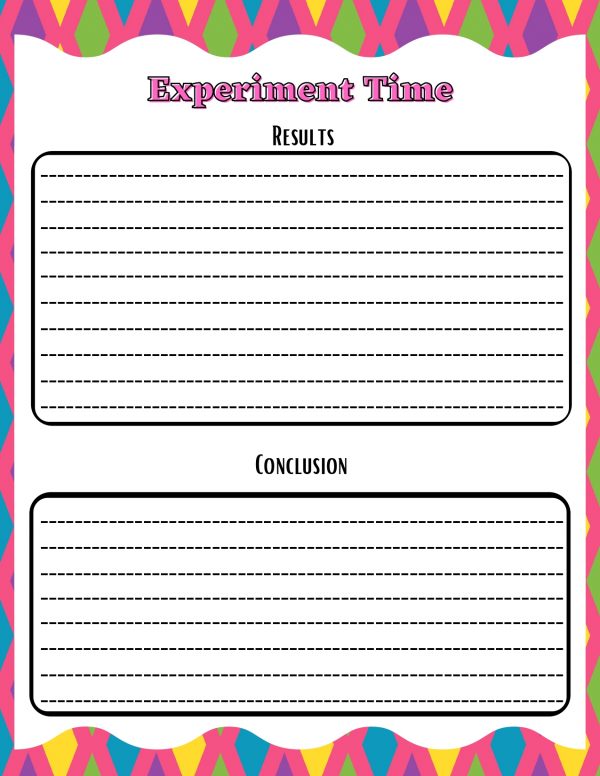
- Results and Conclusion worksheet
The packet includes three illustrated teaching pages and three scientific method worksheets students can write on.
It does not contain a completed example, experiment directions, vocabulary exercises, an answer key, cut-and-paste activities, or dedicated spaces for identifying variables and numerical data.
The download box for this free printable is located at the bottom of this post.
What is the Scientific Method?
A simple definition of the scientific method is an organized approach to asking questions, investigating them, examining evidence, and explaining what was learned.
This scientific process helps students move beyond simply making an educated guess by encouraging them to make a prediction they can investigate and compare with their observations or measurements.
The steps of the scientific method are often displayed in a particular order for teaching, but real investigations are not always perfectly linear. A result may lead to a new question, a revised procedure, another prediction, or a new experiment. Repeating and refining a scientific investigation is part of science.
This scientific method printable uses six introductory steps:
- Ask a question.
- Gather information.
- Form a hypothesis.
- Test the prediction.
- Analyze the data.
- Form a conclusion.
Different textbooks may combine or rename certain steps of the scientific method. For example, some begin with an observation, problem, or question, while others include communicating results as a final step.
What matters is that students ask a testable question, follow a documented procedure, collect evidence, and base their conclusion on that evidence.
The six scientific method steps
1. Ask a question
Begin with something the student can investigate. A focused question is more useful than a broad one and makes it easier to design an experiment.
Questions students might investigate include:
- Will sugar dissolve at different rates depending on the water temperature?
- How does the amount of sunlight influence plant growth?
- Which paper airplane design travels farthest?
- Does adding salt change how quickly ice melts?
Avoid questions that cannot be investigated with the available time, materials, or tools.
2. Gather information
Students observe, read reliable sources, discuss what they already know, and learn enough background information to make a reasonable prediction.
During this research stage, they should record facts that relate directly to the question rather than copying everything they find.
This is also the time to consider safety, necessary tools, and what needs to be measured during data collection.
3. Form a hypothesis
A hypothesis is a prediction or proposed explanation that can be investigated—not simply a random guess. For elementary students learning how to write a hypothesis, this sentence frame works well:
If ______ changes, then ______ will happen because ______.
For example: “If sugar is placed in warmer water, then it will dissolve faster because the water molecules are moving more quickly.”
Students do not prove their prediction true. Their results may support it or may show something different. Either outcome can provide useful information.
4. Test the prediction
Plan and conduct a fair science experiment. Create a materials list and write the procedure clearly enough that another person could repeat it.
Change one factor at a time when possible, keep other conditions consistent, measure carefully, and repeat trials if the activity allows.
In more advanced investigations, students may identify the independent variable, dependent variables, and controlled variables, as well as a control group when appropriate. An adult should review safety and supervise any heat, chemicals, glass, sharp objects, or other hazards.
5. Analyze the data
Look closely at the results. During data analysis, students might compare measurements, calculate an average, identify a pattern, create a data table or graph, or notice an unexpected result.
Analyzing data is different from collecting background information. Research happens before or during planning; analysis focuses on the evidence collected during the experiment.
6. Form a conclusion
The conclusion should answer the question and explain what the evidence shows. Students can use this structure:
- My question was…
- The results showed…
- The evidence did or did not support my prediction because…
- If I repeated the experiment, I would…
- A new question I have is…
Students should draw conclusions from their evidence rather than changing their results to match the original prediction.
A prediction that was not supported does not mean the experiment failed. It simply means the result differed from what was expected.
How to use the Free Scientific Method Worksheets
Before the experiment
Print the packet on US Letter paper. Review pages 2–4 together and discuss the example question you plan to investigate. Students can keep these illustrated pages nearby as a reference or place them in a science notebook.
On page 5, students will write the investigation question, summarize the most relevant background information, and state their hypothesis.
Plan the investigation
Use page 6 to list up to ten materials and write the procedure in numbered order. Encourage students to include specific amounts, times, and measurements rather than vague directions so they can use the scientific method consistently.
For example, “Add 100 milliliters of water” is more repeatable than “Add some water.”
Record and discuss the results
Page 7 provides lined space for results and a conclusion. Students can record observations and summarize their measurements there.
If the experiment produces several numerical results, attach a separate data table or graph because this packet does not include one.
Ask students to distinguish between what they observed and what they think it means. “The plant grew two centimeters” is an observation. “The extra light caused more growth” is an interpretation that should be supported by the overall evidence.
Example Scientific Investigation
The sample investigation below shows one way students can complete the worksheet.
Question: Will one teaspoon of sugar dissolve faster in warmer water than in cooler water?
Important information: Water can dissolve sugar. Warmer water particles move more quickly than colder water particles.
Prediction: If the water is warmer, then the sugar will dissolve faster because faster-moving water molecules will interact with the sugar more frequently.
Materials: Three clear cups, equal amounts of cold, room-temperature, and warm water, sugar, a teaspoon, a thermometer, a spoon, and a timer.
Procedure: Measure equal amounts of water into the cups. Confirm each temperature. Add one teaspoon of sugar to the first cup, stir at a steady pace, and record the time it takes to dissolve. Repeat with the remaining temperatures.
Results: Record the temperature and dissolving time for each cup in a separate table.
Conclusion: State which cup dissolved the sugar fastest, cite the recorded times, and explain whether the results supported the original prediction.
An adult should control water temperature and ensure the warm water is not hot enough to burn.
Suggested experiments to pair with the packet
The worksheets are most useful when paired with a hands-on activity that produces observable or measurable results. These options can also complement lesson plans, school science, homeschooling, or a science class.
- Use the Pop Rocks and soda experiment to practice observations and conclusions.
- Compare crystal-growing conditions as you learn how to grow borax crystals.
- Test one variable in this homemade bouncy ball experiment.
- Build and observe a homemade heart model.
- Find additional investigations in these STEM activities for kids.
These science projects give students opportunities to test ideas and learn more about the world around us. Choose activities appropriate for the student’s age and provide adult supervision. Do not let children handle borax, heat, pressure, or reactive materials without direct guidance.
Recommended ages and grade levels
The format and illustrations are most appropriate for elementary learners and can introduce important science concepts without requiring a formal lab report.
- First grade and 2nd grade: Complete the packet together, with an adult writing longer answers.
- 3rd grade–5th grade: Students can use the packet to plan and document a simple experiment with guidance.
- 6th grade: Useful as a basic review or planning form, but add variables, controls, data tables, and repeated trials.
- Middle school: Use a more detailed lab report template when students must identify independent, dependent, and controlled variables or produce formal graphs and analyses.
This distinction matters because a colorful elementary worksheet should not be presented as a complete middle school science lab report merely to target a keyword.
More Science Worksheets for Kids
Keep the science learning going with these printable activities that help kids explore everything from life cycles and cells to the five senses.
- Printable Science Worksheets – A collection of educational pages covering different science topics for learning at home or in the classroom.
- Star Life Cycle Worksheets – An engaging resource that introduces kids to the different stages in the life of a star.
- Life Cycle Worksheets – Printable activities that help kids discover how different plants and animals grow and change over time.
- Build a Plant Cell Cut and Paste Worksheets – A hands-on activity for identifying and assembling the different parts of a plant cell.
- Build an Animal Cell Cut and Paste Worksheet – A simple cut-and-paste resource that makes learning the basic parts of an animal cell more interactive.
- Five Senses Sorting Worksheets – A fun sorting activity that helps kids connect everyday objects and experiences with sight, sound, smell, taste, and touch.
Download the free scientific method worksheet PDF
This free, seven-page scientific method worksheet printable helps elementary students review the scientific method and document their own experiment from question through conclusion.
Print the full packet on US Letter paper or select only the reference and recording pages you need. Download your free scientific method worksheet and use it to help students learn the scientific method through their own questions, observations, and results.
How many pages are in the scientific method worksheet?
The PDF contains seven pages: one cover, three illustrated reference pages, and three experiment-recording worksheets.
Does it teach six or seven steps?
The actual printable teaches six: ask a question, gather information, form a prediction, test it, analyze the data, and formulate a conclusion. Some teaching models add observation/problem or communication as separate steps.
Is an answer key included?
No. The recording pages are blank because students use them with their own experiment. The illustrated pages provide brief explanations of the six steps.
Is this a blank scientific method worksheet?
The final three pages are blank experiment-planning forms. The first four pages are a cover and instructional references.
Can middle school students use it?
They can use it for a basic review, but it does not include variables, controls, quantitative data tables, graphs, or error analysis. Most middle school investigations need a more detailed template.
What should a hypothesis include?
It should make a prediction that can be investigated and, when appropriate, explain the student’s reasoning. “If…, then…, because…” is a helpful structure, but it is not the only acceptable format.
May I distribute the PDF to students?
Review the current usage terms beside the download before copying or sharing it. If classroom distribution is not explicitly permitted, direct other users to this article to obtain their own copy.
