
Printable Body Systems Chart (Free To Print)
What if there were a way to make learning fun and interactive? That’s where this free Printable Body Systems Chart for kids comes in.
These human body systems worksheets PDF are an easy way for parents and teachers to help their child learn human body systems in a fun and engaging way. Free Kid’s printables are a fun and engaging way to help kids learn!
This post contains affiliate links meaning I get commissions for purchases made through links in this post at no cost to you. Read my disclosure policy here.
Each printable body systems chart features different body systems, which kids can use to learn how the body works. Plus, with vivid colors and illustrations, these cards will surely capture your child’s attention.
So if you’re looking for a fun and educational activity for your classroom or home use, download the free anatomy flashcard printable pack for kids.
Printable Body Systems Chart Flashcards – Free to Download
We have included this free printable PDF with all of the body systems listed so the kids can make anatomy flashcards with them. This printable version is a great way to reinforce your child’s learning skills and help memorize the body systems.
They provide an easy-to-follow visual aid to help you understand and remember the body’s major systems.
What is a Printable Body Systems Chart?
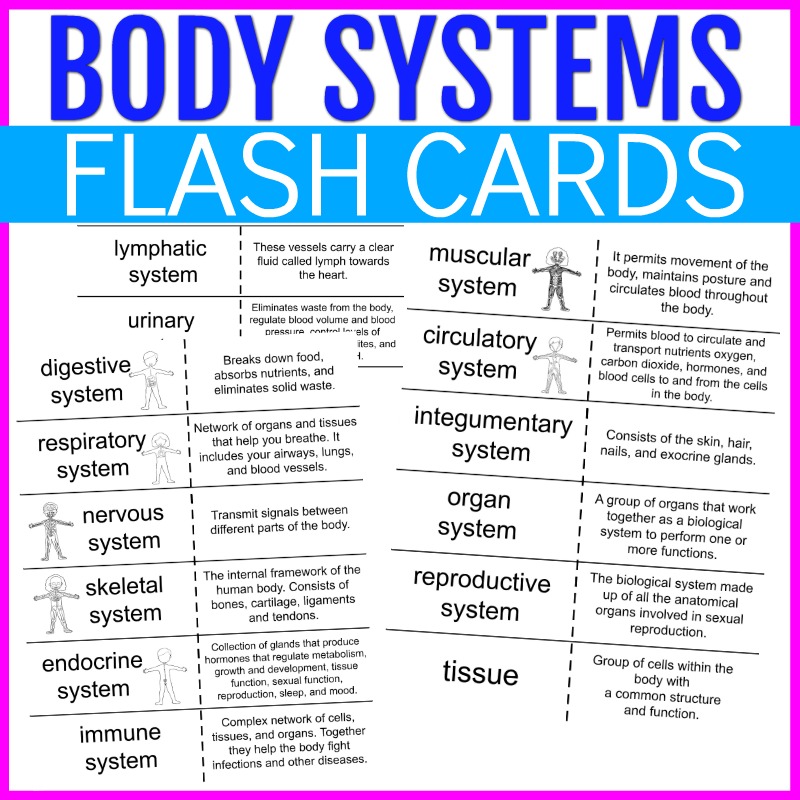
The free body systems cards are a set of flashcards covering each major system in the human body. Each card contains information about a specific system along with illustrations that help make it easier to understand.
The back of each card explains how the system works and relates to other systems in the human body. With so much information packed into each card, they’re perfect for helping students better understand how their bodies work.
The Benefits Of Using Body Systems Cards
Using these cards can be beneficial in many ways. For one, they’re an excellent resource for teaching kids about the various body systems. They can also be used as part of an interactive game or activity.
You could use them as part of a matching game where students attempt to match up various parts of the human anatomy with their corresponding descriptions on the back of each card.
Or you could use them as a fun science project, allowing students to quiz themselves on what they know (and don’t know) about different parts of the human body while having fun simultaneously.
How many Human Body Systems are there?
The human body is made up of 14 systems that work together to keep it functioning properly. These systems include the circulatory, respiratory, digestive, nervous, and immune systems.
Each system has a unique function essential for the proper functioning of the body. For example, the circulatory system transports oxygen and nutrients to cells, while the respiratory system helps to remove carbon dioxide from the body.
The digestive system breaks down food so that the body can absorb nutrients, and the nervous system controls movement and coordination. The immune system helps to protect the body from harmful bacteria and viruses. Together, these systems work to keep the human body functioning properly.
The human body has many complex systems working together to keep us healthy and functioning properly.
Understanding how these different systems work will help you know what you need to do to maintain your health, such as eating nutritious foods or getting enough exercise every day. This will ensure your body continues to operate at peak performance levels for many years to come.
Systems of the Human Body
1. Digestive System—This includes the small and large intestines. It breaks down food, absorbs nutrients, and eliminates solid waste.
2. Respiratory System – Network of organs and tissues that help you breathe. It includes your lungs, airways, and blood vessels.
3. Nervous System – This system transmits signals between different body parts.
4. Skeletal System – The internal framework of the human body. Consists of bone, cartilage, tendons, and ligaments.
5. Immune System – Complex network of cells, tissues, and organs. Together they help the body fight infections and other diseases.
6. Endocrine System – Collection of glands that produce hormones that regulate metabolism, growth and development, tissue function, reproduction, sleep, and mood.
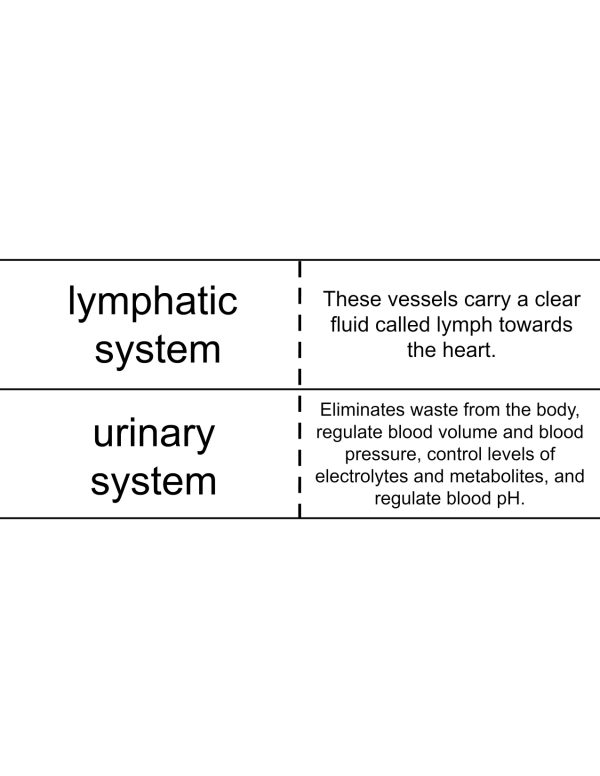
7. Lymphatic System – These vessels carry a clear fluid called lymph toward the heart.
8. Urinary System—This system eliminates waste from the body, regulates blood volume and pressure, controls levels of electrolytes and metabolites, and regulates blood pH.
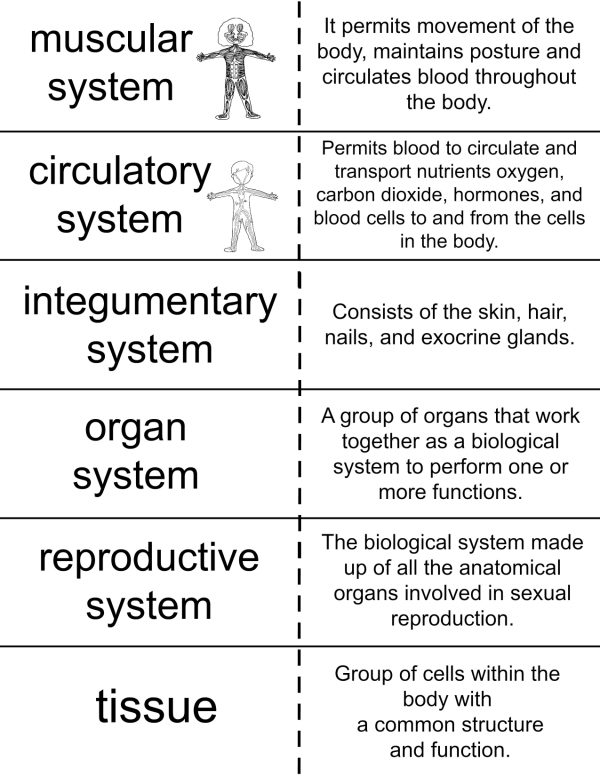
9. Muscular System – Permits body movement, maintains posture, and circulates blood.
10. Circulatory System—This system permits blood to circulate and transport nutrients, oxygen, carbon dioxide, hormones, and blood cells to and from the cells in the body.
11. Integumentary System – Consists of the skin, hair, nails, and exocrine glands.
12. Organ System – A group of organs that work together as a biological system to perform one or more functions.
13. Reproductive System – The biological system comprises all the anatomical organs involved in reproduction.
14. Tissue – A Group of cells within a body with a common structure and function.
Human Organ Systems Worksheets
The human body comprises a complex system of organs that all work together to enable us to live, move, and survive. Knowing what these organs are and how they work can help us better understand our bodies and take better care of ourselves.
There are 78 body organs, including the heart, lungs, brain, skin, and many other systems. Knowing about the internal organs of the human body allows us to better understand how to take better care of ourselves by making healthier lifestyle choices.
The heart pumps blood throughout the body, while the lungs bring in essential oxygen; both are essential for life.
Our brains control much more than just thinking; they also regulate many other bodily processes. Understanding these vital internal organs helps us comprehend why they are crucial to our health.
There’s no need to spend hours poring over anatomy texts when you can print out this free resource – anatomy flashcards for kids. These handy cards will help your child learn all about the human body, from the skeleton to the muscles.
Print them out and let your child quiz themselves, or use them as a fun game to play with friends. With these cards, learning about anatomy and body systems will be a breeze. Also, check out our other free printables that are helpful when teaching kids: Scientific Method (free printable) and the Free 7 Page Homeschool Unit Planner.
