
Parts of a Plant Worksheets for Kids
Help young learners explore basic botany with these free parts-of-a-plant worksheets. The pages introduce simple science concepts through naming, drawing, coloring, and recognizing familiar plant-based foods.
These pages are designed primarily for kindergarten and grade 1 lessons. They can also be used for review in 2nd grade or adapted for preschoolers with an adult’s help.

Free Parts of a Plant Worksheets for Kids
Use the printable pack during a spring unit, a gardening theme, a homeschool session, or a classroom study of living things. Children can learn the names and function of each part of the plant while connecting the topic to real plants, fruits, vegetables, and other edible examples.
What Comes in the Worksheet Pack?
The pack includes four types of pages:
- Parts of a Plant
- How Does a Plant Grow?
- I Can Eat a Whole Plant
- My Plant
Each page explores a different part of introductory plant science. Children can complete a picture, recognize what plants need, learn which sections people eat, and draw their own example.
This is not exclusively a plant-life-cycle pack. While the pages discuss growth and basic needs, the primary focus is how a blooming species is organized and how its parts work.

Parts of a Plant Worksheet
The parts of a plant worksheet introduces the primary sections of a blooming specimen. Depending on the exact page, children can identify or label the parts:
- Roots
- Stem
- Leaves
- Flower
- Fruit
- Seeds
This page can be used as a guided early-learning exercise or as independent first-grade practice.
Before children complete the page, show them a real potted specimen or a photograph. Ask which areas they can see and which ones might be hidden beneath the soil.
This post may contain affiliate links. As an Amazon Associate and a participant in other affiliate programs, I earn a commission on qualifying purchases. Read our disclosure policy here.

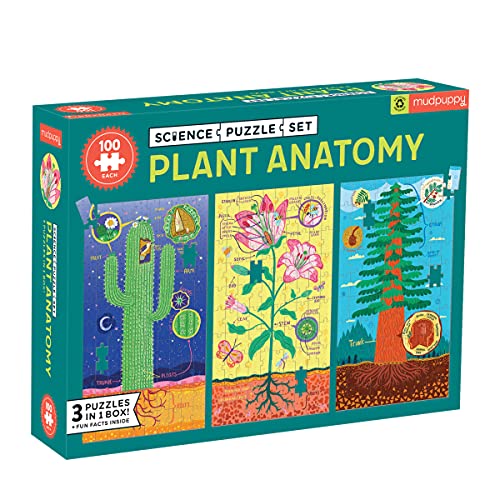


Understanding the Basic Parts of a Plant
Each part has an important job. These descriptions use simple language suitable for young learners who are learning the parts.
Roots
The underground system usually grows below the ground. It anchors the plant and absorbs water and dissolved minerals from the surrounding growing medium.
Some species store food underground. Carrots, sweet potatoes, radishes, turnips, and beets are familiar examples that people eat.
Stem
The central stalk supports the growth and holds foliage and blooms where they can receive light.
It also contains tissues that transport water and minerals upward and move sugars produced in the greenery to other parts of the plant.
Celery and asparagus are examples of foods people eat.
Leaves
Foliage captures light energy and is one of the primary sites of photosynthesis. During this process, vegetation uses sunlight, water, and carbon dioxide to produce sugars. The green pigment chlorophyll helps absorb light energy.
Tiny openings also allow gases to move in and out.
Spinach, lettuce, kale, and cabbage are examples people eat.

Flowers
A bloom is a reproductive part found on many species. After pollination and fertilization, portions of it can develop into fruit containing new plant material.
These colorful structures can attract pollinators such as bees, butterflies, birds, bats, beetles, and other animals. Some are also pollinated by wind.
Broccoli and cauliflower are examples people commonly eat.
Fruit
In botanical terms, fruit develops from the ovary and contains or surrounds reproductive material. It helps protect it and can assist with dispersal.
Apples, tomatoes, peppers, pumpkins, cucumbers, and green beans are all botanical fruits.
Seeds
This reproductive part contains a young embryo and stored nutrients. With the appropriate conditions, it can germinate and begin developing into new growth.
Peas, beans, sunflower kernels, corn, and lentils are examples that people eat.

Blank Plant Diagram Activity
The unlabeled or partially completed page can serve as a blank diagram for young students.
Begin by reviewing the key terms aloud. Children can then use the word bank to write each plant part next to the correct line.
For younger students who are not ready to copy full words, try one of these adaptations:
- Write the terms on small slips of paper for children to match.
- Read each term aloud and let children point to the correct area.
- Cut out word cards and turn the page into a cut-and-paste exercise.
- Complete the first few answers together.
- Let children trace words written by an adult.
- Use different colors for each section.
For independent practice, remove the word bank or cover it with another sheet of paper.

How Does a Plant Grow Worksheet?
The “How Does a Plant Grow?” page encourages children to consider the resources and conditions required for healthy development.
Most plants need:
- Light
- Water
- Air
- Nutrients
- An appropriate temperature
- Enough space to grow
Many familiar varieties grow in soil, which provides support, water, air spaces, and minerals. However, this growing medium is not an absolute requirement because some species can develop in water or other environments when their needs are supplied.
For an early elementary class, it is fine to focus on the familiar combination of sunlight, water, air, and soil while explaining that different varieties may have slightly different needs.

Do Plants Need Air?
Yes, living vegetation needs gases from the air.
During photosynthesis, carbon dioxide is taken in, and oxygen is released as a product. Cellular respiration also uses oxygen to release energy from sugars.
For young children, you can simplify this idea:
Green growth uses carbon dioxide from the air to help make food, and it also needs oxygen to release energy and stay alive.
This is more accurate than simply telling children that vegetation “breathes in carbon dioxide and breathes out oxygen” at all times.

I Can Eat a Whole Plant Worksheet
The “I Can Eat a Whole Plant” page helps children connect plant science with familiar foods.
Ask students to match or draw foods representing different sections:
| Plant part: Foods we eat | |
|---|---|
| Root | Carrot, beet, radish, sweet potato |
| Stem | Celery, asparagus |
| Leaf | Lettuce, spinach, kale, cabbage |
| Flower | Broccoli, cauliflower |
| Fruit | Apple, tomato, pepper, cucumber |
| Seed | Pea, bean, corn, sunflower seed |
A single meal can include many different parts of the plant. For example, a salad might contain spinach, carrots, celery, broccoli, tomatoes, and sunflower kernels.
Children may be surprised to learn that tomatoes, cucumbers, pumpkins, and peppers are botanical fruits because they develop from blooms and contain reproductive material.

My Plant Drawing Activity
The “My Plant” page gives children space to draw and name an example of their own.
Encourage students to include:
- Underground growth
- A central stalk
- At least two pieces of foliage
- A bloom
- Fruit or a pod, if appropriate
- Sunlight
- Water
- Soil or another growing environment
After drawing, children can use arrows to mark the main sections.
Older students can write one sentence explaining the function of each one. Younger students can dictate their explanations to an adult.

How to Use These Worksheets
Introduce the vocabulary
Write the six key terms on a board or piece of paper. Say each word together and point to it on a classroom poster or illustration.
Observe a real plant
Provide a blooming specimen, weed, vegetable crop, or safe garden sample. Ask students to show which features are visible.
If possible, show them what is normally below ground. Handle classroom specimens carefully and avoid unknown varieties that could be irritating or toxic.
Complete the labeling page
Let children fill in the illustration using the terms they just learned. Offer a word bank or cut-and-paste options when needed.

Discuss what plants need
Ask children what would happen without enough water or light. Complete the needs section together.
Explore edible plant parts
Display several fruits and vegetables. Let children sort them by the portion people eat.
Draw a complete plant
Use the “My Plant” page as a final review. Check whether children include and recognize the primary sections.
Simple Plant Science Lesson Plan
These pages can support a complete 30- to 45-minute elementary session.
Learning objective
Students will recognize the primary parts of a blooming species and describe at least one function of each.
Vocabulary
- Root
- Stem
- Leaf
- Fruit
- Bloom
- Reproductive part
Lesson sequence
- Show students a real specimen or large photograph.
- Encourage students to share their observations.
- Introduce the six key terms.
- Discuss the function of each part.
- Complete the plant-part exercise.
- Discuss what living vegetation needs to grow.
- Sort familiar foods by category.
- Finish with the “My Plant” drawing exercise.
Informal assessment
Ask each student to point to or name:
- The area that absorbs water
- The section that provides support
- The areas that capture light
- The reproductive portion that can produce fruit and new growth
- One edible portion
Kindergarten and First-Grade Adaptations
For kindergarten
- Complete the labeling page as a group.
- Use picture and word cards.
- Let children trace key terms.
- Concentrate on the four most visible parts.
- Read the directions aloud.
- Use coloring and drawing as the primary response.
For first grade
- Let students complete the answers independently.
- Introduce fruit and reproductive material as additional parts.
- Ask children to connect each one with its function.
- Have students write one sentence about basic growing needs.
- Sort edible foods into all six categories.
For 2nd grade
- Compare two different blooming varieties.
- Discuss pollination and dispersal.
- Ask students to explain, in simple terms, how green growth produces sugars.
- Add a germination observation journal.
- Have students describe how the underground system, stalk, and foliage work together.
For grade 3, the material can also serve as review before introducing more detailed topics from the plant kingdom, including reproduction and floral features.
Plant Observation Activity
Pair the free worksheets with a simple observation exercise.
Give each child a bean and a clear plastic bag containing a damp paper towel. Place it against the towel where it can be observed.
Over several days, children may see:
- Water being absorbed.
- The outer covering breaks open.
- New growth appears below the surface.
- New growth starts to appear.
- The first green growth appears.
Children can record their daily observations with drawings. Keep the paper towel moist without soaking it.
Explain that germination is only one portion of a complete life cycle.
Basic Life Cycle of a Flowering Plant
Although the pack primarily teaches physical parts, it can introduce the basic stages of development:
- Starting material
- Germination
- Seedling
- Mature growth
- Blooming
- Pollination and fertilization
- Fruit formation
- Dispersal
Growth does not end when a bloom appears. It helps with reproduction, allowing new growth to form and the cycle to begin again.
Learning Skills Supported by the Worksheets
These educational pages can help children practice:
- Science terminology
- Observation
- Classification
- Completing illustrations
- Following directions
- Handwriting
- Drawing
- Fine-motor control
- Comparing and sorting
- Connecting classroom concepts with everyday food
- Reading comprehension
They work well as center work, morning practice, review, homework, or additions to a spring binder. You could also pair them with a simple botanical crossword for additional vocabulary review.

More Plant Science Activities
Continue your plant unit with these related resources:
- Strawberry Life Cycle
- Scientific Method Worksheets
- Pumpkin Life Cycle Diorama
- 3D Plant Cell Worksheets
- Egg Carton Flower Craft
Download the Free Parts of a Plant Worksheets
These resources offer young learners several ways to explore physical parts, growing needs, and foods from different botanical categories.
Children can complete a plant picture, consider what is needed for healthy growth, recognize edible underground portions, stalks, foliage, blooms, fruits, and reproductive parts, and draw a complete example of their own.
Are these printables free?
Absolutely. The pages are available as a free PDF through the download form at the bottom of this post.
Which Grade Levels Are These Printables Best For?
The pages are best suited to early elementary students. Preschoolers may complete selected tasks with adult help, while older elementary learners can use them for review.
What plant parts are included?
The resource introduces six primary parts. Verify the terms on every page before stating that all six appear on each one.
Is there a blank plant diagram?
The pack includes a labeling page that can be used as a blank or partially completed illustration. Children can use the word bank to complete each area.
Does the printable teach the plant life cycle?
It discusses growth and basic needs, but its main focus is plant development rather than the complete sequence from germination through reproduction.
Is this a parts-of-a-flower worksheet?
This resource focuses on the whole organism rather than detailed floral features. A more advanced study would typically introduce the stamen, anther, filament, pistil or carpel, stigma, style, ovary, and ovules.
Can I use these worksheets in a classroom?
Add your precise usage policy here. If permitted, explain whether a teacher may make copies for one classroom and whether sharing or reselling the digital file is prohibited.

Awesome!!!
Awesome!
Awesome!