
8 STAR WARS Craft-Themed Science Activities For Kids
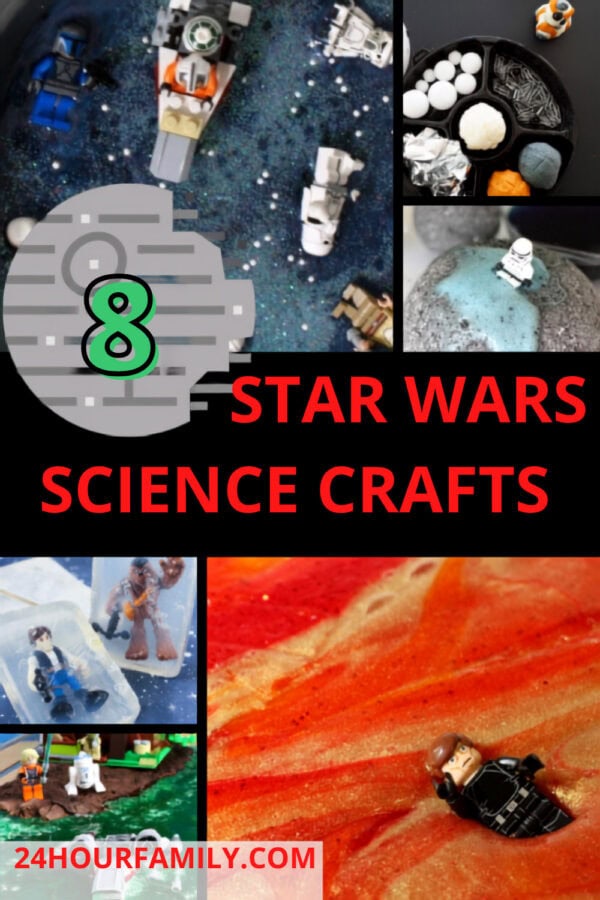
Bring science and a galaxy far, far away together with these Star Wars STEM activities for kids. Children can erupt a model, make a sensory bottle, rescue Han Solo from ice, make a galaxy jar, and investigate how different mixtures move and change.
These projects are useful for May the Fourth, a homeschool science day, a family activity, or a Star Wars birthday celebration. Each one connects the theme to a real science, technology, engineering, or math idea rather than using Star Wars as decoration alone.
The activities range from low-preparation sensory play to experiments that require measuring, heating, or careful adult supervision. Read the complete tutorial linked with each project before beginning so you can gather the correct materials and review its safety directions.
For character crafts, printable builds, coloring pages, and other creative projects, visit the complete collection of Star Wars crafts and activities for kids.
What Do Children Learn From Star Wars STEM Activities?
STEM stands for science, technology, engineering, and mathematics. A hands-on activity may explore one area or combine several.
In this collection, children can:
- Observe a baking-soda-and-vinegar reaction
- Compare liquids with different viscosities
- Investigate melting and changes in matter
- Explore potential and kinetic energy
- Measure and compare ingredients
- Make predictions and record results
- Adjust a design after observing what happens
The most valuable part is not producing a perfect result. Encourage children to predict, observe, describe, compare, and try again. Those conversations turn an entertaining themed project into a meaningful learning experience.
Before You Begin
Choose activities according to the child’s age, current skills, and the level of adult supervision available. Some projects involve small toys, borax-containing products, hot melted soap, or ingredients that should not be tasted.
Use these general preparation guidelines:
- Read the linked tutorial from beginning to end.
- Check all product labels and safety warnings.
- Protect the table and children’s clothing.
- Keep small parts away from children who may place them in their mouths.
- Have an adult handle heating, sharp tools, and strong adhesives.
- Do not assume a mixture is edible unless the original tutorial explicitly identifies every ingredient as food-safe.
- Wash hands and clean the work area when the activity is finished.
8 Star Wars STEM Activities for Kids
Explore hands-on Star Wars STEM activities that teach chemical reactions, motion, melting, aerodynamics, sensory science, measurement, and math.
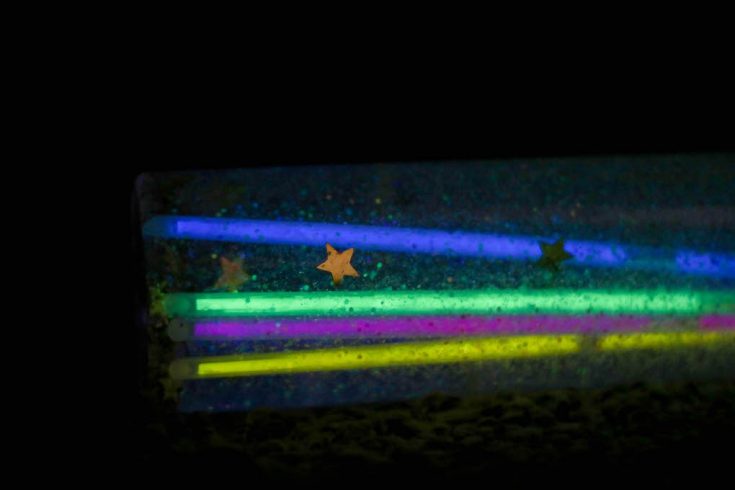
Make a galaxy-inspired Star Wars Sensory Bottle with clear glue, warm water, glitter, confetti, and optional small figures. After sealing the container, children can tip and turn it to watch the contents move through the thickened liquid.
This activity provides a simple introduction to viscosity, or a liquid's resistance to flowing. Add more water and the glitter generally moves faster; add more clear glue and it generally moves more slowly. Make two bottles with different ratios and compare how long the glitter takes to settle.
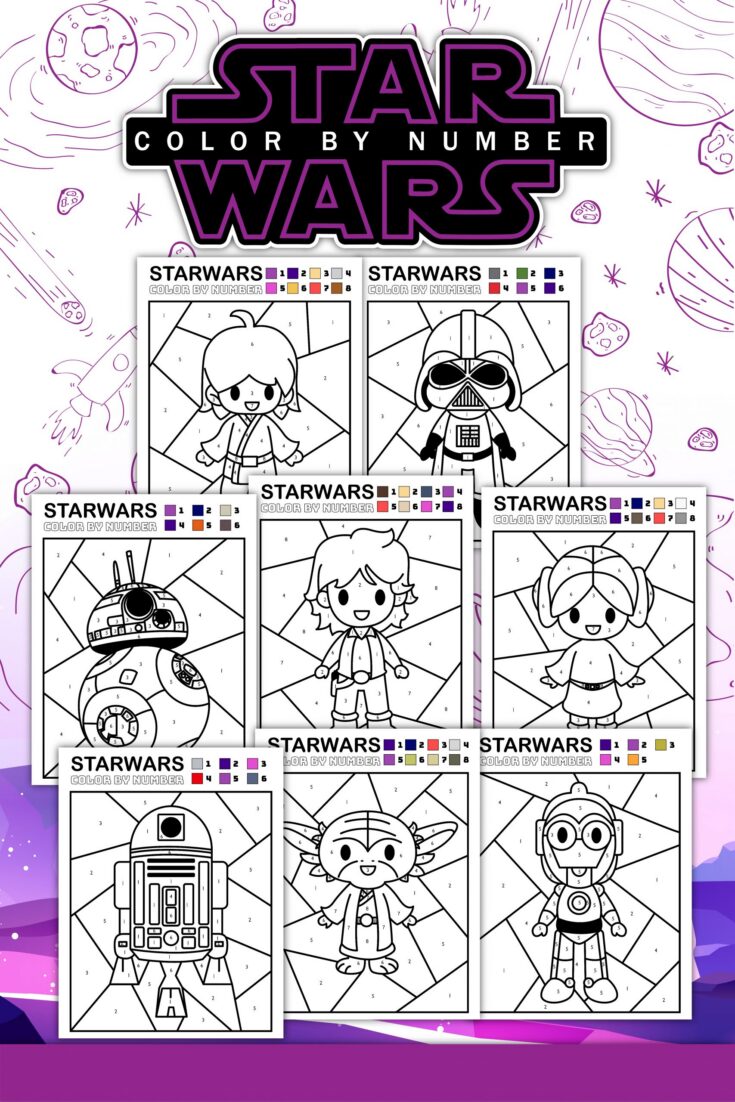
The eight-page Star Wars Color by Number printable adds a simple mathematics option to the collection. Children identify numerals, match each number to a color key, and apply the code across the picture.
Color-by-number pages reinforce number recognition, visual scanning, attention to detail, and one-to-one matching. Extend the activity by asking children to tally how many sections use each color, compare the totals, or create a bar graph.
For older children, replace the color key with age-appropriate addition or subtraction facts. They solve each fact first and then use its answer to locate the correct color.
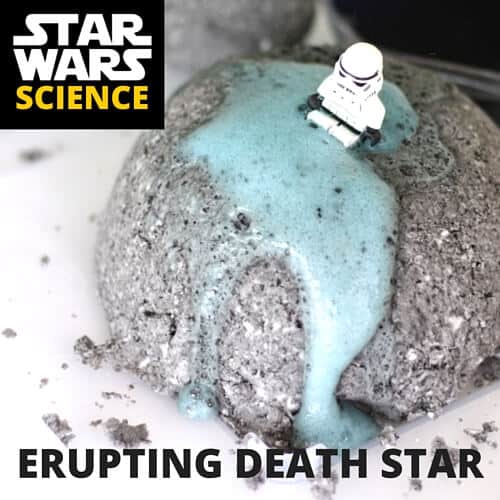
The erupting Death Star sciene activity uses a familiar baking soda and vinegar reaction to create a foaming eruption. The themed container makes the demonstration especially memorable for children who enjoy dramatic science.
When baking soda and vinegar combine, an acid-base reaction produces carbon dioxide gas. The growing gas bubbles move through the liquid and create the visible foam.
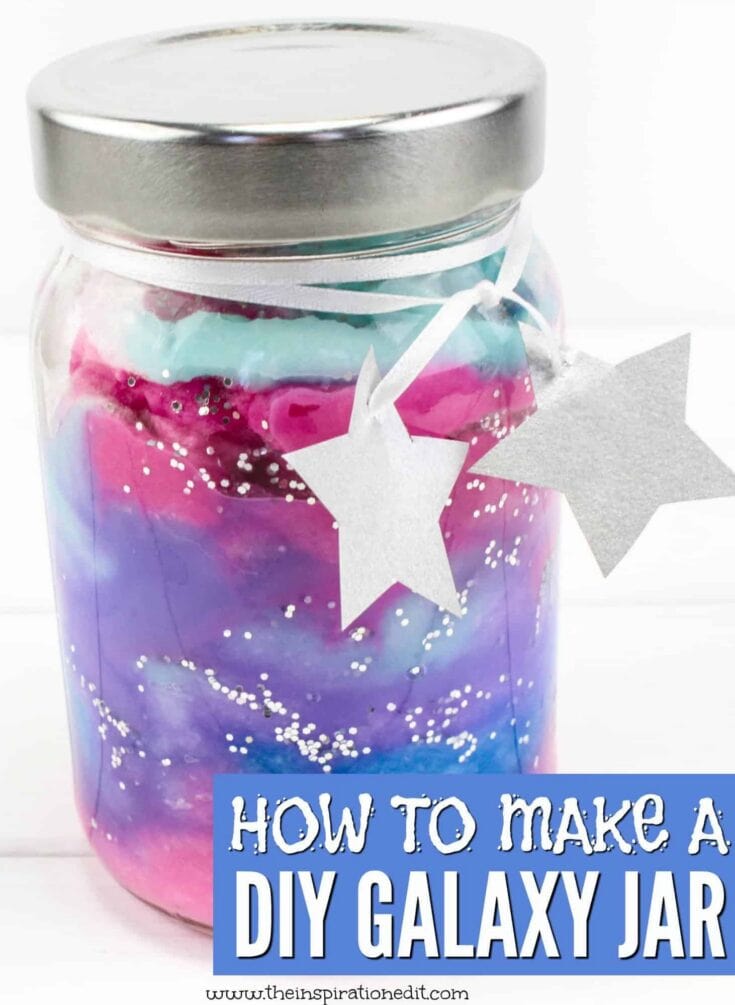
Create a layered galaxy jar STEM activity using the supplies and directions in the complete tutorial. Children build a colorful space scene inside a transparent container, then observe how the materials absorb, mix, and remain layered.
Use the activity to discuss why some materials hold liquid while others allow it to move. Children can compare how the jar looks immediately after assembly and after it has rested.
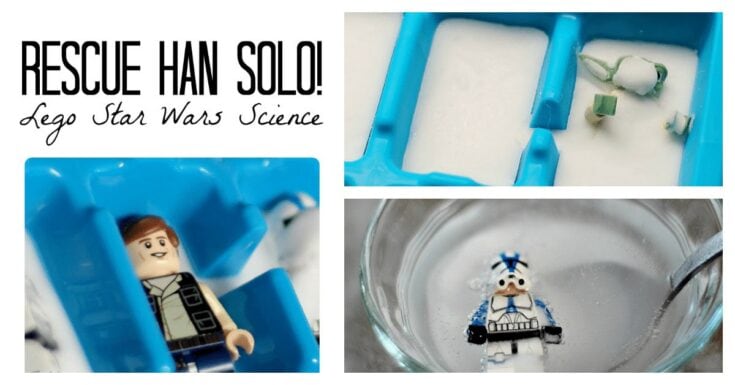
Recreate a famous frozen-character moment with the Rescue Han Science experiment. A small figure is trapped in ice, and children investigate ways to release it.
This is an accessible way to explore melting, temperature, and changes in matter. Provide appropriate tools or materials from the original tutorial, then let children predict which method will free the figure most quickly.
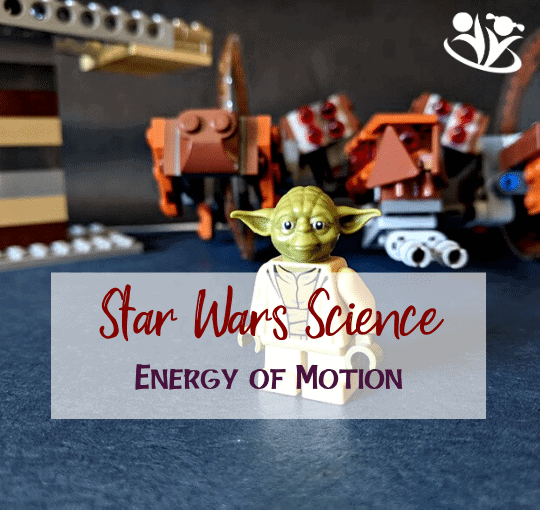
Explore the energy of motion with a Star Wars experiment that connects character play with potential and kinetic energy.
Potential energy is stored energy related to an object's position or condition. Kinetic energy is the energy an object has while moving. Children can observe how changing a starting height, angle, force, or object affects the resulting motion.
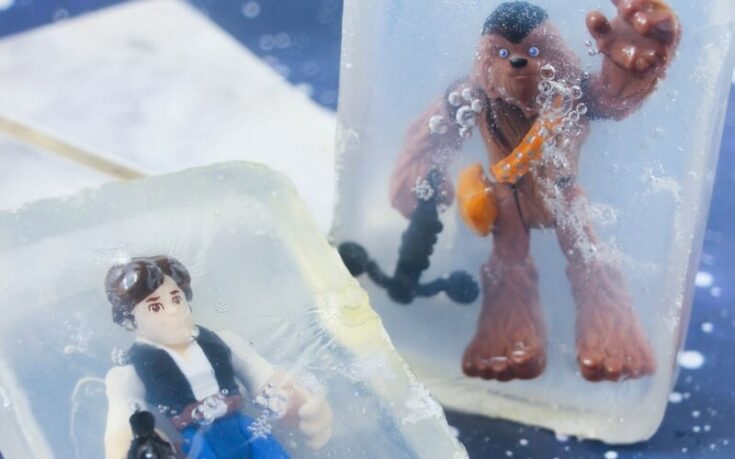
The homemade Star Wars soap activity shows children how a solid material can be melted, shaped, cooled, and returned to a solid form.
This activity differs from a chemical reaction because the soap's basic identity remains the same as its physical state and shape change. Discuss melting, cooling, molds, and why the liquid soap takes the shape of its container
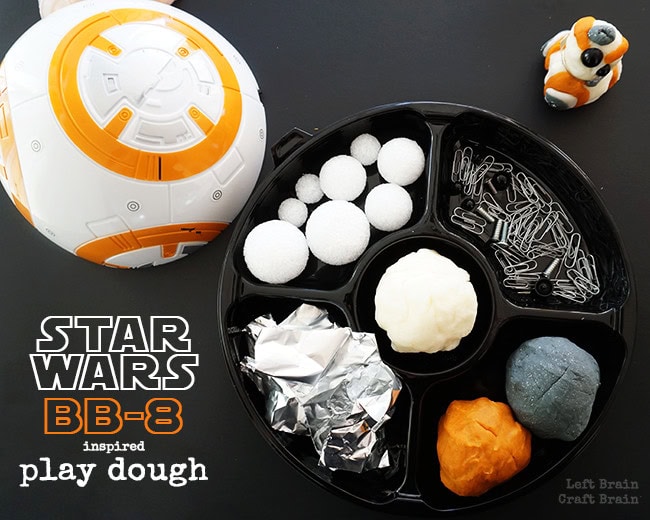
Mix and shape BB-8 inspired playdough while exploring measurement, texture, and material properties. Children can observe how separate ingredients become one moldable mixture.
Ask what happens when the dough is too sticky, too dry, or pressed into a new shape. Older children can measure the ingredients and discuss why following ratios matters. After the dough is ready, use circles and lines to create a BB-8-inspired design.
How to Choose the Right Activity
Select a project based on the amount of time available and the concept you want to explore.
For a quick activity
Choose the paper airplane comparison or color-by-number math activity. Both require little preparation and can be completed with familiar supplies.
For sensory exploration
Try the Star Wars sensory bottle, galaxy jar, or BB-8-inspired play dough. These activities encourage children to observe changes in movement, color, texture, and material.
For a dramatic science demonstration
Use the erupting Death Star or Yoda’s bubbling slime swamp. Both make gas formation visible, but the materials behave differently because one mixture is much thicker.
For an experiment children can measure
Choose the Han Solo ice rescue, energy-of-motion experiment, or paper airplane comparison. Children can record time, distance, or repeated trials and compare their results.
Turn an Activity Into a Simple Experiment
Not every hands-on project automatically becomes an experiment. An experiment begins with a question, changes a variable, and uses observations or measurements to compare results.
Use this five-step process:
- Ask a question. Which paper spacecraft will fly farthest?
- Make a prediction. Record what the child thinks will happen and why.
- Change one variable. Alter the plane design while keeping the launching line and thrower the same.
- Measure the results. Record distance, time, or another observable outcome.
- Discuss the evidence. Decide whether the results supported the original prediction.
Repeating the test helps children see that one trial may not provide enough evidence. It also creates an opportunity to revise a design and try again.
Star Wars STEM Activity Recording Page
You can use a notebook or a blank sheet of paper to record:
- Activity name
- Question
- Prediction
- Materials
- What was changed
- What stayed the same
- Results from each trial
- Drawing or photograph
- What the child learned
- What they would change next time
Preschoolers can dictate their ideas while an adult writes. Older students can create a table, calculate averages, or graph numerical results.
Ideas for May the Fourth
For a May the Fourth learning day, select one project from three different areas:
- Science: Erupting Death Star or Han Solo ice rescue
- Engineering: Paper airplane comparison or energy of motion
- Math: Star Wars color by number with a tally or graph
End the day with a creative project from the collection of Star Wars paper plate crafts. Separating the STEM investigations from the craft roundup keeps each page focused while giving families an easy way to plan a complete themed day.
More Star Wars Activities for Kids
Continue the themed learning with the main collection of Star Wars crafts and activities for kids. It includes printable character builds, coloring activities, paper crafts, sensory play, and projects for a range of ages.
