
How to Make a LEGO Parachute: Easy STEM Activity
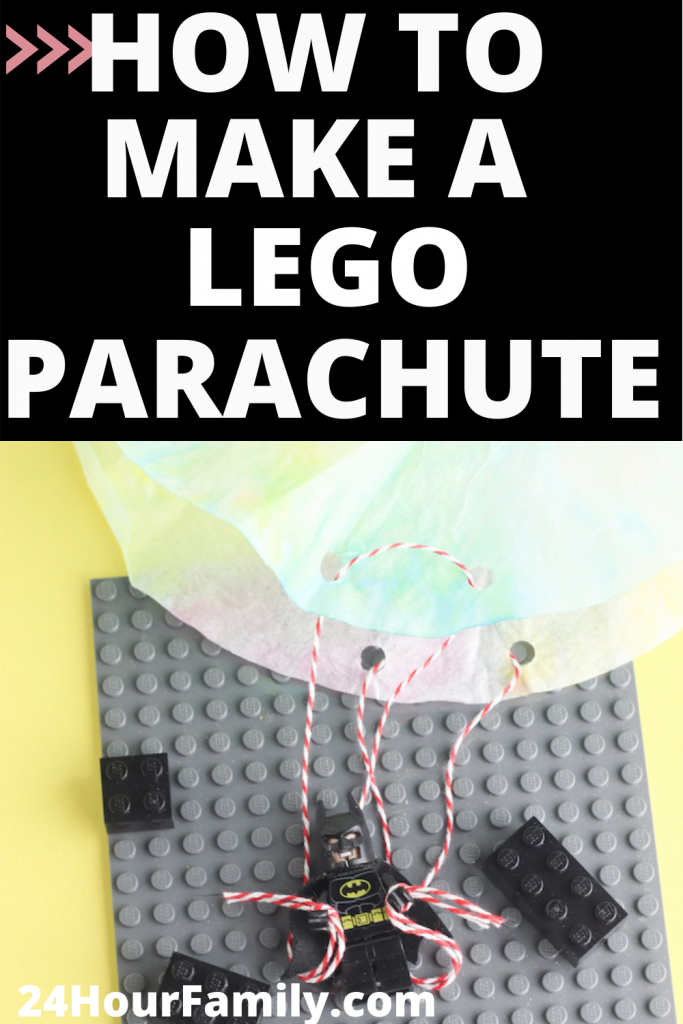
Make a LEGO parachute with a lightweight paper filter, cord, markers, and a small character.
This easy STEM activity gives kids an opportunity to design, build, test, and improve their creation while they learn about gravity, air resistance, surface area, and drag.
No special accessory is required. The canopy is made from an ordinary coffee filter, making this an inexpensive LEGO craft for home, homeschool, a classroom science center, or birthday parties.
Check out our collection of LEGO Crafts and printables here.
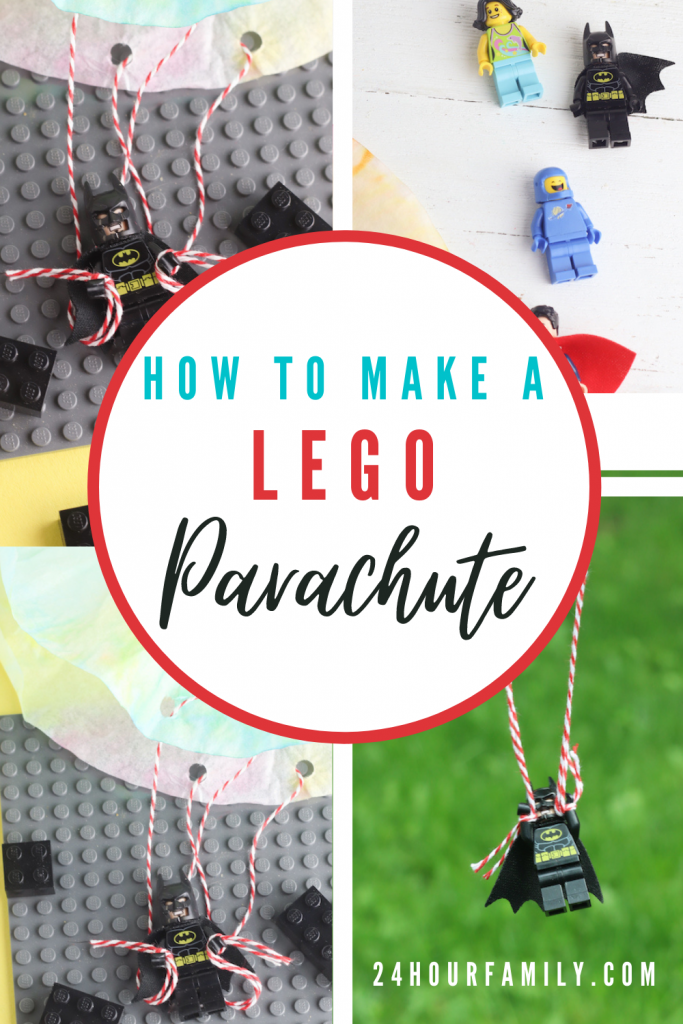
How to Make a Parachute for a LEGO Minifigure
A minifigure falls quickly when dropped by itself. Connecting it to a lightweight canopy increases air resistance and slows its fall.
Children can observe the difference by conducting two safe test drops from the same height:
- Drop the LEGO figure without a canopy.
- Connect the completed design and drop it again.
The larger surface should help the figure descend more slowly and land more gently.
Children can then change the canopy size, cord length, drop height, or material to see how each variable affects the result.
This post may contain affiliate links. As an Amazon Associate and a participant in other affiliate programs, I earn a commission on qualifying purchases. Read our disclosure policy here.
Hoolerry 25 Pcs Block Building Party Favor 5 lb Paper Food Trays Large Brick Theme Party Disposable Serving Tray Snack Tray for Food Building Block Birthday Baby Shower Decor (Bright Color)96PCS Building Block Pre-Cut Temporary Tattoos – Cute Party Favors for Kids, Boys & Girls | Birthday Party Supplies, Decorations, Stickers, Gifts, Classroom & School Prizes (Normal)Rossesay Building Block Number 0-9 Birthday Cake Candle Numeral Birthday Sparkler Candles for Building Block Cake Topper for Party Decorations Supplies(Number 8)Hxezoc 12 Pcs DIY Building Bricks Glasses Building Blocks Games for Kids Creative Building Block Birthday Party Favors, Carnival Party Games SuppliesSabary 24 Pieces Building Block Party Favor Gift Bags, Bricks Candy Treat Paper Bags, Gift Goodie Bags with Handle for Building Block Birthday Party Baby Shower Decoration SuppliesBELECO 7x5ft Fabric Colorful Blocks Photography Backdrop Kids Building Blocks Theme Birthday Party Backdrop Colored Toy Bricks Building Chips Boy Girl Baby Shower Banner Cake Table Decor Photo Props



Supplies Needed for This DIY LEGO Activity
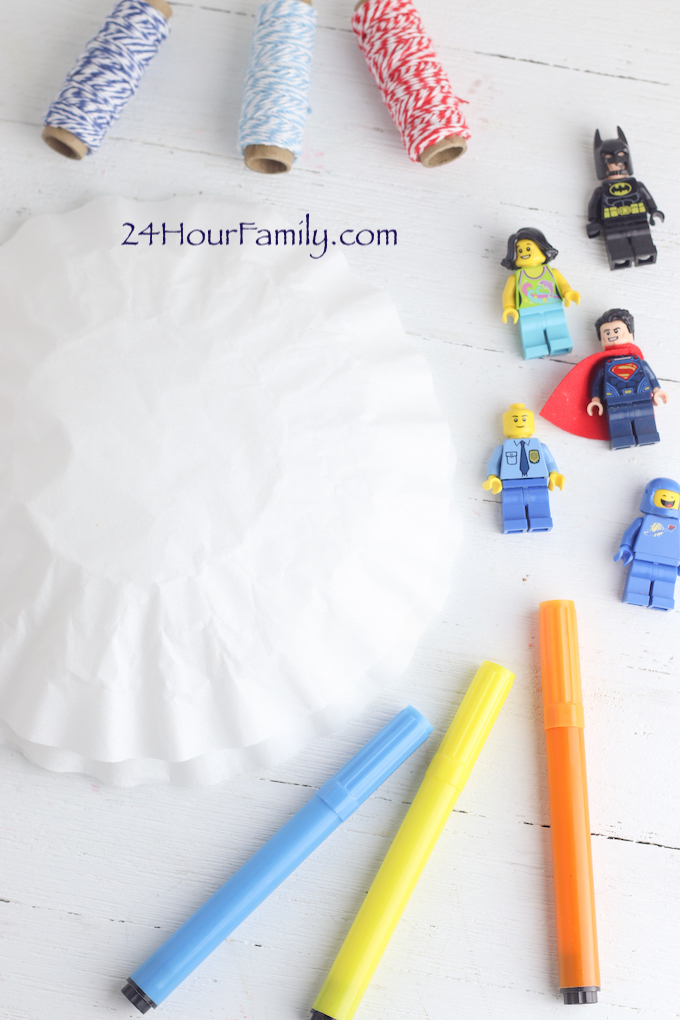
Gather the following supplies:
- One basket-style filter
- One LEGO man or mini figure
- Washable markers
- Small paintbrush
- Water
- Single-hole punch
- String, thread, or dental floss
- Scissors
- Ruler
- Clear tape, optional
- Stopwatch or phone timer, optional
You will need one filter and one small character for each toy design.
An adult should supervise the use of scissors, water, elevated testing locations, and any activity involving small LEGO parts.
How to Make a Parachute
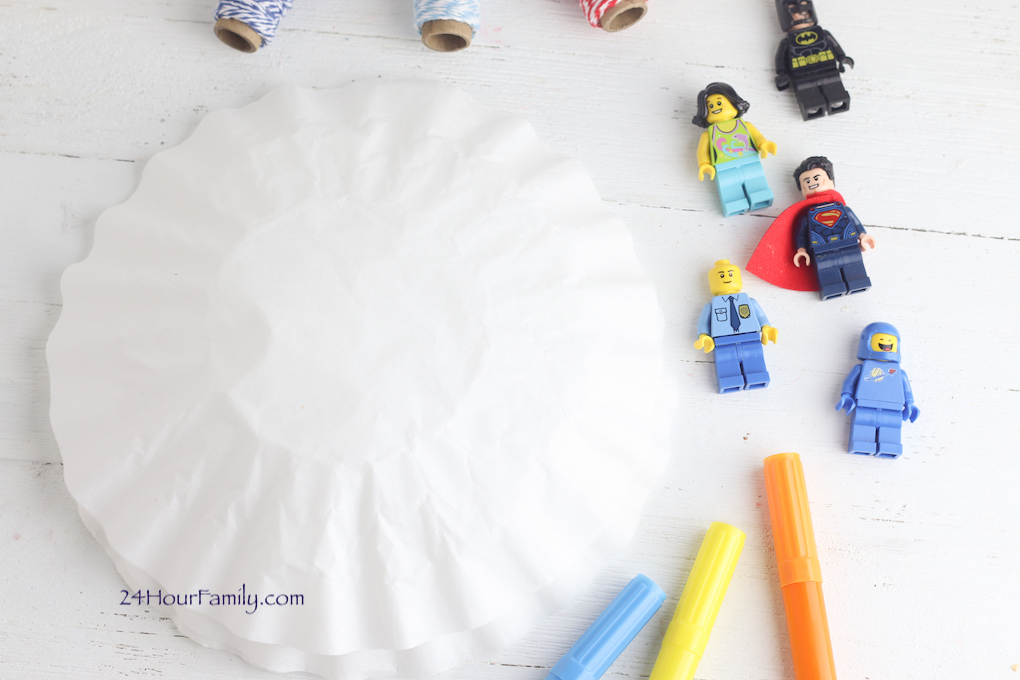
Step 1: Flatten the Filter
Place the filter on a protected work surface and gently flatten it with your hands.
You can place a book over it briefly if it will not remain flat. Do not tear, fold, or stretch the thin paper.
The flattened circle will become the canopy.
Step 2: Decorate the Canopy
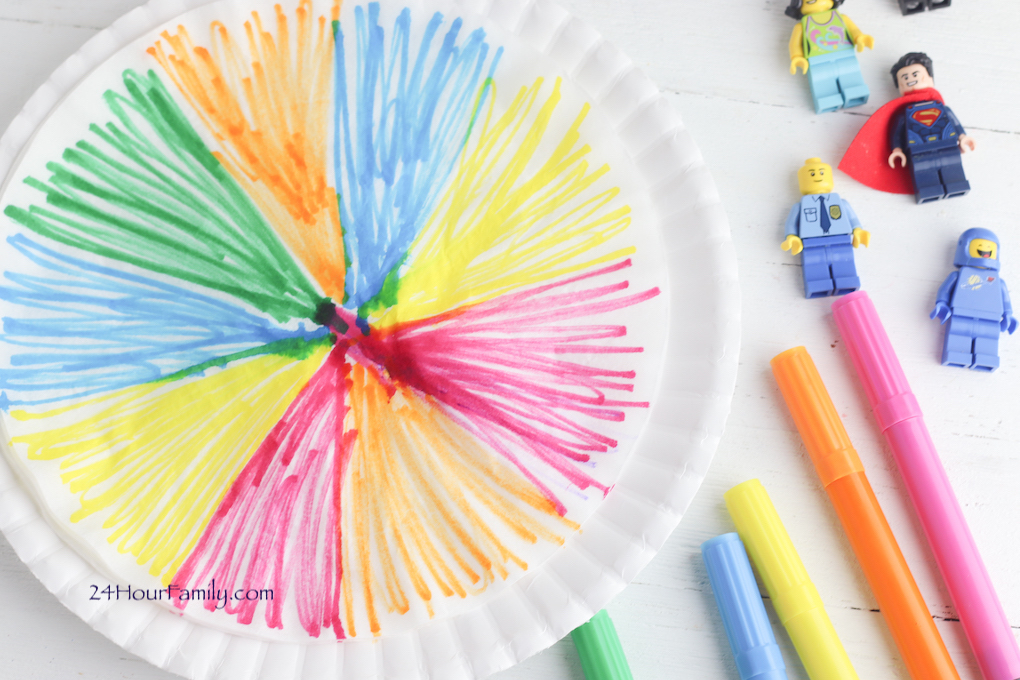
Use a washable marker set to draw a colorful design across the paper.
Children can add:
- Stripes
- Dots
- Spirals
- Stars
- Rainbows
- Geometric patterns
- The figure’s initials
- A pretend team or mission symbol
Leave some white space between colors if you plan to blend them with water.
Step 3: Blend the Colors
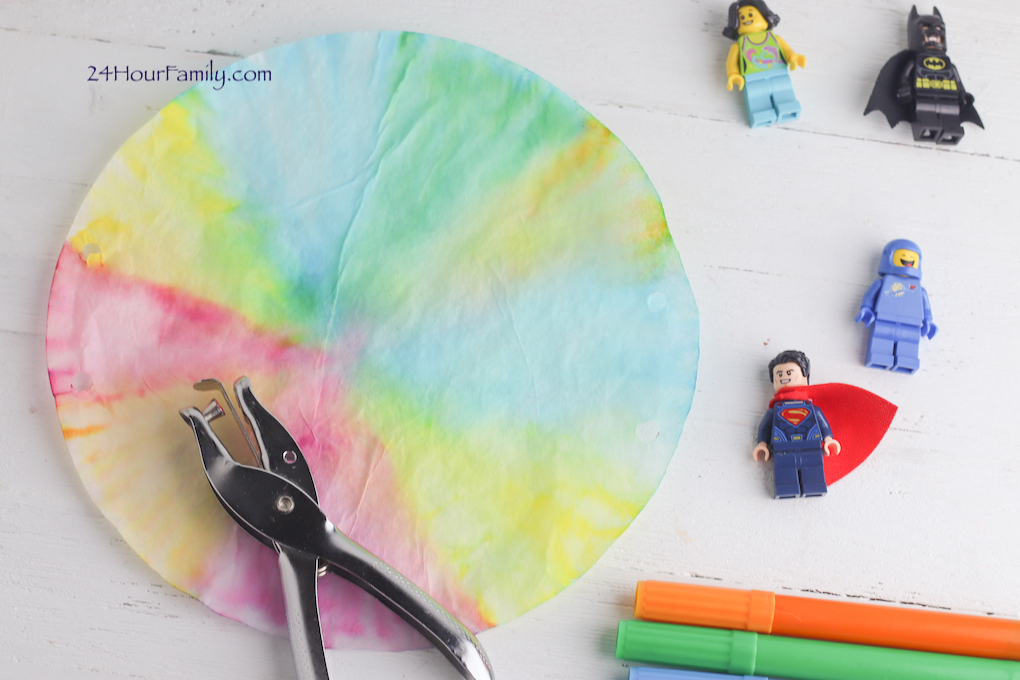
Dip the paintbrush in a small amount of water and brush it lightly across the design.
The water will cause washable ink to spread and blend across the thin paper.
Avoid soaking it. Too much water can weaken the material, making it more likely to tear during assembly.
Step 4: Let It Dry
Place the decorated filter on a flat, protected surface and allow it to dry completely.
Do not make the four openings or connect the suspension lines while the paper is damp. Wet material tears easily.
Drying time will depend on how much water was used.
Step 5: Make Four Holes
Once the material is completely dry, create four evenly spaced openings near the outer edge.
Imagine the circle as a clock and place each hole near:
- 12 o’clock
- 3 o’clock
- 6 o’clock
- 9 o’clock
Keep each opening approximately ½ inch from the edge. Placing them too close to the outside may cause tearing during testing.
If the paper feels fragile, reinforce each area with a small piece of tape before making the opening.
Step 6: Cut the Suspension Lines
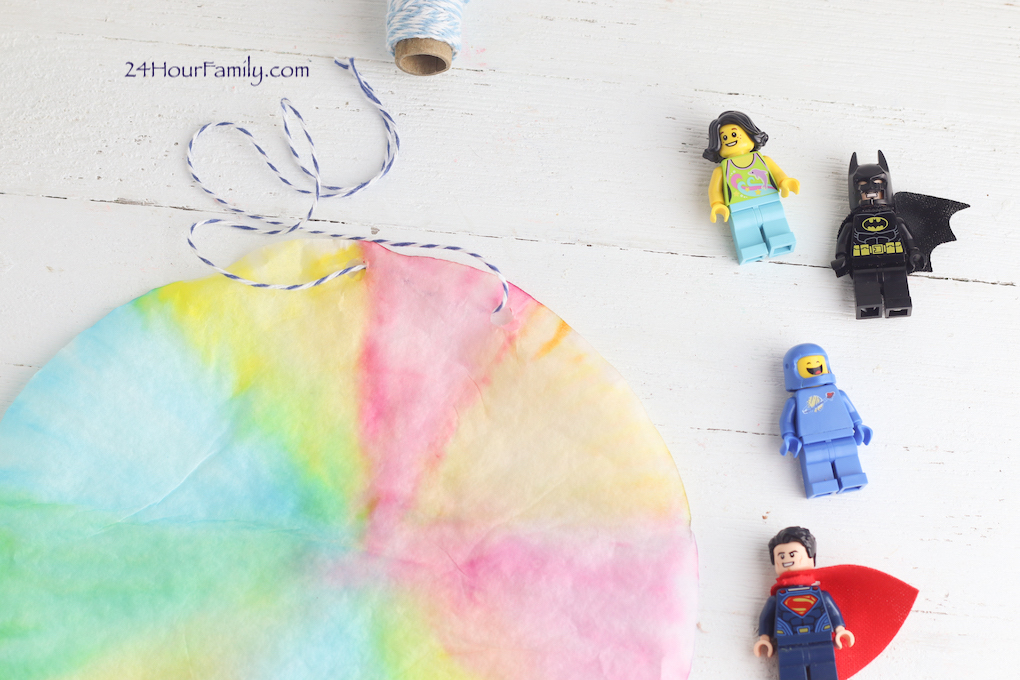
Cut two equal pieces of string, each approximately 12 inches long.
Matching length is important. Uneven suspension lines can cause the character to tilt, spin, or prevent the canopy from opening properly.
For a simple science extension, children can later test shorter and longer lengths.
Step 7: Connect the Lines to the Canopy
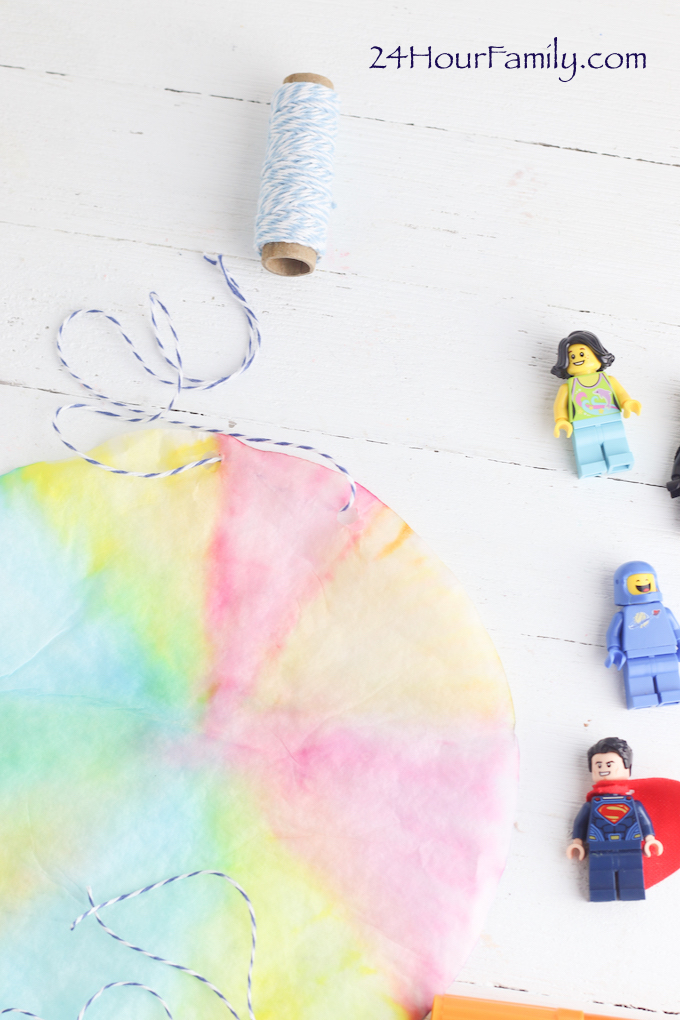
Guide one section through two opposite openings. Run the second through the remaining pair.
Adjust both so the ends hanging beneath the canopy are approximately equal.
Tie a knot at each opening or use a small amount of clear tape. Check that the four hanging sections are the same length before adding the character.
Step 8: Secure the LEGO Man
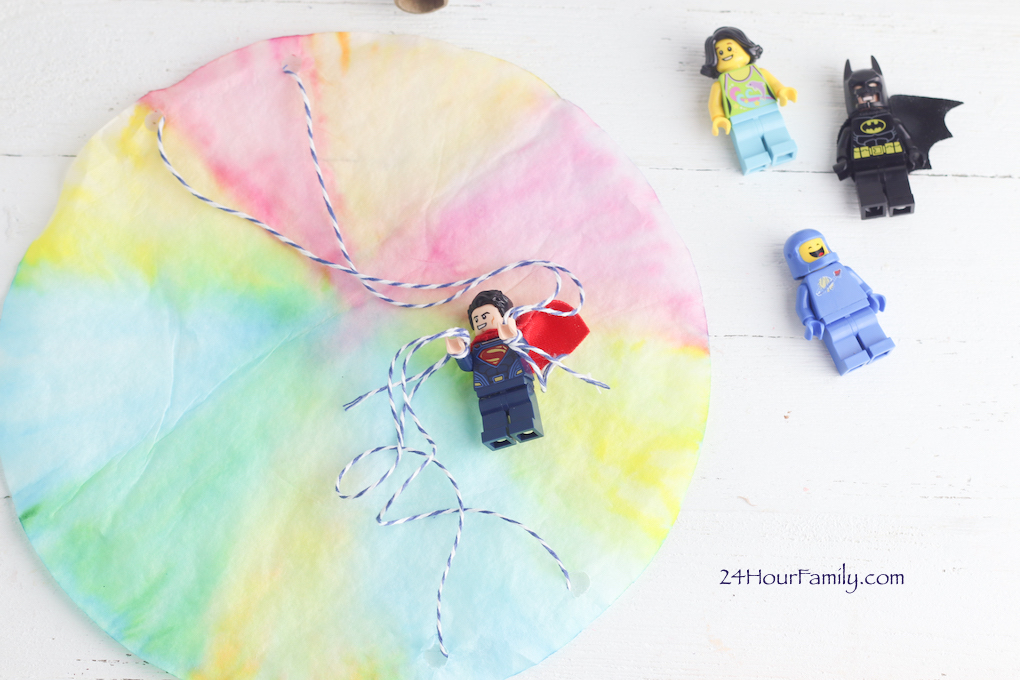
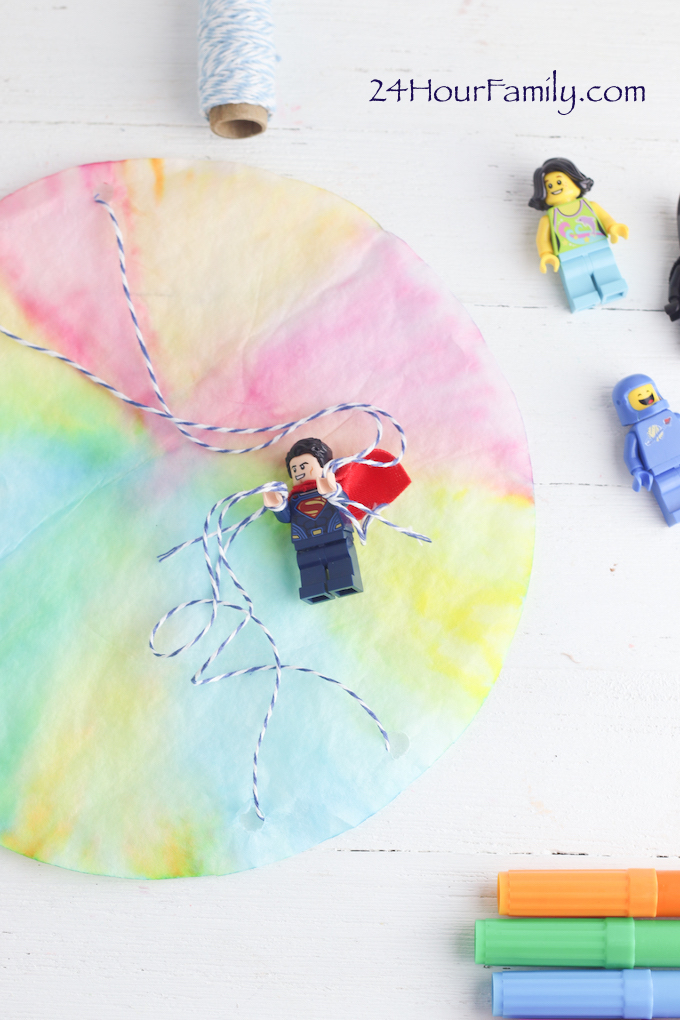
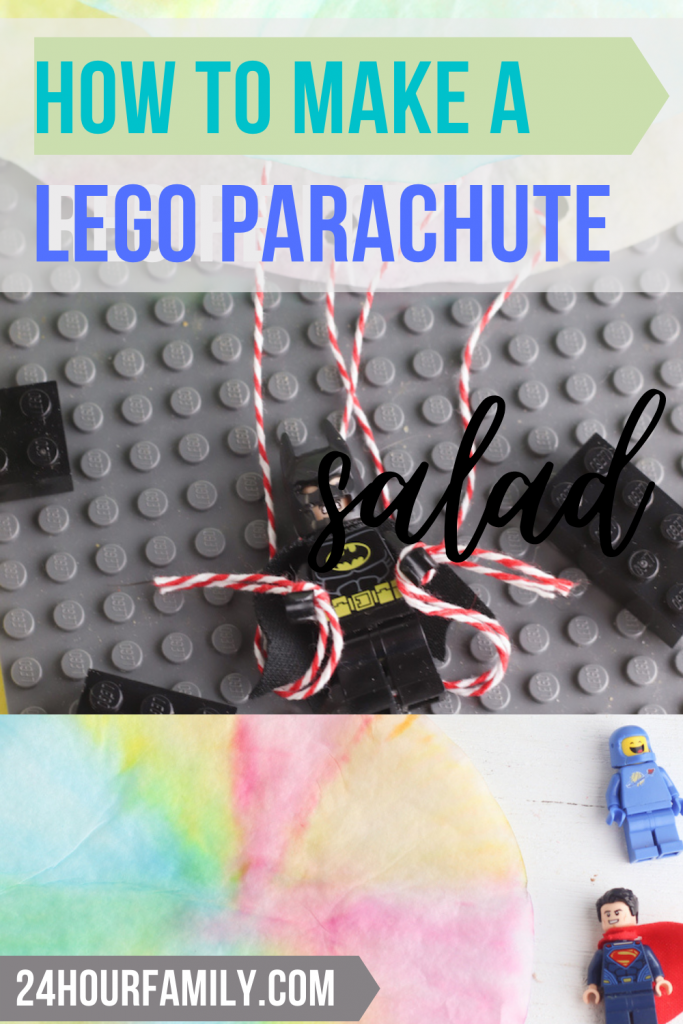
Bring the four ends together beneath the canopy and secure them around the character’s arm area or torso.
Keep the cords away from the neck. The action figure should hang upright beneath the center.
Check that:
- The figure is centered.
- The suspension lines are not tangled.
- Each line is approximately the same length.
- The canopy can open above the figure.
- The knots or tape are secure.
How to Launch the Parachute
Begin with a low, safe test drop.
- Hold the canopy by its center.
- Let the character and lines hang beneath it.
- Untangle any twisted sections.
- Open the canopy before releasing it.
- Drop the mini character straight down.
- Watch whether the material fills with air.
- Observe how the figure lands.
A gentle vertical drop usually works better than trying to throw or toss it into the air. Doing so can twist the suspension lines or collapse the canopy.
Test over carpet, grass, or another soft surface. Children should not climb on furniture, railings, windows, roofs, a balcony, or other unsafe elevated locations. An adult should choose and supervise the testing area.
How Does a Minifigure Parachute Work?
Two major forces affect the falling character: downward pull and drag.
Downward Pull
The gravitational force pulls the small character toward the ground, causing it to fall.
When the character is dropped without a canopy, very little surface area pushes against the surrounding air. It accelerates downward and reaches the floor quickly.
Air Resistance and Drag
The open canopy has a much larger surface area than the small character.
As it falls, air pushes against the material. This resistance creates drag, which acts in the opposite direction from the falling motion.
Drag does not eliminate the downward force. Instead, it slows the descent and helps the character land more gently.
A properly opened canopy usually creates more resistance than a crumpled or collapsed one.
Turn It Into a Parachute STEM Experiment
After the first successful drop, invite children to improve the design.
The strongest experiment changes only one variable at a time while keeping everything else consistent.
Children could investigate these questions:
- Does a larger canopy fall more slowly?
- Does a smaller one fall faster?
- What happens when the suspension lines are longer?
- Do shorter lines improve stability?
- Does the shape matter?
- Does a center vent reduce spinning?
- Which material works best?
- What happens when the character carries an extra brick?
- Does the design work differently indoors and outdoors?
Possible canopy materials include:
- Paper filters
- Tissue paper
- Lightweight fabric
- Plastic bag
- Paper napkins
- Cupcake liners
Avoid heavy materials that cannot open and catch the air.
Simple Parachute Test
Use this procedure to make the activity more scientific:
- Choose one safe drop height.
- Drop the character without the canopy.
- Record how long it takes to reach the floor.
- Attach the completed design.
- Drop it from the same height.
- Record the new time.
- Repeat each test three times.
- Compare the results.
A simple recording table can include:
| Test | Design | Drop Height | Time to Land | What Happened? |
|---|---|---|---|---|
| 1 | No canopy | |||
| 2 | Filter canopy | |||
| 3 | Filter canopy | |||
| 4 | Modified design |
Repeating the test helps children discover whether a result was consistent or happened only once.
Parachute Troubleshooting
The Parachute Falls Too Fast
Check whether the canopy is opening fully.
A collapsed surface cannot catch enough air. Try opening it before releasing the character or increasing its size.
The Parachute Spins
Spinning is often caused by tangled or uneven suspension lines.
Measure them again and make sure the character hangs beneath the center.
A very small opening cut in the exact center may also improve stability by allowing trapped air to escape evenly. Test the design before and after adding the vent.
The Filter Tears
Make sure the material is completely dry before cutting or making openings.
Move each opening farther from the edge or reinforce the area with small sections of clear tape.
The Figure Falls Off
Retie the suspension lines around the character’s arms or torso. Check the connection before every drop.
Do not connect them loosely or rely on the character holding them in its hands.
The Lines Become Tangled
Hold the canopy up and let the character hang freely before each test. Separate all four suspension lines and remove twists before releasing it.
LEGO Challenge Ideas
Extend the activity with one of these engineering challenges:
- Land the character inside a paper-plate target.
- Try building with LEGO to create a landing pad.
- Design a canopy that remains airborne for 3 seconds.
- Carry one extra block safely.
- Create the smallest version that still works.
- Compare round, square, and rectangular canopies.
- Build matching designs and conduct a race.
- Create a rescue mission for two minifigs.
- Make a version using no filter.
- Improve the design without changing the canopy size.
Children can sketch their ideas before building and explain why they think each change will work. A superhero, Star Wars character, pilot, or soldier can also inspire the mission’s theme.
More LEGO Activities for Kids
Continue building and experimenting with these projects:
- Easy LEGO crafts and printable ideas
- LEGO Man printable templates
- How to build a LEGO heart
- How to build a LEGO lighthouse
- How to make LEGO cupcakes
- How to build a LEGO North Pole
- LEGO head printable templates
Do You Need a Special LEGO Accessory?
You do not need an official or specialized component for this project.
A lightweight filter creates the canopy, while ordinary cord connects it to the character. This fun craft is designed around common household supplies.
Some LEGO sets and third-party products may include similar accessories, but they are not necessary for this homemade LEGO challenge.
Which material works best for making a homemade parachute?
A basket-style paper filter is an excellent starting material because it is lightweight, inexpensive, and already shaped like a canopy. Tissue paper and thin plastic can also work, but children can test the materials to compare their performance.
How long should the suspension lines be?
Start with pieces approximately 12 inches long. All four should have an equal length. Children can experiment with different measurements after the first design works successfully.
Why is my parachute not opening?
The lines may be tangled, the canopy may be folded, or the character may be thrown instead of dropped. Untangle everything, open the canopy, and release it vertically.
Can I use yarn?
Thin yarn may work, but lightweight thread or dental floss generally creates less weight and bulk. Whatever material you choose, make all suspension lines the same length.
Can preschoolers make this activity?
Preschoolers can decorate the canopy and help test the finished creation. An adult should handle scissors, the hole-making tool, attachments, and elevated drops.
What age is this STEM activity for?
With adult assistance, the activity can work for preschool and kindergarten children. Elementary-age children can make a LEGO version more independently and test different variables as part of a science lesson.

5 Comments